
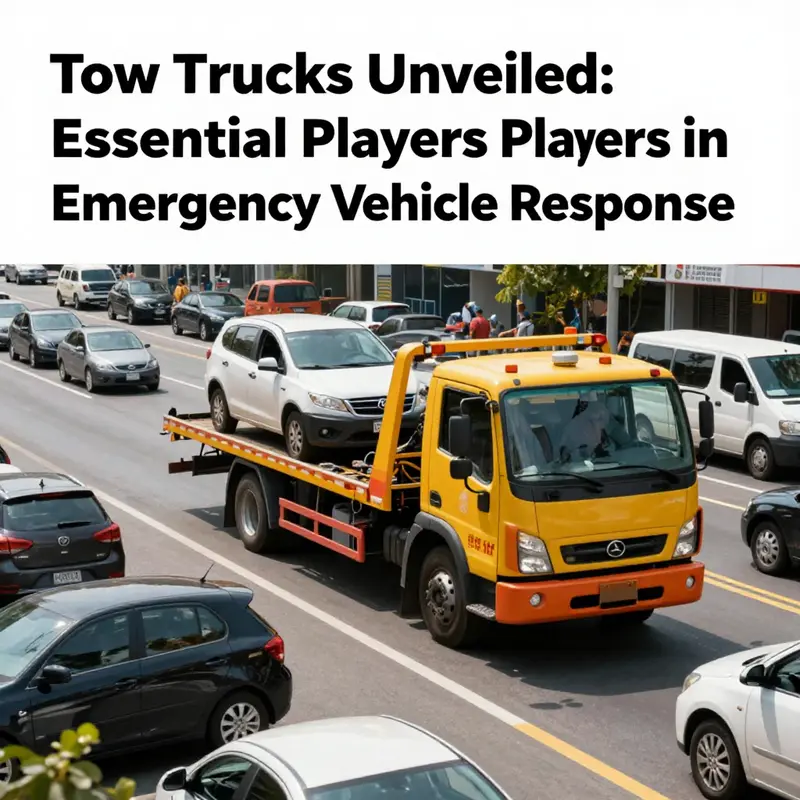
Tow trucks are often overlooked in the broader conversation about emergency vehicles, yet they play a pivotal role in ensuring public safety on our roads. Beyond merely transporting disabled vehicles, tow trucks function as crucial responders in emergencies ranging from accidents to breakdowns. Understanding their role is vital for business owners who rely on transportation networks and road safety for their operations. This article will delve into the operational responsibilities of tow trucks in emergency response scenarios and will also explore the regulatory frameworks surrounding their classification as emergency vehicles.
Behind the Tow Line: The Quiet Power of Tow Trucks in Emergency Roadside Response
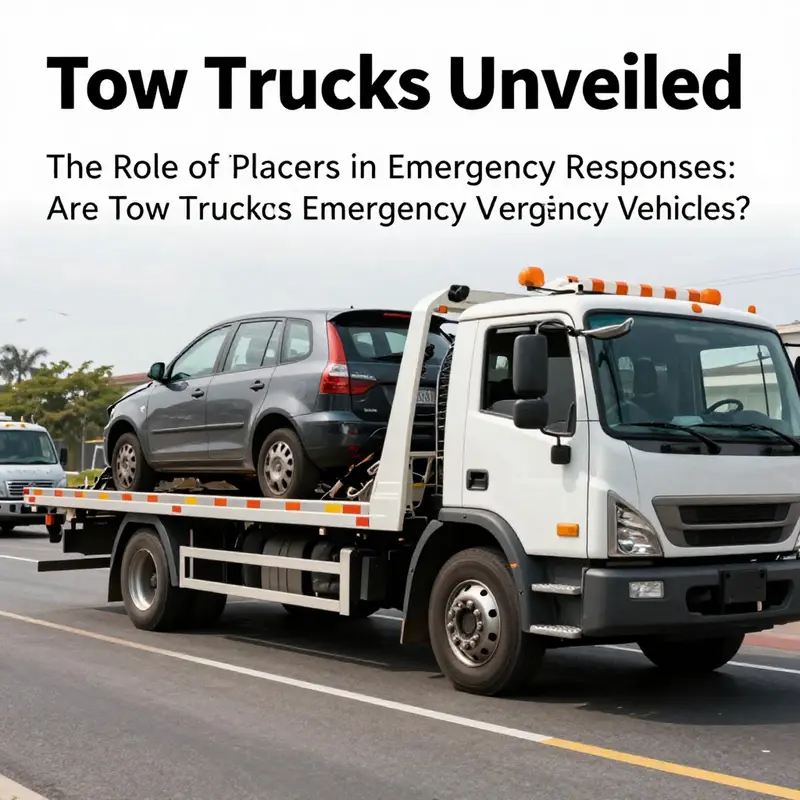
When people imagine an emergency on the road, they picture flashing lights, sirens, and hurried responders racing toward danger. What often goes unseen is the crucial support role played by tow trucks, vehicles whose mission extends far beyond moving a stranded car from the shoulder. In the broad ecosystem of emergency management, tow trucks function as mobile recovery units that restore mobility, reduce risk, and enable the broader cascade of responders to reach those in need more quickly. They are part of a resilient safety architecture that recognizes every moment saved in clearing a crash scene as a moment gained for potential life, for rapid triage, and for the efficient reestablishment of normal traffic flow. In this sense, tow trucks occupy a distinctive niche. They are not always labeled emergency vehicles in every jurisdiction, yet their operational impact is consistently linked to safer roads and swifter protection of the public.
To understand their place, one must begin with the simple premise that emergency responses have two interlocking objectives: protect people and restore movement. Police, fire, and EMS officers perform the first part–identifying hazards, securing the scene, and delivering medical or public safety interventions. Tow trucks advance the second, less flashy but equally essential objective: they clear the obstruction that blocks responders from reaching victims and that traps vehicles in lanes where secondary crashes could occur. This interplay is not a minor detail; it is a core mechanism that shapes the tempo and success of emergency operations. The National Highway Traffic Safety Administration has underscored the importance of rapid scene clearance and the role of specialized vehicles in improving outcomes for emergencies. While a tow truck may not wear siren lights in every place, its ability to physically remove hazards and reposition disabled vehicles makes it a critical ally in the broader emergency-response network.
The practical reality on the ground is straightforward. If a collision blocks a lane, if a stalled truck occupies the ramp, or if a wreckage spans both directions, responders must reach the injured and surrounding motorists without being hindered by the debris and vehicles in the way. Tow trucks arrive with the specific tools needed for those challenges. Hydraulic lifts, winches, and flatbed systems enable them to negotiate heavy recoveries and move vehicles safely without causing further damage. In some high-risk recoveries, operators may lift a damaged car several feet into the air to access mounting points, secure the vehicle, and extract it from precarious positions. The anecdotal example of a tow truck being lifted dramatically–in a case where steam or other forces created an extraordinary lift–reminds us of the unpredictable nature of roadside emergencies. Yet it also highlights the ingenuity and strength that modern tow trucks bring to the field. Those capabilities are not mere feats of engineering; they translate directly into faster, safer scenes for everyone nearby.
The coordination around a crash or breakdown is a choreography. The dispatch system weighs factors such as location, vehicle type, and the severity of injuries to decide when a tow is needed and in what sequence. A tow may be dispatched alongside or shortly after primary emergency services, depending on the incident’s complexity. The timing matters because every minute spent waiting for a clear lane translates into longer exposure for first responders, slower access to injured drivers, and greater risk of secondary collisions as other drivers slow, rubberneck, or swerve to avoid debris. The tow operator, often arriving with a calm demeanor and clear plan, becomes a pivotal link in the chain. They assess the scene, confirm safety, and begin the process of stabilizing and removing the vehicle in a way that reduces risk to EMS crews and firefighters who might be inside or near the wreckage.
Beyond the mechanical tools and the tactics of maneuvering a car onto a flatbed or winching it from a ditch, tow trucks embody a broader philosophy of mobility-as-safety. When a vehicle is properly cleared, traffic can resume a more predictable flow, protecting pedestrians on nearby sidewalks, enabling emergency lanes for ambulances to pass, and lowering the chance of a follow-up collision caused by suddenly stopped traffic. In urban networks, the presence of a tow unit also signals a measured, organized response rather than a chaotic scramble. It communicates to other drivers that the road will be restored and that there is a credible plan to minimize disruption. This social signal – an organized recovery operation – can reduce panic and confusion at the scene, contributing to safer behaviors from bystanders and other drivers who might otherwise react impulsively.
The equipment carried by tow trucks speaks to the versatility of their mission. The hydraulic lifts and winch lines are not just for display; they are designed for controlled, precise movements that protect both the operator and the vehicle being recovered. Flatbeds add versatility by enabling the transport of vehicles that cannot be driven away or that would be damaged by conventional towing. These tools are crucial when the road surface is slick, when a car is perched in a dip, or when a wreck involves hazardous materials that require careful handling before removal. In such cases, the tow operator must balance speed with safety, a skill that comes from training, experience, and a solid understanding of the incident command structure. The result is a recovered scene where responders can work with fewer impediments and motorists can regain access to their routes with minimal delay.
Policy framings and regional classifications can shape how tow trucks function within emergency response. In some jurisdictions, tow services are explicitly included as part of the emergency response fleet, while in others they operate more loosely as contractors or municipal assets. The common thread, however, is that their services are integrated into the incident-management workflow. This integration helps ensure that the necessary tools and personnel are available when a crash occurs, that the responders can rely on predictable procedures, and that the overall system can scale up in the face of more complex incidents. The alignment of tow services with public safety objectives is about more than moving cars; it is about maintaining tunnel-like throughways for emergency response where every moment saved on the road is a moment gained for someone awaiting aid.
In metropolitan corridors, the collaboration between tow operators and city or regional agencies can be especially pronounced. A tow truck may operate as a dependable extension of the public-safety network, placed where it can respond quickly to incidents across busy lanes and arterial roads. The role becomes even more essential in peak traffic hours, during weather events, or on highways where the sheer volume of vehicles magnifies the consequences of a single disabled car. In such contexts, tow trucks do not simply remove a car; they liberate a part of the roadway so police can manage the scene, EMS can reach a patient, and other vehicles can navigate around the disruption with a minimum of risk. The net effect is a safer, more reliable transportation system that performs better under pressure.
This integrated approach is not just about immediate benefits. It also involves longer-term planning: how fleets are sized, how responders coordinate, and how information is shared across agencies. Data-driven decisions about deployment patterns, equipment needs, and training standards all hinge on recognizing tow trucks as essential partners in emergency management. While their presence may not always be as visually dramatic as a flashing ambulance or a fire engine, their contribution is deeply practical. They are the lever that moves a congested scene toward clearance, the quiet force that allows treatment to begin sooner, and the logistical backbone that prevents a breakdown from spiraling into a wider public-safety issue.
For readers curious about how this works in specific places, metropolitan systems often rely on partnerships that integrate tow services into the broader network of road safety and maintenance. In practice, this means standardized response times, clear handoffs between agencies, and agreed-upon protocols for scene safety, vehicle recovery, and debris removal. These protocols are what allow responders to operate in a coordinated fashion, even when the specifics of a crash differ from incident to incident. The result is a resilient system that can adapt to a range of emergencies–from a single flat tire on a highway ramp to a multi-vehicle pileup on a major express lane.
In the day-to-day reality of roadside incidents, it is easy to overlook the significance of the tow truck. Yet the truth remains: when a tow truck arrives, it signals more than the act of removing a vehicle. It signals a turn in the incident, a transition from danger to safety, and a commitment to restoring normal life as quickly and safely as possible. The operator’s skill, the vehicle’s equipment, and the seamless coordination with other responders all contribute to outcomes that matter–fewer secondary crashes, quicker access to victims, and a roadway that is back in service sooner. The public gains not just from the physical clearance of a wreck but from the confidence that a responsible, expert system is in place to address emergencies as they arise.
In reflecting on the broader question–are tow trucks emergency vehicles?–the answer hinges on how one defines emergency response. If the metric is the capacity to reduce risk, to protect lives, and to restore mobility with speed and precision, then tow trucks are essential components of emergency response. They operate in the same ecosystem as police, fire, and medical services, even if their designation varies by jurisdiction. They are the bridges between the moment a hazard is identified and the moment the road returns to safe, normal operation. They are, in effect, the recovery arm of a well-orchestrated safety system. And as cities grow, as traffic densifies, and as the demands on road networks intensify, the role of tow trucks will only become more central to how we keep our roads safe, efficient, and resilient. For those who study or manage traffic safety, recognizing this contribution is a starting point for building even more effective emergency-response practices–practices that acknowledge every tool that helps save time, protect lives, and preserve the continuity of everyday life on the road.
Internal resource: In many regional networks, messages about the value of tow-truck services appear in local context and policy discussions. For example, in the Washington, DC area, professional towing services are integrated into the incident-management framework to support rapid clearance and safe recovery operations. You can explore a local example of this approach through a dedicated service page that highlights the region-specific capabilities and response times involved in tow-truck operations: tow-truck service Washington DC.
External reference for further reading on emergency-response practice and the role of specialized vehicles: https://www.nhtsa.gov/vehicle-safety/emergency-response
Tow Trucks on the Frontline: A Regulatory Perspective on Emergency Vehicle Status and Roadway Safety
Tow trucks glide into view on our roadways with a mix of practicality and peril, a reminder that emergency response is not a single, uniform fleet but a broader system of support designed to restore order, reduce risk, and revive traffic flow after a breakdown, collision, or spill. The question of whether tow trucks are emergency vehicles is not merely a semantic debate; it hinges on legal definitions, regulatory frameworks, and the real-world duties they perform when the stakes are highest. In many jurisdictions, tow trucks are not labeled as emergency vehicles in the strictest legal sense. They do not universally enjoy the same guaranteed clearances, priority lanes, or siren-augmented passage that police cars, fire apparatus, or ambulances do. Yet the moment a roadside incident unfolds, the role of tow crews shifts from a conventional service to a critical component of the emergency response ecosystem. Their presence helps stabilize the scene, remove hazards, and prevent secondary crashes that can compound the initial emergency. In this sense, the functional reality of tow trucks as emergency responders is widely recognized even if the formal statutory category remains nuanced and variable.
The regulatory landscape is mosaic, not monolithic. Across the United States, federal guidance and state-specific rules converge on a central truth: tow trucks are essential for incident management, especially on high-speed corridors and busy urban arterials. The federal layer, anchored in statutes and standards governing vehicle safety and highway operations, sets expectations for visibility, signaling, and operator conduct. One keystone standard is FMVSS No. 108, the Lighting and Reflective Devices standard. This regulation does not declare tow trucks as emergency vehicles in a vacuum; instead, it articulates the minimum lighting, signaling, and reflective requirements that any vehicle operating on public roads must meet to protect workers and other road users. In practice, this means that tow trucks must carry a lighting system capable of communicating their presence, actions, and intentions to surrounding traffic. The technology is not about excess flashy equipment; it is about creating predictable, unambiguous cues for drivers who must navigate around a vehicle in distress or a scene that demands quick, deliberate, and safe maneuvering.
The rulebook also acknowledges that the context of a tow operation matters. On a quiet rural road, a flashing beacon might be enough to alert following drivers. On a crowded highway shoulder at night, however, more robust signaling—strobe lighting, proper placement of rear and side warning lamps, reflective markings, and clear auxiliary signals—becomes critical. This attention to lighting is not cosmetic; it is a health-and-safety measure intended to reduce the risk of secondary incidents while technicians perform complex tasks such as vehicle winching, debris removal, or re-routing traffic around a disabled vehicle. In this environment, the tow operator is not simply a “service provider” but a worker in a high-risk, time-sensitive setting where visibility translates directly into safety.
Beyond the colors and wattage of lights, state regulations actively shape how tow crews can operate when danger or congestion is present. Some jurisdictions carve out explicit permissions for roadside assistance vehicles to perform certain maneuvers that other ordinary vehicles cannot undertake without undue delay. These permissions can include the ability to slow or stop traffic within a defined zone, set up temporary work areas with cones and barriers, or coordinate with law enforcement for traffic control until the scene is stabilized. The practical upshot is a permission structure that recognizes tow trucks as part of the emergency response chain while maintaining clear boundaries to protect public safety. In other words, they gain operational leverage in crisis scenarios, not because they carry the official badge of an emergency vehicle, but because the systemic risk they mitigate is real and widely acknowledged by regulators and responders alike.
The regulatory narrative is further enriched by the way agencies manage coordination on the ground. When a breakdown occurs on a major highway or during a multi-vehicle crash, a coordinated response involving law enforcement, fire and rescue, and transportation departments is essential. Tow crews become integral players in these coordinated efforts, providing scene clearance, vehicle recovery, and hazard removal that enable these other responders to do their jobs effectively. The on-scene dynamic often follows formal incident management structures, such as the Incident Command System, where clear roles, responsibilities, and handoffs help ensure that traffic control, safety monitoring, and rapid decision-making stay aligned with the ultimate goal: restore safe mobility as swiftly as possible. This collaboration underscores a broader regulatory philosophy: even when a vehicle is not legally an emergency vehicle, its deployment in critical infrastructure and safety operations warrants formal recognition in practice and strong, standardized safety protocols.
A vivid, albeit challenging, example from the field helps illuminate the point. A witness once described an incident in which a tow truck unit was drawn into a high-risk environment on a roadway, and steam from a damaged system created a hazardous working space. The scene underscored the reality that tow crews routinely operate in unpredictable conditions—full glare of oncoming traffic, unpredictable weather, and the ever-present risk of secondary incidents. In such moments, the utility of robust lighting, disciplined traffic management, and closely coordinated response becomes clear. The witness account highlights more than danger; it reveals the essential function of tow operators as stabilizers of traffic flow and public safety. This is not a dramatic flourish but a practical truth: the closer a scene is to being a controlled chaos, the more critical the presence of well-equipped, well-led tow teams becomes for preventing further harm.
From a regulatory standpoint, the relationship between tow trucks and emergency services is characterized by a continuum rather than a binary classification. The continuum reflects both the variability of laws across jurisdictions and the universality of the risks that accompany roadside work. Some states designate specific roadside-rescue or incident-response vehicles with their own signaling conventions, distinct from police or fire apparatus. In these places, tow trucks may be compelled to display warning devices and obey traffic-control rules tailored to emergency operations. Other states may apply broader rules that treat tow trucks as standard service vehicles unless they are actively engaged in a sanctioned incident-response task. In those contexts, the emphasis shifts toward ensuring that operators are trained, equipped, and prepared to modify their behavior to protect themselves and the public when called to assist in emergencies.
The practical implications for operators and safety regulators are distinct and interlocking. Operators are expected to maintain high levels of situational awareness, use spotters when necessary, and implement rigorous procedures for scene safety. PPE, high-visibility apparel, proper lane positioning, and adherence to safe speeds are not mere suggestions; they are required safeguards that help prevent further harm. The regulatory framework supports these expectations by mandating lighting, signaling, and reflective requirements and by enabling what regulators often describe as safe, predictable behavior on the roadway. In turn, regulators emphasize training and certification, emphasizing that a well-prepared tow crew can dramatically reduce system-wide risk during incidents.
The debate about whether tow trucks are emergency vehicles is therefore less about category labels and more about the responsibilities they carry and the risks they mitigate. In the end, regulators seek a balance: provide tow operations with the flexibility they need to respond promptly and safely, while imposing the safeguards that protect workers and drivers alike. That balance is not static; it evolves with new road designs, new safety technologies, and the growing complexity of incident-response operations. The result is a regulatory environment that recognizes tow trucks as indispensable partners in emergency response, even if the formal designation as an emergency vehicle varies by jurisdiction. This recognition is echoed in practice: agencies and responders routinely coordinate to ensure that tow crews can access eligible scenes, work within safety margins, and contribute to the extinguishing of danger and the restoration of normal traffic patterns as efficiently as possible.
For readers who want to explore local specifics, consider examining regional guidance and practical examples that bring this regulatory nuance to life. If you are interested in how such services operate within the Washington DC area, you can learn more about a local provider here: towing service in Washington DC. This resource offers a window into the day-to-day realities of roadside recovery, illustrating how a single jurisdiction translates the federal expectations into on-the-ground practice. The broader takeaway remains consistent: tow trucks occupy a critical and highly regulated niche that sits at the intersection of public safety, traffic management, and fast, capable response when seconds count.
As the road network continues to evolve—with ongoing infrastructure upgrades, emerging traffic management technologies, and growing complexities in incident response—the regulatory conversation about tow trucks will likely become more nuanced, not less. The central thread will persist: safety, visibility, and coordination are the non-negotiables that enable tow operators to carry out essential tasks without becoming themselves a source of risk. The question of identity—whether tow trucks are emergency vehicles in the formal sense—will continue to be answered differently depending on where you travel. Yet the operational reality remains the same across the country: they are essential participants in the emergency response ecosystem, and their regulation reflects that essential role. The public, too, benefits from this clarity. When an incident occurs, drivers understand that tow crews are part of a carefully orchestrated response, guided by standards that aim to protect life, preserve property, and minimize disruption to the traveling public.
External resource: For a foundational understanding of the lighting and signaling requirements that underpin this regulatory framework, see FMVSS No. 108 – Lighting and Reflective Devices, provided by the National Highway Traffic Safety Administration (NHTSA). https://www.nhtsa.gov/federal-motor-vehicle-safety-standards/lighting-and-reflective-devices-fmvss-no-108
Final thoughts
Tow trucks hold a significant position in ensuring safety and efficiency on our roads, serving as vital emergency responders. Their classification as emergency vehicles is not merely a bureaucratic label; it reflects their essential function in maintaining public order and providing critical services during emergencies. As business owners, understanding the role of tow trucks can help in planning for efficient logistics and emergency preparedness. By recognizing the contributions of tow trucks to safety and mobility, we can further appreciate their value in our transportation ecosystems.