
Tow trucks are a common sight on roads, often perceived merely as vehicles for transporting broken-down cars. However, their role extends far beyond; they are integral in responding to emergencies on the road, facilitating timely interventions that protect public safety. As business owners, understanding whether tow trucks are classified as emergency vehicles can influence your operations, liability considerations, and partnerships with towing services. This article delves into the complex relationship between tow trucks and emergency situations, examines legal perspectives on their status, and discusses the broader implications for traffic management and public safety. Through these insights, we aim to enhance your awareness and prepare you for informed decisions regarding towing services and emergency protocols.
Tow Trucks and Emergency Response: Reconsidering Their Place in the Emergency Vehicle Landscape
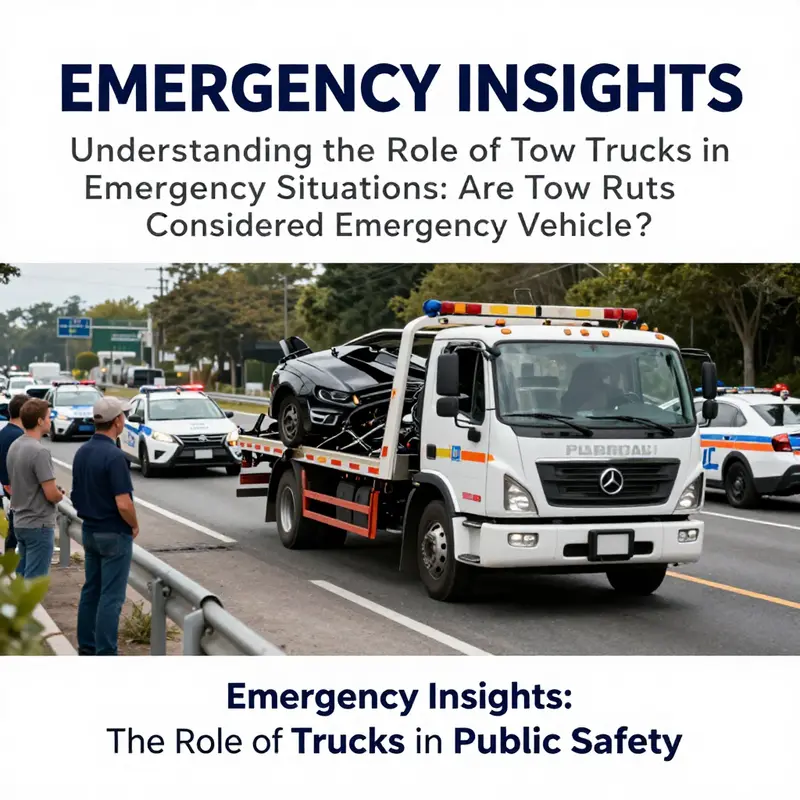
Tow trucks are not traditional emergency vehicles like ambulances, fire engines, or police cars, but they play a crucial role in emergency response. They arrive after the initial life-saving actions begin to restore order, clear lanes, and enable responders to operate safely.
This chapter explores the distinction between frontline emergency responders and support vehicles, why some jurisdictions grant tow operators limited emergency-like privileges, and how effective towing can affect response times, scene safety, and patient outcomes. It discusses training differences, the scope of authority, and the practical realities on the roadside, emphasizing that the value of towing lies in facilitating rapid recovery and continuity of care rather than providing direct medical treatment or firefighting.
Tow Trucks on the Threshold: Legal Status, Privileges, and the Real Role in Emergencies
The question of whether tow trucks count as emergency vehicles hinges less on the vehicle itself and more on the moment and jurisdiction. In everyday use, a tow truck is a service vehicle designed to remove damaged or disabled vehicles and to clear lanes. But in the heat of a highway incident, the same vehicle can assume a role that mirrors public safety work: arriving with urgency, coordinating with authorities, and performing tasks that directly affect the safety and flow of traffic. This dual identity—service tool at rest, potential emergency responder in action—defines the legal status and the practical privileges that surround tow operations.
Legal status is not universal. Across countries and states, the designation of “emergency vehicle” is reserved for those on official duty for life safety, such as police, fire, and EMS units. Tow trucks normally sit outside that circle. Yet many jurisdictions attach special privileges to towing firms and operators when responding to scenes that threaten public safety. These privileges are conditional, tightly regulated, and time-bound. They do not grant the full authority and immunities of traditional emergency vehicles; rather, they offer targeted allowances that help the responder clear dangers quickly and reduce secondary risks to other road users. The result is a nuanced framework: tow trucks are not emergency vehicles in the broad legal sense, but they can be treated as urgent partners when the situation calls for rapid scene management.
Two threads run through this framework. The first is the immediate need to restore traffic flow and reduce exposure to hazard. A disabled vehicle sitting in a highway shoulder can spawn further incidents, block lanes, or create sudden slowdowns that cascade into longer delays and higher risk. In such moments, a tow operator may be permitted to use flashing lights and, in some places, audible signals while en route to or working at the scene. The second thread concerns the obligations that come with such privileges. Operators must carry proper permits, adhere to regional protocols, and operate under clear dispatch and direction from public safety authorities. Misuse—using emergency equipment when the situation does not justify it, or performing duties outside prescribed limits—carries penalties that can include fines, license suspensions, or criminal charges. The balance is delicate: the public expects speed and efficiency, but safety depends on strict compliance with defined rules.
The contrasts with true emergency vehicles are telling. True emergency vehicles benefit from broad statutory exemptions that let them outrun congestion and cross red lights under carefully defined safety conditions. They are integrated into official response systems, often carrying specialized crews and equipment for life-saving work. Tow trucks, by contrast, function mainly as support units that become critical only when the incident involves vehicle recovery, hazard removal, or traffic management. When a tow truck moves through a scene with emergency lights, it is not signaling the same authority to breach controls as a police cruiser does; rather, it is signaling a localized need to make the area safe for other responders and motorists. The difference matters because it shapes how drivers respond to such vehicles and how agencies plan for coordinated action at complex crash sites.
Practical practice reflects this division, yet it also reveals a layered reality. On major corridors and in dense urban corridors, responders frequently integrate tow operators into the incident command structure for immediate tasks: removing stranded vehicles, clearing debris, and enabling investigators and medical personnel to do their work with minimal disruption. In many jurisdictions, dispatch systems are synchronized so that a tow truck is deployed not as a one-off service but as part of a broader public safety operation. The operator’s capacity to move with urgency—without sacrificing safety—depends on training, the right equipment, and a disciplined adherence to legal boundaries. This is why you will often see tow crews arrive with the same sense of seriousness as other responders, yet you will notice the distinct boundaries that keep them within a defined scope of work.
A practical implication for drivers and pedestrians is that the presence of a tow truck with lights on does not automatically grant it the same right of way as a fire engine or police car. Road users should yield primarily to the scene’s safety needs. Tow operators, like any responders, should be predictable in their movements, obey signals, and communicate clearly with other responders to minimize confusion. The human dynamics at a crash scene—eye contact, hand signals, and standardized radio communications—are as vital as the mechanical steps taken to haul a disabled vehicle away from danger. In this sense, the tow truck occupies a liminal space: not a primary life-safety vehicle, but a crucial instrument in the chain that returns people to normal life after a disruption.
Regional variation underscores how law and practice shape this role. In the United States, for example, some states authorize the use of emergency lighting and sirens for tow operators only when responding to a hazard posed by a disabled vehicle blocking traffic. Those privileges are conditional on the vehicle’s status, the nature of the threat, and the operator’s credentials. They are not privileges of unrestrained speed or prerogatives at red lights; they are carefully circumscribed tools to ensure the quickest safe clearance while protecting the public from misuse. It is a legal acknowledgment that the vehicle recovery function is indispensable to traffic safety, even as it remains a separate category from the police, fire, and EMS fleets that operate under a different, broader set of exemptions.
To understand the landscape more clearly, one can consult authoritative sources that map the boundaries between service and safety. In practice, guidance around the legal status of tow trucks often emphasizes consulting local motor vehicle regulations or state statutes, because those rules define what a tow operator can and cannot do in an emergency. A reliable overview can also be found in national discussions of vehicle recovery and roadside assistance, which acknowledge the essential but distinct role of towing in incident management. For readers seeking a distilled view, the National Highway Traffic Safety Administration’s resources offer a framework for how recovery and roadside services fit into overall road safety, including the standards for operation and the emphasis on minimizing secondary crashes. This perspective helps bridge the gap between the reality on the ground and the legal labels that govern it.
In this landscape of nuance, the chapter of tow truck legality is less a single verdict and more a mapping of responsibilities. The key takeaway is that tow trucks are not universally emergency vehicles by law, but they can carry emergency privileges in tightly regulated circumstances. That arrangement reflects a pragmatic recognition: when a corridor is blocked, when a crash occurs, or when a hazard endangers motorists, a properly credentialed tow operator can be deployed with the authority needed to regain control of the scene while protecting the traveling public. The precise scope—which acts are permitted, under what conditions, and with which equipment—depends on the jurisdiction and the specific incident.
As a reader moves through this topic, a steady thread remains: the term emergency vehicle carries gravity and public trust, and it is defined by the combination of law, policy, and practice. Tow trucks reside at the edge of that definition, offering a vital service that can become an emergency function when circumstances demand speed and coordination. And while their official label may not proclaim them as emergency vehicles in the same way as a police car or a fire engine, their operational reality is undeniable: they clear lanes, reduce exposure to danger, and help restore everyday motion after a disruption. That is a practical truth about how modern road networks stay safe and functional, a truth that the law reflects through nuanced privileges rather than blunt designation.
External resource: https://www.nhtsa.gov/vehicle-recovery-and-roadside-assistance
Internal note: For a regional perspective on how towing services operate within Arlington, VA, see the guidance on towing service in Arlington, VA.
Clearing the Roadways: Tow Trucks at the Intersection of Public Safety, Emergency Protocols, and Traffic Flow
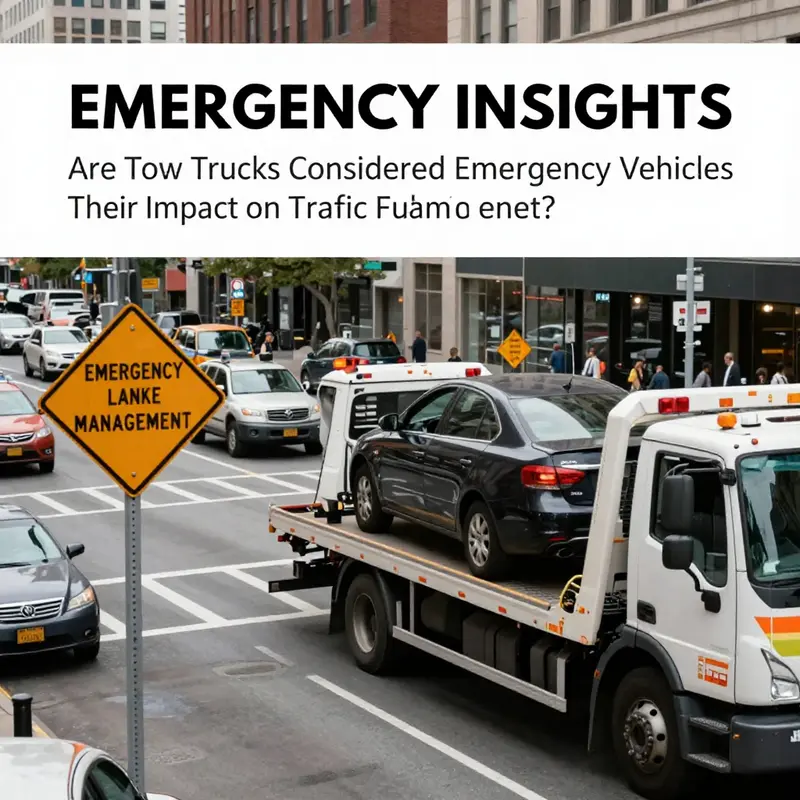
Tow trucks occupy a gray zone in public safety discourse. They are not emergency vehicles in the classic sense, yet their presence can determine whether a traffic incident collapses into a gridlock or becomes a safer, more predictable event for everyone on the road. The debate about whether tow trucks should be treated as emergency responders hinges on both legal classifications and pragmatic impact. In many places, the stark line between ’emergency’ and ‘non-emergency’ is drawn by law and policy, not by the practical consequences of a tow truck’s arrival at a scene. Tow operators usually do not have the same statutory right of way as police cars, fire engines, or ambulances, but their work is inextricably linked to public safety when a vehicle breaks down, a crash blocks a lane, or debris hazards threaten to propagate into secondary crashes.
That linkage is not incidental. When a disabled car sits in a travel lane, the risk of rear-end collisions, sudden lane changes, and sudden bottlenecks multiplies quickly. A rapid towing response can convert a potential hazard into a controlled removal, restoring what the road system depends on: predictable flow. In this way, tow trucks contribute to safety by reducing exposure time for other motorists. Yet the same time sensitivity that makes towing an essential service also creates a tension with general road safety rules. If a tow truck is granted emergency privileges, it should only be in effect under clearly defined conditions—when its actions directly prevent harm, when it communicates with the responding agencies, and when it follows personnel directions on the scene. Otherwise, the emergency-use status risks encouraging risky maneuvers, such as occupying shoulders without clear visibility or blocking lanes while the operational plan is still forming.
Legal classification varies by location. Some jurisdictions allow limited use of lights and sirens during a deliberate, coordinated response to incidents that threaten public safety, such as clearing a highway of a disabled vehicle or assisting at the edge of a major crash. Other areas reserve that privilege for vehicles whose primary function is emergency response. The result is a patchwork system in which tow operators may temporarily assume an emergency posture, while in neighboring regions they remain roadside workers with traffic control duties. This variability is not an indictment of towing’s value but a reflection of different risk assessments and resource planning.
Despite not being traditional responders, tow trucks are increasingly woven into coordinated incident management. Dispatch centers now recognize that time to clear matters as much as time to respond. Accordingly, some regions deploy ‘rapid response’ towing units on major corridors, with preplanned routes, priority lanes, and dedicated channels of communication with police and transportation departments. These arrangements reduce the duration of lane blockages, lower the rate of secondary crashes, and shorten the time until a broken vehicle can be moved off the highway. In practice, such coordination looks like a choreography: the tow operator arrives with the right equipment, trucks move to safe locations, traffic is diverted or slowed under controlled conditions, and once the vehicle is removed, the lane is reopened with minimal disruption. This process requires that tow operators be trained to manage roadside hazards, to understand basic traffic control, and to coordinate with law enforcement or highway agencies on the specifics of a given scene.
Recruiting and training play a critical role in public safety outcomes. It is not enough to tow a car; the operator must understand scene safety, hazard recognition, spill response, and the proper use of warning devices. In regions with hazardous materials or complex crashes, certification programs may enable tow operators to participate in incident scenes beyond simple vehicle extraction. The aim is not to blur lines between agencies but to extend a carefully controlled layer of capability that keeps traffic moving and people safer. However, this expanded role also introduces risk. Tow crews face dangers from fast-moving traffic, reduced visibility, night operations, and unpredictable spill or debris conditions. Poor placement on the roadside or delayed response can convert a recoverable scene into a risky one for both motorists and tow personnel.
From a policy standpoint, the classification question matters because it frames who bears primary responsibility for rapid clearance, scene safety, and secondary crash reduction. When tow operations are treated as integral to incident management, they gain access to coordinated dispatch channels, standardized signaling, and resources that support safe operations. When they are treated as ancillary, the tempo of scene clearance can suffer, and opportunities to prevent cascading traffic problems might be missed. The practical takeaway is that tow trucks, while not emergency vehicles by default, function as critical nodes in the emergency response ecosystem. Their value lies in speed, visibility, and reliability, married to disciplined collaboration with police, fire, EMS, and transportation agencies.
To illustrate the urban dimension, consider dense city networks where a single stalled vehicle can reverberate through miles of connectors and feeder roads. In such environments, the timely removal of a vehicle is less about the vehicle itself and more about preserving the rhythm of a city’s entire travel system. Where audiences and policymakers focus attention on paramedics rushing to a critical medical scene or firefighters battling a blaze, the quiet efficacy of a well-coordinated tow response often operates behind the scenes, ensuring that the next leg of the journey—an emergency vehicle’s route, a bus line, or a commuter’s daily pattern—remains unobstructed. In regions that emphasize coordinated response, tow operators are integrated into the incident command structure, maintaining situational awareness, relaying scene conditions, and optimizing lane configurations for recovery operations.
All of this underscores a central point: tow tractors are not emergency vehicles by traditional definitions, but they are indispensable for traffic safety and public safety outcomes during stressful moments on the road. The right framework recognizes their contributions without inflating their official status. It allows them to participate in rapid clearance and hazard management when appropriate while keeping clear lines of authority and accountability. That balance—clear roles, robust training, and seamless communication—transforms the roadside from a place of danger into a navigable space where a stalled car does not derail an entire corridor. For residents and travelers alike, that translates into shorter delays, fewer crashes, and a road system that can absorb the shocks of unavoidable breakdowns or crashes with less ripple effect.
In metropolitan areas where the demand for fast, reliable towing is high, a local understanding of available services matters. For those curious about regional options, a representative example is the Washington DC area, where a dependable towing service can complement law enforcement and transportation agencies in maintaining flow during incidents towing service Washington DC.
Beyond local practice, national standards exist to guide how tow operations fit into safety goals. The National Highway Traffic Safety Administration outlines vehicle recovery and roadside assistance guidelines that help agencies balance rapid response with safety on the scene. External reference: https://www.nhtsa.gov/vehicle-safety/tow-trucks-and-road-safety
Final thoughts
In conclusion, while not traditionally classified as emergency vehicles, tow trucks hold crucial responsibilities that intertwine with public safety during emergency incidents. Their legal status may vary by jurisdiction, affecting their privileges and operations. For business owners, recognizing the importance of tow trucks can lead to improved partnerships and enhanced response strategies in case of emergencies. The interrelationship between tow trucks and emergency management remains vital for maintaining safety on our roads, underscoring the need for businesses to be well-informed and prepared.