
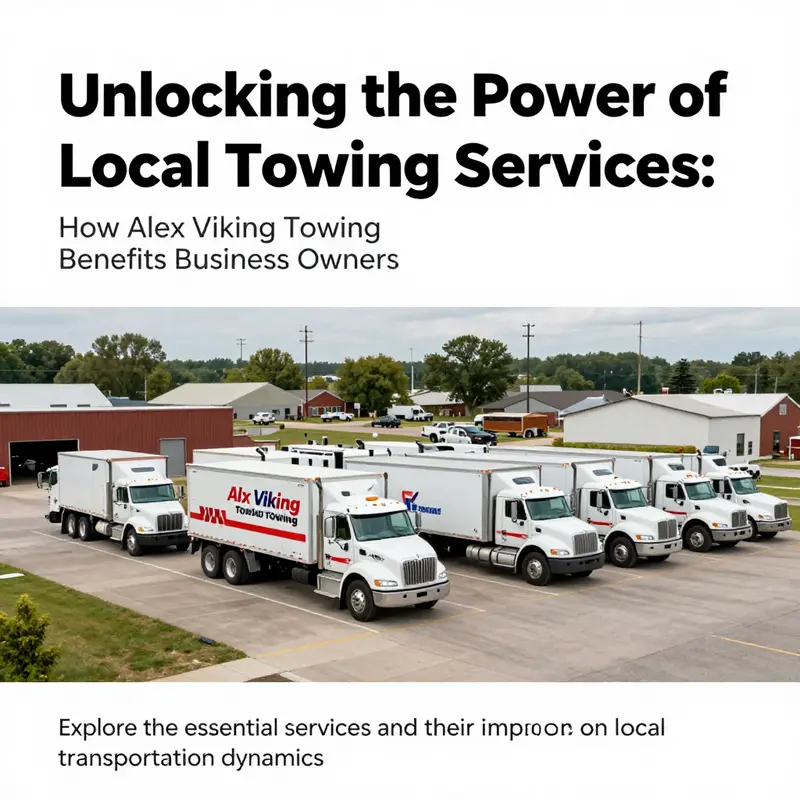
In the world of transportation, reliable towing services stand as a vital lifeline for businesses. Especially in regions where heavy machinery and commercial vehicles dominate, a dependable towing partner can make all the difference. Alex Viking Towing, based in Alexandria, MN, exemplifies the kind of service that can elevate operational efficiency for local businesses. This article delves into the array of services they offer and the positive ripple effects on local transportation, specifically targeting how business owners can leverage these services for enhanced productivity.
On Call, On Route, On the Move: A Deep Dive into the Essential Services of Alex Viking Towing in Alexandria, MN
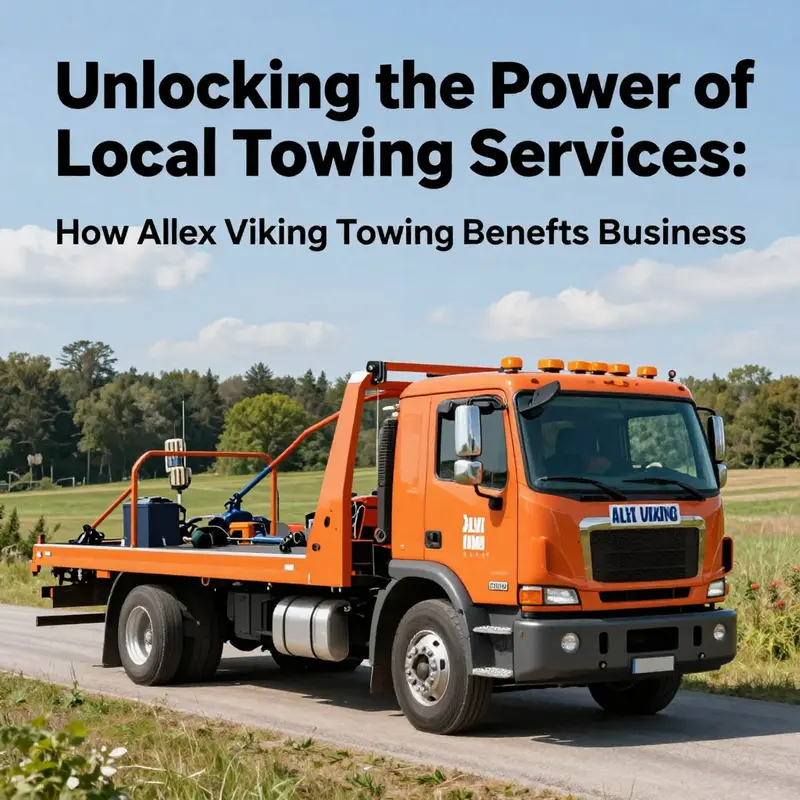
When a car coughs to a halt on a windy Minnesota road or sits stubbornly in a snow-dusted cul-de-sac, the first moment of doubt is usually followed by a second thought: who can get us out of this and what will it cost? In Alexandria, MN, a town braided with lakes, winter wind, and backroads that wind through farms and neighborhoods, the answer often comes from a single mission-driven team that has spent years turning roadside emergencies into stories of reliable arrival. Alex Viking Towing is not merely a service provider; it is a responsive partner prepared to translate chaos into safety, delay into movement, and worry into a plan. The company’s work culture orients itself around one simple idea—when vehicles need to be moved, damaged, or rescued, speed matters, but safety matters more. That balance guides every call, every mile driven, and every piece of equipment fired up on a cold morning or a busy dusk after a long workday. The result is a cohesive, fleet-backed system that can adapt to a wide spectrum of situations with a calm efficiency that comes from years of experience and a careful calibration of tools and human skill.
In this part of the story, the focus is the practical framework that underpins Alex Viking Towing’s service offering. Rather than presenting a catalog of features, the narrative follows a single thread: how the right combination of vehicle type, terrain, and urgency determines the approach to help. The fleet, with its varied capabilities, becomes a single organism designed to meet real-world needs in real time. In the winter, when roads are slick and visibility can shrink to a gray wash, the choice of method matters as much as the speed of response. In dry heat or late autumn rain, the same principle holds: the method is chosen to protect people, preserve the vehicle, and minimize the disruption to the day. And behind every decision is a clear understanding of the terrain around Alexandria—whether it’s a quiet residential street, a rural lane that twists toward the lake, or a business district where timing can ripple through a workday.
One of the core strengths of Alex Viking Towing lies in its versatility. The team can approach a downed car in a way that keeps the car intact and safe for transport through the use of a flatbed service when the vehicle has sustained damage, or cannot be driven at all. The flatbed is more than a piece of equipment; it represents a philosophy of care—gentle handling, controlled loading, and secure restraint that minimizes the risk of further harm during transit. The choice to deploy a flatbed is rarely about speed alone; it is about safeguarding the asset and, when needed, carrying it to a repair facility without subjecting it to the stresses that come with traditional dragging tandems. In situations where the vehicle is not immobile but cannot be moved without risk, a flatbed becomes the safest bridge between the roadside and the final destination.
Yet the service repertoire expands far beyond a single method. Off-road recovery demonstrates how the operation meets the tougher realities of rural or uneven terrain. Snow-packed fields, muddy ditches after spring thaw, or slick, grassy embankments all demand a crew that can read the ground with accuracy and employ the right combination of traction aids and winching techniques. Rather than a one-size-fits-all solution, the team analyzes grade, surface, and distance to determine the safest extraction path. This is not about heroic retrievals; it is about procedural, repeatable steps that minimize the chance of getting stuck again once the vehicle is back on firmer ground. The off-road recovery service sits alongside a more specialized set of capabilities within the same organizational anatomy, reinforcing the idea that a towing company can be a comprehensive responder rather than a narrow tradesman.
If a motorcycle was the rider’s pride and joy on a sunny afternoon, it merits its own careful handling. The motorcycle sling service speaks to the precision and balance required to move two-wheeled machines without compromising their frames, forks, or tires. In tight spaces or on narrow lanes, the technique is as much about securing the bike as it is about protecting the surrounding environment. The crew uses purpose-built slings and supports that cradle the machine with even pressure and steady contact, ensuring that the cycle arrives at the destination without post-transport drama. This is a quiet art that blends strength with finesse, a reminder that reliable towing is as much about respect for the vehicle as it is about speed.
For vehicles that can roll on their own wheels but need a steady pull and guidance, wheel lift service offers a practical compromise. It enables the operator to lift the rear end while keeping the wheels on the ground, which can be a quick and efficient way to transport while preserving the vehicle’s drive components. It’s a technique that requires careful calculation of weight distribution and secure rigging, a routine that becomes second nature after thousands of miles of service across diverse road conditions. Each call in which a wheel lift is chosen reinforces the underlying principle: choose the least invasive, most controlled method available to get the job done safely and efficiently. The same mindset applies when a vehicle arrives at a shop or a storage facility; the crew ensures it is carefully aligned, strapped, and documented to prevent any post-delivery surprises.
Of course, the roadside is unpredictable. Lock-out service represents a pragmatic, everyday form of resistance that people encounter as they navigate busy lives. A momentary lapse—keys left inside, a mislaid wallet, a locked glove compartment—can spare someone hours of hassle if the response is swift and discreet. The lock-out approach is handled with privacy and care, maintaining the owner’s sense of security while reuniting them with access to their vehicle. The aim is not to overstep boundaries but to restore the owner’s autonomy as quickly as possible, whether it’s to reach a deadline, a family commitment, or the next leg of a journey.
Punctual, efficient service also means being ready to address the more mechanical realities of a vehicle that won’t start. Car starting services and tire changes are practical, hands-on interventions that bring a sense of road-resilience back to the moment. A dead battery can stall plans and test patience, but a trained technician can assess, jump-start, or safely replace power sources on site, all while communicating clearly about what the next steps will be. Tire changes, when paired with rapid roadside diagnosis, become more than a patch-up; they become a bridge to safety, ensuring that the tire condition meets the road’s demands and that the driver can continue to a preferred repair shop or home with confidence. In all these tasks, the emphasis remains on safety, speed, and respect for the customer’s timeline and property.
Fuel delivery and the ability to restart a vehicle when power has faded are other pieces of the service mosaic that reflect a broader commitment to keeping Alexandria’s drivers moving. In parts of Minnesota where fuel availability can be a concern during harsh weather, the ability to deliver gasoline or diesel on demand translates into fewer detours and more predictable plans. The same thinking informs a starting service, where a weak battery or a sensor that refuses to wake up does not necessarily equal a tow. Instead, a technician can diagnose, isolate the issue, and determine whether the vehicle can safely be brought to life on the road, or whether it must be towed for repair. The decision is never about pushing a problem to another place; it is about making the most prudent, reliable choice for the motorist who calls for help in a moment of need.
All of this happens within a framework that prioritizes accessibility and reliability. The dispatch system, the communication between the driver and the customer, and the careful documentation of the transport process are essential to turning a stressful moment into a manageable experience. The team’s familiarity with local routes, knowledge of weather-driven patterns, and readiness to adapt to last-minute changes in plans all contribute to a sense of confidence for the customer. The aim is not simply to move a vehicle from point A to point B; it is to move a customer through a challenging moment with clarity and care. When a driver is dispatched to a call, the initial assessment is a blend of the vehicle’s type, the terrain, the urgency, and the customer’s constraints. The technician then selects the most appropriate method from a toolbox that includes flatbed, wheel lift, off-road recovery, and the specialized handling required for motorcycles, all while maintaining the highest safety standards. This is a craft that grows out of repeated practice, safety training, and a commitment to the communities around Alexandria—communities that count on reliable access to transportation in all seasons.
For readers seeking a broader picture of local options beyond the immediate crew, a quick visit to the Alexandria-towing page offers a sense of the regional ecosystem and how different service providers complement one another when emergencies overlap or when a caller needs more specialized support. Alexandria-towing provides a window into the broader landscape of on-the-road assistance, illustrating how a robust network can reduce wait times and improve outcomes for residents and visitors alike. This chapter thus situates Alex Viking Towing within a larger system of mobile response, where a quick call can set in motion a coordinated effort that brings together fleet capabilities, driver expertise, and a community-minded approach to roadside resilience.
The conversation about services is not a sales pitch but a reflection on the practicalities of getting people back on the move. It is about understanding what the vehicle needs, the terrain that surrounds it, and the driver’s schedule. It is about applying the right method at the right time with just enough attention to the details that can otherwise derail a trip—properly securing the load, maintaining communication with the customer, and ensuring that the destination is reached with the vehicle in a condition suitable for repair or continued operation. In the end, the most memorable aspect of Alex Viking Towing is less about the individual service names and more about the reliable rhythm of response that keeps Alexandria connected. It is a rhythm built on the quiet confidence that when a vehicle is immobilized, there is a solution that respects the vehicle, the road, and the person who depends on it. The services offered are, in this sense, a language of care spoken fluently by a team that understands that every mile counts and that every call deserves an attentive, responsible response.
External reference: MapQuest listing for Alex Viking Towing Inc. in Alexandria, MN provides additional context on local listings and service footprint: https://www.mapquest.com/business/alex-viking-towing-inc-alexandria-mn
Steady Tow, Steady Flow: How Alex Viking Towing Keeps Alexandria’s Roads Moving
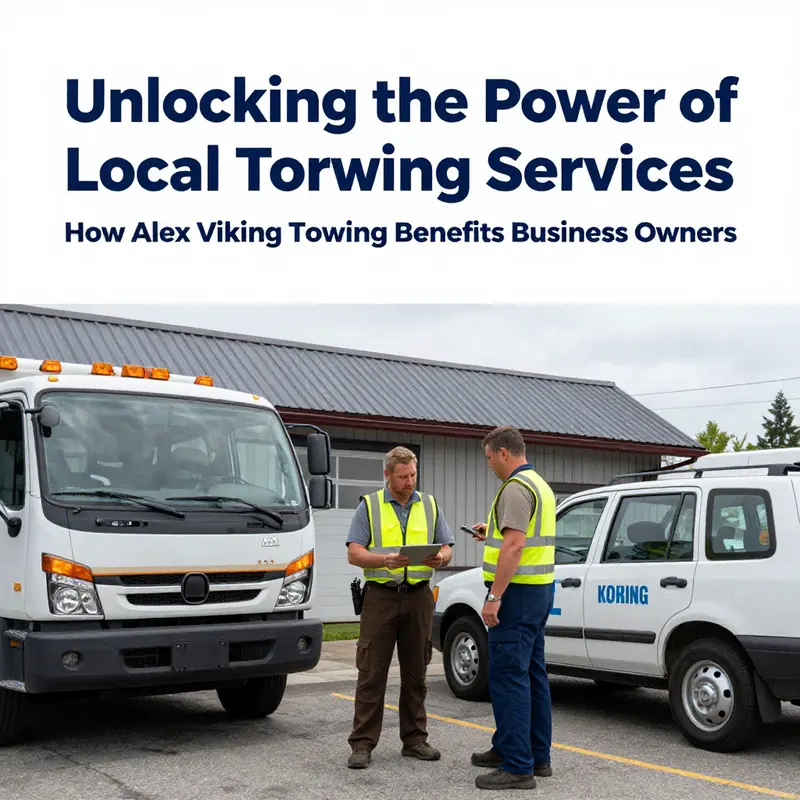
In the quiet hours before dawn on the roads around Alexandria, Minnesota, a steady, almost invisible network keeps vehicles from grinding to a halt when things go wrong. That network is built on the reliability and readiness of local towing and roadside assistance providers, among them Alex Viking Towing. This chapter steps into the practical heart of how a towing company, operating in a midwestern city, can ripple outward to stabilize daily life, commercial supply chains, and public safety. It is not merely a matter of removing a stranded car from a shoulder; it is a carefully choreographed ecosystem designed to minimize disruption, protect people, and sustain the momentum of a community that depends on steady transportation to function, from school buses and municipal fleets to small businesses and family travelers alike. The company’s presence in Alexandria, MN, becomes a hinge point around which the city’s mobility pivots, especially when winter storms, flat tires, or unexpected breakdowns threaten to derail a day’s plans.
What makes Alex Viking Towing a central thread in this story is the breadth of its on-call capability. The rapid response ethos is more than a marketing promise; it is a practiced discipline rooted in trained personnel, modern equipment, and a deep familiarity with the local terrain. The team knows the landscape—from the clustered neighborhoods near the lake area to the rural stretches that connect town to county roads. They understand how weather can transform ordinary trips into hazardous or time-consuming ordeals. Minnesota winters can turn a routine commute into a test of patience and endurance. A tow operator who can arrive quickly and handle a recovery with care reduces not just the danger of an immobilized vehicle but also the risk of a cascading delay for whole routes, whether it’s a family heading to a medical appointment or a regional freight driver seeking to deliver goods that morning. In such moments, the speed and professionalism of on-site recovery matter as much as the act of towing itself.
The service profile that Alex Viking Towing brings to Alexandria reflects a deliberate approach to mobility. It encompasses a range of on-site interventions that extend beyond traditional towing. When a driver finds themselves locked out of their car, or when a tire has blown on a rain-slicked boulevard, the ability to remedy the situation on the spot preserves time and reduces the need for additional burdens on the city’s road system. A vehicle needing a jump-start may be the first in a chain reaction that leaves a corridor clogged while waiting for a more comprehensive service call. On-call responders who provide starting assistance, lock-out relief, or fuel delivery become an essential safeguard against such disruptions. Their readiness translates into measurable benefits: faster reentry into traffic for individuals, shorter delays for commercial operations, and fewer opportunities for secondary incidents triggered by an immobilized vehicle.
Behind the scenes, the equipment and technical know-how that support these responses are as important as the response time itself. A modern towing operation relies on a fleet equipped to handle a spectrum of scenarios—from delicate, on-scene recoveries that require careful handling of a motorcycle or a passenger vehicle to heavier-duty needs where a flatbed or wheel-lift might be called into service. The on-site workflow is designed to minimize additional risk. Skilled operators assess the scene, secure the vehicle, and implement a recovery plan that reduces further damage and protects those nearby. In a community setting, this care becomes a practical form of public service. It reassures residents that when a car breaks down on a remote road or a heavy vehicle experiences a failure near a busy intersection, there is a dependable partner ready to step in swiftly and with consideration for the surrounding traffic and pedestrians.
The economic dimension of this service, often overlooked in conversations about daily mobility, is substantial. Local towing providers support both personal mobility and regional logistics. For a small city with a diverse economic base—schools, healthcare facilities, hospitality venues, construction projects, and agricultural activity—the ability to move people and goods efficiently hinges on the resilience of the transportation backbone. When a truck is sidelined by a breakdown on a supply route, the ripple effects extend beyond a single delay; they can influence product availability, scheduling, and cost. A punctual recovery operation helps keep deliveries on track and minimizes the downtime that can accrue across an entire day’s schedule. In a place like Alexandria, where the rhythm of life is closely tied to weather patterns and seasonal activity, the value of a reliable towing partner grows with every storm, every icy morning, and every late-night breakdown reported by a stranded motorist.
This perspective helps explain why the local towing scene is often discussed in terms that blend practical service with social responsibility. It is about more than moving a vehicle from point A to point B. It is about protecting the safety of drivers who find themselves in precarious situations, and about supporting the broader transportation ecosystem that keeps the town functioning. When an operator arrives with a calm demeanor, a well-maintained rig, and a plan that respects the safety of the scene, they contribute to a culture of responsible roadside assistance. That culture, in turn, reduces the likelihood of accidents caused by rushed or makeshift recoveries and lowers the overall stress on city streets during peak hours or adverse weather. The psychological comfort of knowing a trusted responder is nearby can also lower the anxiety that often accompanies vehicle trouble, encouraging drivers to seek help sooner rather than attempting risky self-remediation.
In conversations with community stakeholders—fleet managers, municipal planners, and shop owners—the value of a reliable local tow partner is frequently measured not only by response time but by the consistency of service across shifts, seasons, and road conditions. Alex Viking Towing embodies a model of consistency: round-the-clock availability, a breadth of on-site capabilities, and a willingness to go beyond the minimum requirements of a rescue operation. This consistency supports a form of transportation resilience. It makes possible a more predictable commute for residents who rely on the roads every day and a more reliable schedule for businesses that depend on timely vehicle movement. In a world where a single incident can ripple across a region’s traffic patterns, the steady presence of a trusted towing partner becomes an anchor for local mobility. The community understands at some visceral level that a rapid recovery does not erase the risk of breakdown, but it significantly reduces the duration of risk and its impact on daily life.
The chapter would be remiss if it did not acknowledge the human dimension behind the hardware. The technicians, dispatchers, and support staff who make up Alex Viking Towing bring not only technical competence but a certain civic-minded rigor to their work. They train regularly to handle a wide range of vehicles in diverse conditions, from compact cars to larger commercial units, and they cultivate a patient, careful approach to on-site work. Such a mindset matters when the weather turns hazardous and roads become less forgiving. It matters even more when clients include elderly motorists, parents with small children, or business owners who cannot afford to lose a single day of operations. Each recovery, each lock-out, each fuel delivery performed with care reinforces a broader social contract: that the city, despite its occasional vulnerabilities, has mechanisms to recover quickly and continue moving forward.
As with many local enterprises, the human and operational scale of Alex Viking Towing finds its fullest expression through its integration with the city’s information channels and the broader network of service providers. The company’s on-the-ground work is complemented by digital and phone-based coordination that ensures help arrives not just fast, but in the right way. In this ecosystem, even the small details matter: accurate location data, clear communication with the caller about what to expect, and a transparent explanation of the recovery steps. When all of these elements line up, the result is a smoother experience for the customer and a more efficient use of road space for everyone else on the route. It is in the quiet moments of coordination, after the sirens have faded and the scene is secured, that the bigger payoff becomes evident: a community that Rekindles its momentum with less friction and a transportation system that can better absorb the shocks that come with daily life.
This chapter also nods to the broader context of how regional towing services are perceived within the industry. Local companies like Alex Viking Towing operate within a dense network of service providers that share knowledge, equipment standards, and mutual aid practices. The shared ethos helps improve safety outcomes and reliability, which in turn strengthens the public’s trust in roadside assistance as a legitimate, essential public service rather than a private convenience. In the long arc of a city’s development, the presence of dependable rescue and recovery services can shape patterns of road usage, influence safety norms, and contribute to a more resilient transport culture. The practical improvements—faster arrive times, safer recoveries, and more effective on-site fixes—translate into a civic asset that complements law enforcement, emergency medical services, and municipal road maintenance. In this sense, the impact of one local towing company extends beyond the immediate moment of a tow; it enters the fabric of the community, reinforcing the idea that mobility, safety, and economic vitality are interdependent strands of a single, living system.
For readers considering the geography of Alexandria’s transportation landscape, the example of Alex Viking Towing provides a tangible reference point. It shows how a mid-sized city leverages specialized capabilities to protect and optimize everyday travel. It demonstrates that the value of a towing operation lies not solely in the physical act of towing but in the charge of reliability, the discipline of preparedness, and the empathy embedded in service calls. The city’s roads are not merely pathways for cars; they are the arteries of commerce, education, and daily life. When those arteries can be cleared quickly after a breakdown or blocked access, the town’s heart continues to beat with less interruption. The chapter thus highlights a simple truth: robust local towing capability is an enabler of continuity, a quiet yet indispensable contributor to the well-being and functioning of a regional transportation network.
As part of the ongoing dialogue about Alexandria’s transportation future, it is worth naming one practical implication of this model. Local authorities and community partners should view towing and roadside assistance as strategic assets that deserve support through open lines of communication, training opportunities, and incentives that encourage professional growth within the field. When a city benefits from well-trained responders and well-maintained equipment, it also benefits from fewer traffic bottlenecks, safer roadways, and more predictable travel times for residents and visitors. The story of Alex Viking Towing in Alexandria, Minnesota, is not just a tale about a single business; it is a chapter in a larger narrative about resilience, continuity, and the quiet power of dependable service in keeping a community moving forward. In belonging to that narrative, the company demonstrates how a local response capability can align with broader goals of safety, efficiency, and economic vitality, weaving itself into the daily life of the city in ways both visible and, at times, unseen. And in that alignment, the road ahead for Alexandria’s transportation network looks steadier, safer, and more capable of withstanding whatever comes next.
For readers seeking a closer look at related regional resources, local readers may also explore Alexandria-focused service providers in the area as part of a broader ecosystem of on-demand support, including businesses that share a similar mission of keeping wheels turning. In the spirit of community knowledge and practical navigation, one relevant resource is Alexandria Towing, which offers insight into the region’s on-call capabilities and service philosophy. This connection helps situate Alex Viking Towing within a continuum of local service providers that together form a resilient transportation safety net. The combined effect of these providers is a network that helps people reach their destinations more reliably, even when the road ahead looks uncertain.
External reference: MapQuest listing for Alex Viking Towing Inc. in Alexandria, MN provides a snapshot of the business footprint and contact information, illustrating how potential customers discover and connect with the company in a local landscape of drivers seeking assistance on-demand: https://www.mapquest.com/business/alex-viking-towing-inc-alexandria-mn
Final thoughts
Reliable towing services, such as those offered by Alex Viking Towing, not only enhance the efficiency of businesses but also significantly contribute to the safety and effectiveness of local transportation networks. Business owners should consider these services as an essential asset to mitigate risks and streamline operations. By partnering with a trusted towing provider, companies can focus on growth while ensuring that they are prepared for any vehicular challenges that may arise.