
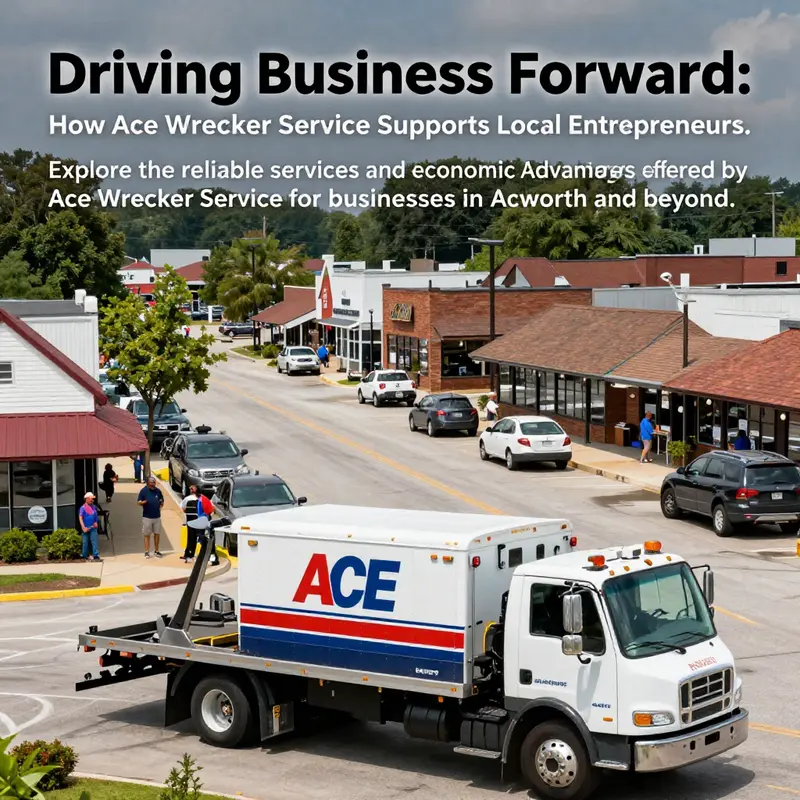
In the interconnected landscape of business operations, reliable service partners are essential. Ace Wrecker Service, LLC has been a pivotal resource for local businesses since 1990, providing towing and roadside assistance in Acworth, Georgia. With a fleet of nine diverse tow trucks equipped to meet a variety of automotive recovery challenges, Ace Wrecker Service has built a reputation for reliability and efficiency in emergency situations. This article explores the company’s comprehensive service offerings tailored for businesses and its economic impact on the local community. Through this exploration, business owners will gain insights into how Ace Wrecker Service can enhance operational efficiency and contribute to community growth.
Beyond Tow Trucks: The Full Spectrum of Ace Wrecker Service in Acworth
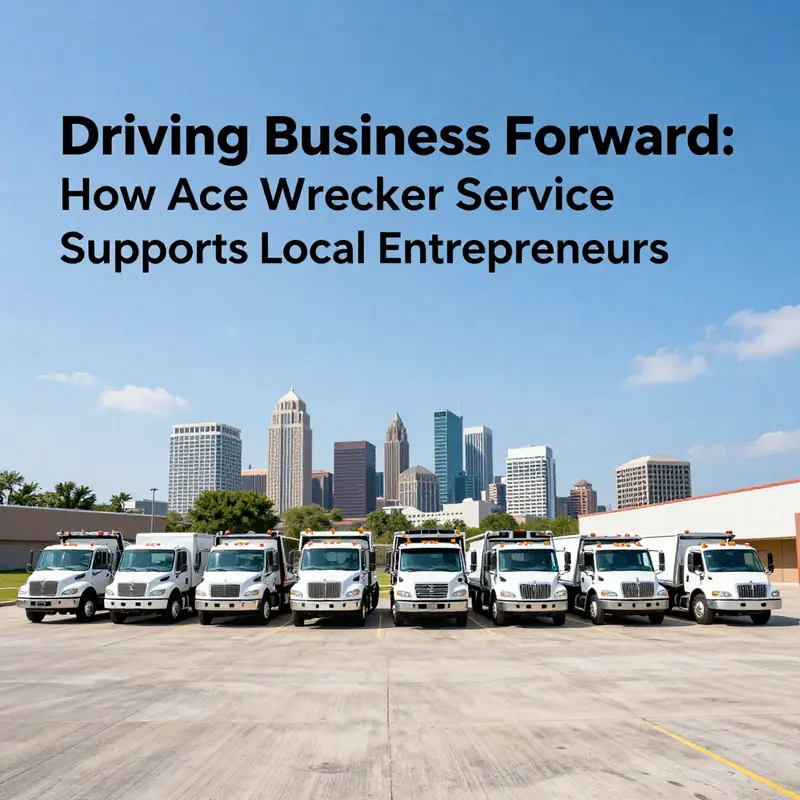
Ace Wrecker Service, LLC sits at the intersection of reliability and momentum in Acworth, Georgia. Since 1990, a time when the region’s roads have grown busier and the pressures of a busy community demanded a dependable response, the company has built a fleet and a mindset that prioritize speed, safety, and steadiness. The nine tow trucks that populate its operation are not just machines; they are extensions of a promise to be where help is needed, ready to mobilize at a moment’s notice. The geographic span they cover—Acworth and the surrounding areas—reflects a deliberate approach to coverage, ensuring that the familiar routes of local drivers and the less-traveled byways of business fleets are met with a consistent standard of care. This is about more than removing a disabled vehicle; it is about restoring forward momentum with minimal disruption to everyday life.
The breadth of Ace Wrecker Service’s offerings speaks to a robust understanding of what people need when they face vehicle trouble. Light and heavy-duty towing are not two separate worlds here but two ends of a single continuum designed to accommodate a wide spectrum of customers. For everyday drivers, that means quick, professional handling of cars and motorcycles, with attention to the nuances of smaller vehicles where delicate tie-downs, careful wheel pairing, and controlled movement matter as much as speed. For local businesses and commercial clients, the same fleet must translate into dependable recovery of larger machines and assets. Trucks and buses present different challenges, from weight distribution to winching dynamics, and Ace Wrecker Service has built a capacity to address these realities without compromising safety or timeliness. This dual capability—the agility of light-duty service and the resilience required for heavy-duty tasks—ensures that no call is beyond reach and no vehicle category is ignored.
Recovery operations sit at the heart of the company’s service philosophy. When a vehicle is stuck, overturned, or positioned in a precarious spot, the recovery team brings more than brute force. They bring an organized method that blends scenario assessment, risk management, and precise execution. Complex recoveries demand more than horsepower; they require a careful plan, a well-anchored set of equipment, and coordinated teamwork. The aim is to extract the vehicle with minimal additional damage, preserve the integrity of the surrounding environment, and set the stage for a safe, efficient return to service. In practice, that translates to trained operators who understand weight distribution, slope dynamics, and the best angles for pulling or winching. It means having the right tools at the ready—rescue winches, stabilizing equipment, and proven attachment points that respect the vehicle’s structure. The result is a process that is as much about safeguarding lives as it is about moving metal from one place to another, a balance that speaks to the company’s long-standing presence in the area.
Roadside assistance is the other side of the coin. The promise of 24/7 service is not merely a slogan but a lifeline, a means to reduce the anxiety that comes with a roadside emergency. Jump starts, lockouts, fuel delivery, tire changes, and basic on-site repairs fall within the scope of assistance that drivers can count on at any hour. The availability around the clock is especially meaningful in a region where weather, traffic, and long hours can transform a simple hiccup into a time-consuming ordeal. The essence of this offering is not simply the act of arriving quickly; it is the assurance that help arrives with the right tools, the right parts, and a technician who can assess the situation on the spot and determine the safest, most effective course of action. In moments of stress, that level of readiness translates into tangible relief, a sense that the road remains navigable even when a vehicle cannot traverse it on its own power.
Specialized equipment transport expands the repertoire beyond moving a vehicle and into the realm of logistics support for businesses and individuals with needs that extend into equipment and assets. When a generator, a large construction asset, or a delicate piece of machinery must be relocated, the emphasis shifts to precision, stability, and protection. This facet of Ace Wrecker Service’s work requires a different mindset from routine towing: it demands planning, careful securing, and a transport plan that considers road restrictions, load limits, and the potential for environmental exposure during transit. The team approaches these tasks with the same professional discipline that guides their daily towing calls, applying a method that minimizes downtime for the client while maximizing the safety of people and payloads alike. The ability to offer such a service speaks to a broader commitment—to be a single, reliable partner capable of managing both the immediacy of a breakdown and the longer arc of asset mobility that commercial clients depend on.
The strength of this comprehensive offering rests on a professional team and a modern operational backbone. The technicians are not just drivers; they are problem solvers trained to interpret a scene, identify complicating factors, and adapt in real time. The trucks, while a visible symbol of capability, are part of a system that includes dispatch coordination, route optimization, and safety protocols that guide every lift, every secure hook, and every careful strap tension. In a region like Acworth, where road conditions and traffic patterns vary with the seasons, the ability to respond with a well-coordinated crew becomes a competitive differentiator. It is this synthesis of personnel, equipment, and process that turns a potentially stressful incident into a navigable experience, a transformation that keeps the community moving and supports the local economy by ensuring that service interruptions are as brief as possible.
The impact of Ace Wrecker Service is not measured solely by response time or the number of calls fulfilled in a day. It is felt in the quiet confidence of business owners who rely on dependable asset movement to meet production schedules, or in the relief a family experiences when a roadside mishap is resolved without incident. The company’s sustained operation since 1990 is a testament to a steady, earned trust within the local network. With nine tow trucks at the ready, the operation manages not only the tangible logistics of moving vehicles but also the intangible logistics of reliability, accountability, and clear communication with customers who often face unfamiliar or high-stress situations. This isn’t about flash or spectacle; it’s about consistency, professionalism, and a clear, practical understanding of what a community needs when wheels are temporarily out of alignment.
For readers who want to explore the breadth of services in more detail, the organization’s online presence offers a coherent map of capabilities. The internal resource that captures the spirit of this expansive service model—while also hinting at the ways in which the company frames its value to clients—provides a concrete touchpoint for prospective customers and partners. The linking of this chapter to the broader service ecosystem is not just a matter of navigation; it is a reflection of how the company positions itself as a comprehensive solution rather than a collection of disparate tasks. In that sense, the full spectrum of offerings is not simply a catalog; it is a coordinated strategy designed to minimize downtime, optimize safety, and sustain momentum for people and businesses during periods of disruption. The result is a dependable partner that can be counted on to move things forward when the road feels blocked.
Users and readers who want to see how these strengths translate into everyday practice can explore a dedicated resource that distills the company’s service philosophy into a practical framework. The internal page linked here, ACE Towing Service, offers a concise sense of how the fleet, personnel, and procedures come together to deliver reliable outcomes across a range of scenarios. It is a reminder that the true measure of a comprehensive service offering is not merely the ability to perform a task, but the ability to tailor solutions to real-world constraints, from tight city streets to the wider, busier corridors that connect communities. Ace Wrecker Service has built its reputation on that alignment—on turning complex problems into straightforward, safe, and timely resolutions that let people keep moving toward their destinations.
In sum, the Acworth operation embodies a philosophy of readiness and a practical commitment to service. The combination of light- and heavy-duty towing, robust recovery capabilities, around-the-clock roadside assistance, and specialized equipment transport creates a holistic network of solutions that empower drivers and businesses alike. This is the kind of comprehensive capacity that keeps a community resilient: a fleet that can respond to a bump in the night, a multi-vehicle collision on a busy corridor, or a crucial piece of machinery that must reach a job site on a precise schedule. It is, in every sense, a chapter of reliability written in steel, rubber, and coordinated action, a narrative that continues to unfold as the region grows and the roads evolve.
External resource: MapQuest listing for Ace Wrecker Service in Acworth, GA provides an external reference point for the company’s local footprint and service footprint. https://www.mapquest.com/business/ace-wrecker-service-acworth-ga
How a Local Towing Fleet Drives Economic Stability in Acworth and Beyond
Ace Wrecker Service acts as more than a roadside responder; it is an economic stabilizer for Acworth and the surrounding region. Operating a nine-truck fleet with capabilities that range from emergency towing and roadside assistance to heavy-duty recovery, the company keeps people, goods, and services moving. That mobility matters: when vehicles are rescued quickly and professionally, traffic clears, delivery schedules remain intact, and local businesses lose fewer hours to unexpected disruptions. The rhythm of commerce in a suburban community depends on those small, decisive interventions.
The most visible economic contribution is employment. Ace Wrecker Service hires tow operators, technicians, dispatchers, and administrative staff. These roles are skilled and locally based, supplying steady wages and benefits to families. A reliable local employer reduces commuter leakage and anchors spending in town. Employees purchase goods, pay local taxes, and participate in community life; their economic activity ripples outward. Beyond direct jobs, the company’s demand for parts, maintenance supplies, and specialized equipment creates business for garages, parts suppliers, and service contractors. Money spent to keep a fleet on the road circulates through local supply chains, supporting vendors who, in turn, hire and buy locally.
Fleet investment itself is a form of economic development. Tow trucks are capital-intensive assets that require regular maintenance, upgrades, and specialized tooling. When a company maintains nine trucks, it creates predictable, ongoing work for local mechanics, fabricators, and tire shops. Heavy-duty recovery equipment and replacement parts may be sourced regionally when possible, and that sourcing decision matters: choosing local suppliers retains more economic value within the community than outsourcing. In towns like Acworth, where small businesses form the backbone of the economy, the difference between buying locally and importing services can determine whether a vendor thrives or struggles.
The company’s operations also reduce hidden costs for other businesses. Consider a delivery company whose truck is stalled on a busy route. Rapid removal and recovery minimize delay penalties, prevent missed appointments, and lower the risk of cascading logistical failures. For businesses that rely on tight scheduling—construction firms, couriers, perishable goods distributors—the presence of a dependable local towing service translates into fewer lost contracts and steadier revenue streams. Similarly, retail districts benefit when accident-related congestion is cleared promptly; customers return sooner, and storefronts avoid revenue dips tied to traffic snarls.
Public safety and municipal efficiency are closely tied to the towing sector’s economic value. When first responders can rely on a professional towing partner, traffic incidents are resolved more quickly, emergency personnel are freed to resume other duties, and the municipality avoids prolonged road closures that can hinder commerce. This operational synergy reduces the indirect economic burden of crashes and breakdowns. Cities and counties that foster cooperative relationships with local towing firms gain a more resilient infrastructure for handling disruptions, lowering the municipal cost of incident management.
Another important but less obvious contribution is skills development. Tow operators learn technical competencies—vehicle stabilization, winch operation, heavy-load rigging—that translate into broader opportunities in transportation and logistics. Mechanics and technicians maintain complex hydraulic and electrical systems. Administrative teams develop dispatch and customer-service expertise. Those human-capital investments strengthen the regional labor pool, making the area more attractive to employers who need experienced technicians and logistics personnel.
There is also a multiplier effect tied to reliability and reputation. A town known for dependable emergency services becomes more attractive to new businesses and residents. Developers and employers factor in the quality of local services when choosing where to invest. A robust towing company helps create that perception of reliability. When delivery fleets and commuters have confidence they’ll be assisted quickly, peak operating efficiency is higher and risk premiums are lower. That intangible stability can influence site selection decisions and long-term investments in the region.
Revenue and tax contributions from a midsize towing operation further strengthen municipal budgets. Licensing fees, business taxes, and payroll taxes fund public services—from road maintenance to emergency response capacity. These funds are part of a circle: improved roads and safer intersections reduce incident rates, which in turn lowers the frequency and severity of the towing interventions required. The company’s presence contributes to a fiscal ecosystem where private activity helps underwrite public goods.
During severe weather and regional emergencies, the strategic value of a towing fleet becomes pronounced. Flooding, multi-vehicle pileups, and storm-damaged infrastructure demand a scalable recovery response. A locally based operator with heavy-duty capacity can be the difference between quick restoration of traffic and prolonged gridlock. That capacity supports economic continuity during crises, helping businesses reopen sooner and reducing the long-term economic drag of disasters.
Community engagement rounds out the economic picture. When a company participates in local events, partners with civic organizations, or supports safety campaigns, it invests social capital that pays economic dividends. Those relationships foster trust and communication with local authorities and residents, smoothing coordination when incidents occur. Community-minded businesses often receive reciprocal loyalty from local customers and officials, which reinforces business stability and encourages sustainable growth.
Measuring this impact requires both quantitative and qualitative lenses. Quantitatively, analysts can track job counts, payroll totals, local procurement spending, and tax contributions. They can model avoided costs—delays prevented, accidents mitigated, and municipal response savings—using data from traffic authorities and incident logs. Qualitatively, surveys and interviews with local businesses, emergency services, and residents reveal perceived reliability, reputational effects, and community value. When combined, these measures present a fuller picture of how a single towing operation contributes to regional resilience.
Operational choices magnify local benefit. Prioritizing local sourcing, maintaining fair wages, and investing in staff training deepen the economic footprint. Collaborating with municipal planners and emergency managers aligns the company’s capacity with community needs. Transparent pricing and clear communication build trust and help businesses plan around potential disruptions. These practices convert a routine service into a strategic asset for local economic health.
Finally, the company’s leadership and civic presence matter. Local ownership and decision-making ensure that profits and priorities stay aligned with community needs. When leaders reinvest in the region, they strengthen the very market they serve. That reciprocal relationship—where economic benefit flows both ways—is central to understanding the company’s role in Acworth’s economic fabric.
For readers seeking a practical resource about regional towing practices and services, consult this overview of towing service approaches and capacities: towing service resources.
For more about the company’s leadership and community role, see the owner’s professional profile: https://www.linkedin.com/in/lauratayloracewrecker/
Final thoughts
Ace Wrecker Service, with its rich history and extensive service offerings, plays a crucial role in supporting local businesses in Acworth and its surrounding areas. Their commitment to timely and reliable towing solutions not only facilitates day-to-day operations for entrepreneurs but also contributes positively to the economic landscape of the region. By choosing Ace Wrecker Service, business owners can ensure efficient handling of vehicle emergencies, leading to minimized downtime and enhanced customer satisfaction. In an era where prompt and effective service can dictate business success, Ace Wrecker stands as a trusted partner in the journey toward operational excellence.