
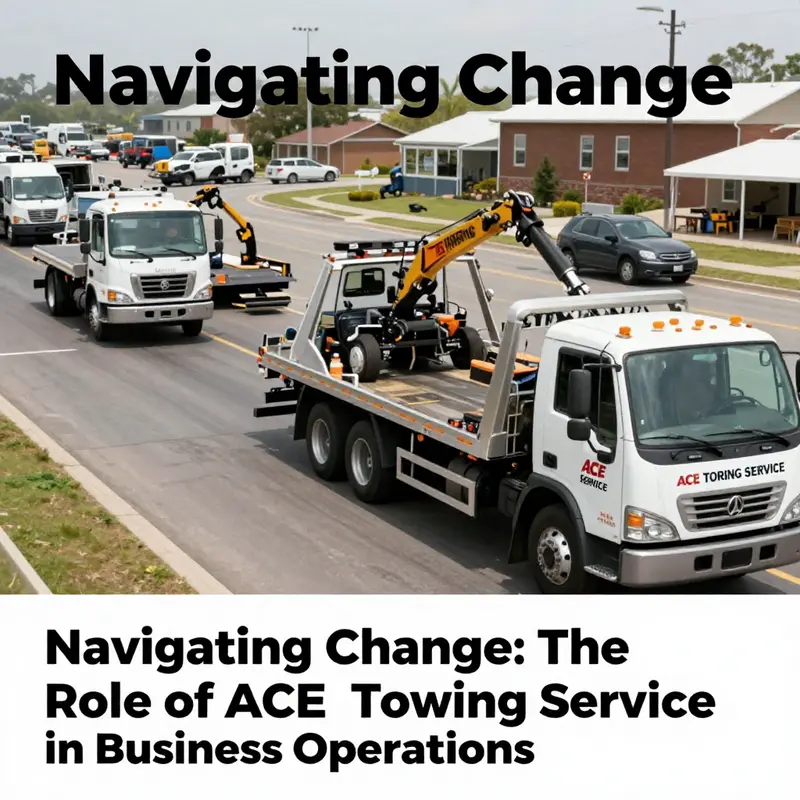
As businesses expand and industries grow, the reliance on consistent support systems becomes paramount. ACE Towing Service in Suzhou, Jiangsu Province, exemplifies how a dedicated towing and roadside assistance provider can influence operational efficiency for various industries. This article explores the inner workings of ACE Towing Service, outlining their operational strategies and the vital role they play in local roadside assistance. The insights presented will equip business owners with a comprehensive understanding of ACE’s service model and its impact on their operations.
Riding the Rescue: Inside the Tactics, Tools, and Trust of ACE Towing Service
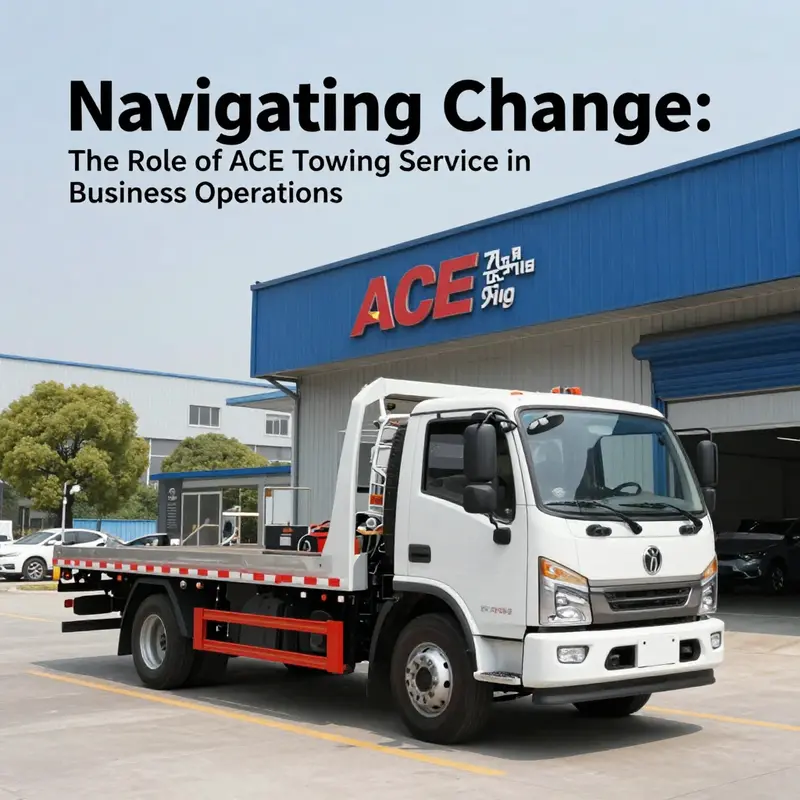
In the pressure of a flat tire, a locked car, or a stalled engine, roadside help becomes more than a service. It becomes a promise that the road will be navigable again. ACE Towing Service stands as a useful case study of how a modern towing and roadside assistance provider operates when demand spikes and stakes are high. The El Cajon operation at 1354 N Magnolia Ave, in the San Diego area, embodies a profile of the contemporary tow truck company that many readers encounter during emergencies. This chapter uses ACE Towing Service as a lens to understand not just what is offered, but how an organization coordinates people, equipment, and information to keep vehicles moving and people safe. The juxtaposition with another regional ACE listing in Asia, part of a broader ecosystem of towing and roadside provision, invites readers to see common patterns across markets while acknowledging local constraints and customer expectations.
The core offerings are straightforward yet essential. Vehicle towing remains the anchor service, moving cars, trucks, and occasionally heavier equipment from one location to another with care and minimal risk. But the kit of routine tasks extends beyond towing alone. Lockout assistance helps drivers regain access to their vehicles when keys stay inside, which happens when a moment of distraction turns into a compact crisis. Battery jump-starts bring energy back to lifeless batteries, a common stoppage that leaves drivers stranded in office lots, residential driveways, or shopping centers. Fuel delivery covers the gap when a driver misjudges fuel, or a distant pump becomes unreachable due to traffic or weather. Each service is a thread in a larger safety net that roadside providers knit across towns and cities. The aim is not just to reach a customer but to restore autonomy quickly and safely. These capabilities, though simple in isolation, combine into what customers experience as a seamless rescue from the edge of disruption.
From an operations perspective, ACE Towing Service demonstrates how a local enterprise adapts to a dense region where roads are crowded and time is a scarce resource. Their footprint in the San Diego area reflects a balance between local dispatch efficiency and the flexibility to respond further when demand rises. A defining feature is the equipment mix. The standard tow truck can be augmented by a car towing crane mounted on the vehicle, a tool that expands the repertoire of possible takedowns. The crane enables access to vehicles that lie in tight spaces, such as alleys, garages, or curbside parking where a traditional pulling hook might fail. It also allows technicians to switch modes quickly, moving from a straightforward tow to a more nuanced recovery approach if the vehicle is jammed behind an obstacle or nestled under a structure. The crane reduces drag and, correspondingly, can improve fuel efficiency during a tow by enabling more controlled, staged maneuvers rather than brute lifting or dragging. In practical terms, this translates to faster service, fewer secondary damages, and a smoother experience for the driver who just wants to get back behind the wheel.
The operational tapestry grows more intricate when one considers safety at the point of contact. ACE Towing Service emphasizes training and adherence to safety protocols that protect both people and property. Technicians routinely review weight limits, securement procedures, and vehicle compatibility for the particular road environment they face. The presence of a crane does not erase risk; it reframes risk into an actionable sequence: assess the space, select the appropriate rigging, and execute controlled movements with a clear line of sight and constant communication with the dispatcher. These safeguards are not incidental but foundational to the company’s reputation for reliability. A driver who understands that the crew prioritizes safety as much as speed is more likely to trust the process, to remain patient, and to cooperate with on-site instructions. The net effect is a service model that minimizes the chance of collateral damage and maximizes customer confidence during a vulnerable moment.
The reputation of such a service is shaped not only by the gear but by the cadence of communication. ACE Towing Service has cultivated a presence on review platforms like Yelp, where customers repeatedly highlight prompt response times and dependable support. When a vehicle is stranded, the clock can feel like a heavy weight; a quick acknowledgement, an estimated arrival time, and a clear plan of action can transform a tense moment into a manageable one. In a market saturated with providers, this consistency around communication becomes a differentiator, one rooted in practical training and a culture of accountability. Customers benefit from knowing that dispatchers, drivers, and shop personnel work from a shared playbook, a set of expectations about safety, etiquette, and operational transparency. The result is a bond of trust born not from grand promises but from reliable, repeatable behavior under pressure. The Yelp voice often serves as a corroborating memory for new customers, signaling that the team has repeatedly delivered when it mattered most.
Geography and scope further shape how ACE Towing Service positions itself within the broader landscape of the industry. The El Cajon chapter is grounded in local, on-demand service, oriented toward immediate needs within a defined radius. Yet the service model aligns with broader industry patterns: a focus on quick mobilization, a fleet capable of multiple tasks, and a safety-first approach that protects the customer’s vehicle as well as the tow crew. Some services describe their reach as restricted to the 48 contiguous United States, prioritizing local and regional towing operations rather than nationwide cross-country transports. The practical implication is that a customer sees value in having a trusted partner who knows the local streets and traffic patterns, can anticipate common roadside bottlenecks, and can adapt the strategy on the fly as road conditions change. Even when the geographic footprint is anchored in a single city or county, the underlying principles—speed, safety, and service density—resonate with customers in many places.
The narrative deepens when one considers how a local business connects with a broader ecosystem of information and partnerships. Dispatch software, GPS tracking, and real-time communication links enable the crew to confirm arrivals, relay ETA updates, and triage a developing situation before it becomes a bigger disruption. The digital layer is not a substitute for field competence but a force multiplier, ensuring that the right truck and the right tool come to the scene promptly. In turn, insurers and fleet operators appreciate predictability and traceability, which reduces friction for claims and cross-service collaboration. The human element remains central, yet the technology layer provides the scaffolding that supports faster, safer, and more transparent service. The result is a roadside experience that feels less like a random halt and more like a coordinated rescue operation that respects the driver’s time and the vehicle’s integrity.
The address on Magnolia Avenue anchors a broader network of relationships that extend into the local business community and beyond. A well-placed base in a busy, mixed-use corridor signals readiness to serve both individual drivers and partner fleets, including local businesses that rely on dependable after-hours coverage or rapid response for commercial tasks. The daily rhythm of a tow operation—dispatch, mobilization, travel, on-site service, and return to base—unfolds with a choreography that becomes almost second nature to the crew. When one considers the logistical demand of a busy urban center, it becomes clear that a successful towing operation is as much about cadence and culture as it is about torque and hydraulics. The crew must remain courteous, while the equipment must perform consistently under shifting weather, traffic, and lighting conditions. It is this blend—human presence, technical skill, and organizational discipline—that underpins ACE Towing Service’s ability to sustain service quality across a fluctuating urban environment.
The broader significance of ACE Towing Service in the context of the overarching article topic becomes clear. A towing and roadside assistance provider is more than a last-mile solution to a problem. It is a frontline partner that keeps people moving and property protected under conditions that range from routine to unpredictable. The combination of essential services—towing, lockout, battery jump-start, and fuel delivery—with specialized equipment and a customer-centric reputation demonstrates how a single provider can become a reliable touchpoint for individuals and businesses alike. The crane-equipped towing capability represents an evolution in the craft, enabling technicians to handle a wider array of scenarios with care. And the emphasis on rapid response and clear communication offers a blueprint for how the service industry can meet customer needs in moments that test nerves and patience. When a driver calls for help, they are rarely looking for a miracle. They want competence, courtesy, and a clear plan. ACE Towing Service, in its San Diego region, shows how those elements come together in practical, workable form. The narrative also invites readers to consider how regional operators adapt to the specific rhythms of their locales while maintaining the universal standards that define professional roadside assistance.
External resource: http://www.acetowinginc.com
Reliability in Motion: ACE Towing Service and the Transformation of Local Roadside Assistance
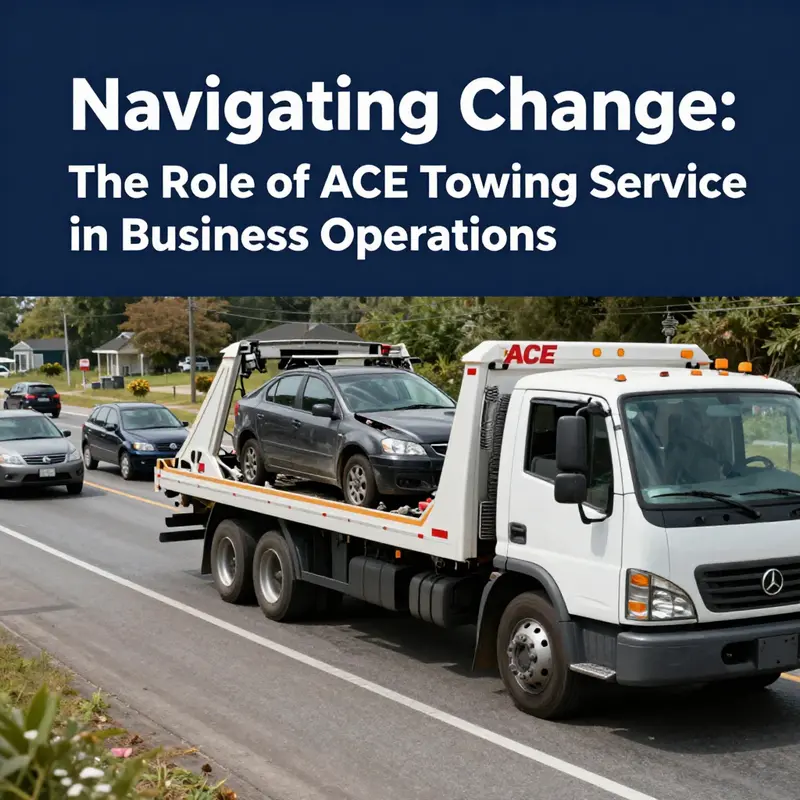
On many Chinese roads, a breakdown is not just a moment of inconvenience but a hinge in the daily cadence of commerce and commute. In Suzhou’s bustling industrial park, ACE Towing Service has built more than a tow truck fleet. It has crafted a responsive, customer-centric approach to roadside assistance that seeks to shorten the moment of helplessness and restore momentum. The company emphasizes routine access to aid during standard business hours, which aligns with workers, fleets, and residents who depend on predictable service windows. The strategic positioning at No. 8 Huizhi Street situates the operation within a growing network of manufacturers, logistics providers, and service firms, where rapid assistance can prevent small delays from cascading into costly downtime. The combination of a dedicated contact channel and a professional dispatch mindset helps convert fear into confidence and turns a roadside incident into a manageable event rather than a crisis.
Rapid response times are the linchpin of ACE’s value proposition. When a driver calls, a dispatch operator taps into a live map of nearby units, reading distance, traffic, and road conditions. The result is not a generic ETA but a focused math of speed and reliability. This process matters, because the length of a wait directly shapes a driver’s willingness to trust the service again. In the context of local road networks, where congestion and detours can compound delays, a few minutes saved at the roadside ripple through the day, reducing stress for the individual and productivity losses for a business that depends on timely mobility. The company’s emphasis on speed does not trade safety for speed. Trained drivers follow safety protocols, secure loads properly, and communicate clearly with customers about what to expect. In many cases, the operator can provide a realistic timeline for the call that helps customers plan the next steps, whether it is waiting with a friend, arranging alternative transport, or coordinating a fleet’s next delivery window.
Behind each fast response is a cadre of professionals who bring both skill and judgment to complex roadside tasks. ACE emphasizes selection criteria that go beyond a clean license. Technicians receive ongoing training in vehicle recovery, load handling, hazard recognition, and customer interaction. Their professionalism is not just about performing a tow; it is about de-escalating a stressful situation. A driver who arrives on the scene with calm, precise explanations and a transparent plan tends to convert a one-time call into a trusted, repeat relationship. The staff’s demeanor matters as much as their technical competence because roadside assistance remains a service that sits at the boundary between logistics and safety. Clear communication about what happens next, what equipment is used, and how the fee is calculated reduces confusion and positions the company as a partner rather than a last resort.
Pricing transparency is a quiet engine of trust. The company lays out the typical components of a service bill: base dispatch, mileages, after-hours surcharges, and any ancillary charges for additional equipment or winching. By presenting these elements at the outset, the service reduces the surprise factor that often accompanies roadside assistance. In many markets, customers recount stories of opaque pricing that left them feeling nickel-and-dimed after the fact. ACE Towing’s approach is to discuss the likely cost range honestly and to provide a final price only after the service parameters are clear. This openness helps customers feel in control of the process and less likely to dispute the final charge. Even when the actual scenario diverges from the expected, the company’s policy of documenting the work and sharing the price rationale with the customer tends to preserve goodwill and fosters long-term trust that extends into future needs, whether for personal drivers or corporate fleets.
ACE operates within a broader ecosystem. Its coordination with insurance providers, automobile clubs, and fleet managers mirrors a growing trend in roadside assistance: services are no longer standalone repairs but nodes in a network. In this network, a single incident can trigger multiple touchpoints—a claim with an insurer, a notification to a fleet supervisor, a referral to a preferred garage, and a bill that passes through a collateral chain. This systemic integration reduces friction for the end user. Rather than calling a separate number for each organization involved, the customer experiences a single, coherent flow from problem to resolution. The workflow echoes concepts discussed in literature on Roadside Assistance Service Aggregators, which describe how interconnected services can improve reliability, reduce wait times, and better align expectations across stakeholders. The practical upshot is that a well-integrated towing operator helps ensure that the entire roadside experience remains smooth, predictable, and traceable.
When demand grows, the challenge is to keep service levels high. ACE’s operational model demonstrates how a SIMT—Single-Instance Multi-Tenancy—approach can support scalability without sacrificing quality. In practical terms, this means one dispatch system can serve multiple clients or partner programs at once, while keeping each client’s service rules or pricing in place. SIMT supports resource flexibility; it allows the company to route specific calls to different parts of its fleet or to partner fleets during peak times while maintaining standardized safety and service protocols. The ability to support multiple clients without creating resource contention is essential in a market where the volume of roadside incidents can vary with weather, traffic patterns, and economic activity. A SIMT approach also reduces redundancy and administrative overhead, because shared platforms and shared data models unify reporting, invoicing, and performance metrics across diverse clients. The net effect is a smoother, more predictable service experience that can adapt to evolving demands without a dip in reliability.
Beyond the mechanics of service, ACE’s approach contributes to the social fabric of the locality. Roadside emergencies are not isolated events; they intersect with daily routines, business operations, and family responsibilities. A reliable supplier of roadside assistance becomes part of the community’s infrastructure, offering reassurance during moments of vulnerability. For drivers, the promise of rapid response, professional handling, and transparent pricing translates into higher confidence when choosing to travel specific corridors or industrial routes. For employers who rely on fleets, dependable towing and roadside support translate into measurable reductions in downtime and improved safety records. When a service is anchored in a well-located facility, close to the industrial clusters that power a region’s economy, it gains visibility and accessibility that further enhances its role as a dependable service partner. The combination of a strong physical base, skilled staff, and a culture of clear communication builds trust that extends beyond individual calls to influence the way people think about roadside service as a whole.
Location matters as much as process. The address at No. 8 Huizhi Street situates ACE within a corridor of logistics and manufacturing activity. From this position, the company can draw on nearby roadways, maintenance facilities, and partner businesses to support fast, coordinated responses. The operational backbone includes not only the drivers on the road but the dispatch center that schedules and tracks each incident. The value of this arrangement is not merely the sum of speed and skill; it lies in the predictability it fosters. When a customer knows that a service window exists, and a professional will be waiting with the right equipment, the risk of an extended problem decreases. In practical terms, this means fewer frustrated drivers, fewer missed deliveries, and less time wasted idling on the roadside. The transporter’s influence extends into streets, workplaces, and homes, where timely assistance can prevent broader disruption, echoing the broader mission of networked roadside services to minimize downtime in complex urban ecosystems.
As traffic patterns evolve and vehicle technology advances, the landscape of roadside assistance will continue to morph. The integration discipline championed by ACE—clear communication, transparent pricing, professional staff, and cross-institution collaboration—offers a blueprint for future providers. The company’s model demonstrates the enduring value of reliability, a quality that cannot be manufactured on the spot but must be cultivated through disciplined operations, continuous training, and a customer-centric ethos. In a world where a single breakdown can derail a day, the ability to deliver dependable service within a defined window matters as much as the service itself. The combination of robust internal processes and external partnerships creates a resilient system, one that not only solves a problem but also preserves the sense of momentum that business and daily life require. The foundation of this approach—consistent performance across a network of stakeholders—ensures that local roadside assistance remains a trusted pillar of mobility, capable of supporting both individual needs and corporate logistics.
For readers seeking theoretical grounding, the discussion aligns with the Roadside Assistance Service Aggregator framework, which describes how interconnected service networks can improve outcomes for drivers, insurers, and fleets. The practical, on-the-ground experience of ACE Towing Service offers a case study that translates those concepts into tangible improvements in wait times, customer trust, and operational efficiency. The emphasis on SIMT, modular capacity, and cross-sector collaboration illustrates how local providers can scale responsibly, preserving service quality as demand grows. To explore the broader scholarly context, you can consult authoritative research such as the ScienceDirect topic on Roadside Assistance Service Aggregator.
For a direct inquiry, you can visit the Contact Towing Company page to connect with ACE Towing Service and learn how its networked approach could support your personal or corporate needs.
External resource: https://www.sciencedirect.com/science/article/pii/B978012813645800006
Final thoughts
ACE Towing Service stands as a cornerstone for many businesses, enhancing their operational capabilities through reliable towing and roadside assistance. Their strategic location and dedicated service ethic not only ensure swift response times but also contribute to the overall safety and efficiency of the local transportation network. Business owners can greatly benefit from understanding the significance of such services and nurturing relationships with providers like ACE, ensuring they have the support necessary to address any unexpected challenges.