
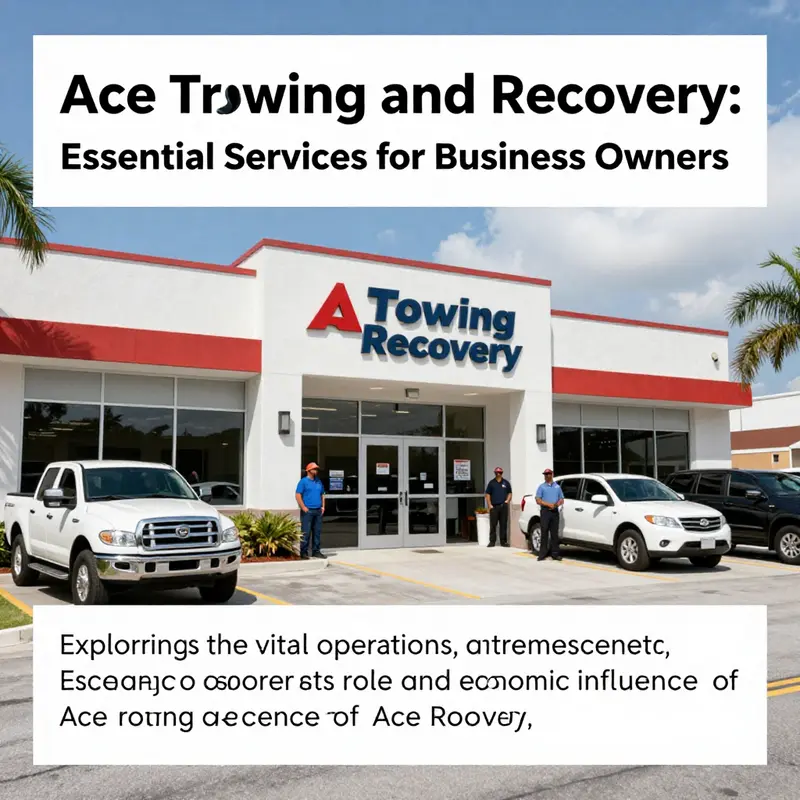
Understanding the value of reliable towing services is vital for business owners, especially those with fleets. Ace Towing and Recovery, located in Miami, Florida, excels in providing essential towing and recovery services, ensuring vehicles are efficiently managed in emergency and non-emergency situations. This article delves into the company’s operations and services, highlighting its crucial role in emergency responses and the broader economic impact it has on the community. Each chapter sheds light on how Ace Towing and Recovery caters to the unique needs of businesses, ensuring safety and efficiency.
Tow Lines and Trust: Inside the Operations and Services of Ace Towing and Recovery in Miami
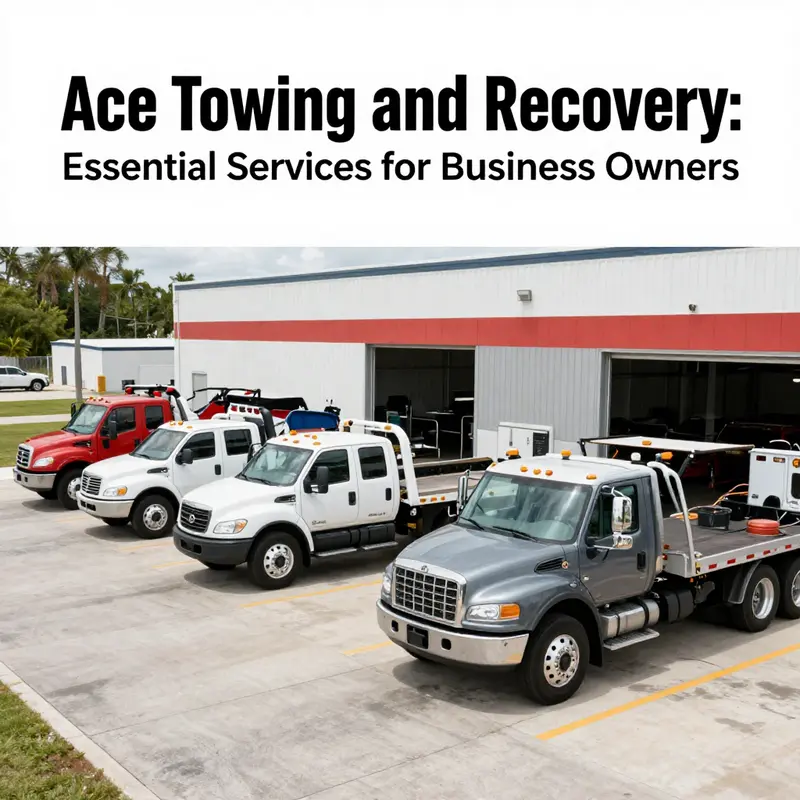
Ace Towing and Recovery sits at 13348 SW 62nd Ter, Miami, FL 33183, a local reference point for drivers who suddenly find themselves stalled on sunlit boulevards or stranded along the city’s busy arteries. In a city where traffic rhythms mix with tropical weather and shifting light, a reliable towing partner can feel as essential as a spare tire. The Miami operation embodies a straightforward yet powerful aim: to move people and their vehicles out of harm’s way with speed, care, and clear communication. What begins as a call on a phone often translates into a coordinated, human-centered response that respects both the urgency of the moment and the property in need of help. In such a setting, the value of dependable service extends beyond the mechanical act of hauling; it becomes reassurance. A vehicle, after all, is not merely metal and mirrors; it represents time, commitments, and plans that the towing team helps preserve when life slows down unexpectedly. The local focus in Miami grounds the company in a particular landscape—dense neighborhoods, waterfront roads, and corridors that demand precise maneuvering—while the core service set remains consistently broad. The business model recognizes that customers arrive with a spectrum of needs, from a quick battery jump to a full transport across town, and it arranges its resources to meet those needs without hesitation. The address, the fleet, and the dispatch structure all point toward one outcome: getting customers back on their way as safely and efficiently as possible, with their confidence intact.
The breadth of Ace Towing and Recovery’s services unfolds in a sequence that begins the moment a call is placed. Emergency roadside assistance forms the frontline, addressing a range of common roadside troubles. A flat tire on a windy expressway, a dead battery on a humid afternoon, or a door that won’t open after a long workday—all of these scenarios demand more than a wrench and a tow truck; they require a calm, informed decision-maker who conveys options and sets expectations. The responders are trained to diagnose quickly, explain the plan, and execute with care, so the customer feels guided rather than simply rescued. Even when a non-tow solution is possible—like a battery jump or a service that provides access with minimal intrusion—the goal remains the same: minimize disruption and restore mobility with dignity.
When the vehicle cannot be driven, the operations shift toward towing as a structured service rather than a last resort. In Miami’s traffic climate, where lane changes happen in a heartbeat and roadside spaces can be scarce, the ability to reposition a car safely becomes a logistical art. The team emphasizes secure handling, appropriate equipment selection, and meticulous attention to detail during loading, securing, and transport. The result is more than a successful transfer from street to tow bed; it is a controlled, careful process that protects the vehicle’s exterior and internal systems, preserving resale value and the owner’s peace of mind. For customers who prefer specific destinations—be it a dealership, a repair shop, or a preferred storage lot—the crew coordinates with dispatch to honor those choices and to keep the handoff seamless.
A distinctly specialized facet of Ace Towing and Recovery’s repertoire is auto recovery—the delicate work of extracting a vehicle from hazardous positions like ditches or uneven embankments. Recovery operations require more than strength; they call for technique, patience, and a clear line of sight to safety. Technicians deploy winch systems and recovery gear with a measured, safety-first approach, ensuring that each move stabilizes the vehicle and minimizes risk to nearby people and property. This careful practice often complements transportation services and impound-related movements, where the vehicle must be relocated under regulatory guidelines or to a secured space. The overarching philosophy is consistent: there is a responsibility to protect the customer’s asset while delivering a transparent, trustworthy experience.
Transportation services expand the scope beyond immediate extraction. The need to relocate a vehicle for storage, for repairs, or for regulatory compliance is common, and Ace Towing and Recovery treats it as a core capability rather than a postscript. Coordination with facilities, scheduling with customers, and a clear record of movement reassure vehicle owners that their asset is treated with respect and accountability. In an urban environment like Miami, where the daily tempo can be relentless, that reliability translates into less downtime, steadier plans, and fewer surprises. The company’s emphasis on clear communication—before, during, and after a service—helps demystify an experience that can feel overwhelming and uncertain.
Underlying all of these services is a steadfast commitment to quality. Prompt response times matter because a minute’s delay can cascade into lost work hours, missed appointments, or prolonged frustration. Safety matters because it protects people on the road and the technicians who work on it. The dispatch process is designed to balance speed with accuracy—assigning the right equipment, the right crew, and the right route to adapt to current conditions and traffic patterns. In Miami’s dynamic urban geography, the ability to read the road and anticipate changing weather conditions becomes part of the professional craft. The technicians’ professionalism—trained, background-checked, and continually educated—turns a potentially stressful encounter into a straightforward solution. People experience this not only in the final outcome but in the quiet competence with which every step unfolds.
What makes Ace Towing and Recovery resonate is not a single package of services, but a dependable pattern of delivery that customers can rely on when plans derail. The company’s local footprint in Miami anchors its identity, while its service philosophy remains transferable to any scenario where a vehicle needs assistance. It is this blend of locality and universality—of understanding a neighborhood street and applying a standardized, safety-first approach to every call—that sustains trust and fosters repeat engagement. For readers seeking a concise snapshot of how such a service operates, the firm’s service page offers a lucid outline of offerings and process, presented in a way that respects the customer’s time and dignity: ACE Towing Service.
In sum, the operations and services of Ace Towing and Recovery reflect a disciplined attentiveness to the realities of modern road travel in a vibrant city. It is a practice built on quick decisions and careful handling, on clear communication and reliable execution, and on a shared commitment to helping people regain momentum after a setback. The Miami chapter of this broader towing landscape demonstrates how a straightforward service can embody a dependable partner’s ethos—one that treats every stranded driver as a neighbor, every tow as a trusted exchange, and every recovery as an opportunity to restore movement and confidence. For those who want to explore the broader scope of the company’s work, the external resource provides a wider window into the field and its evolving practices: https://www.acetowingandrecovery.com
Rolling Towlines, Clearing Roads: Ace Towing and Recovery’s Mastery of Emergency Response in Miami
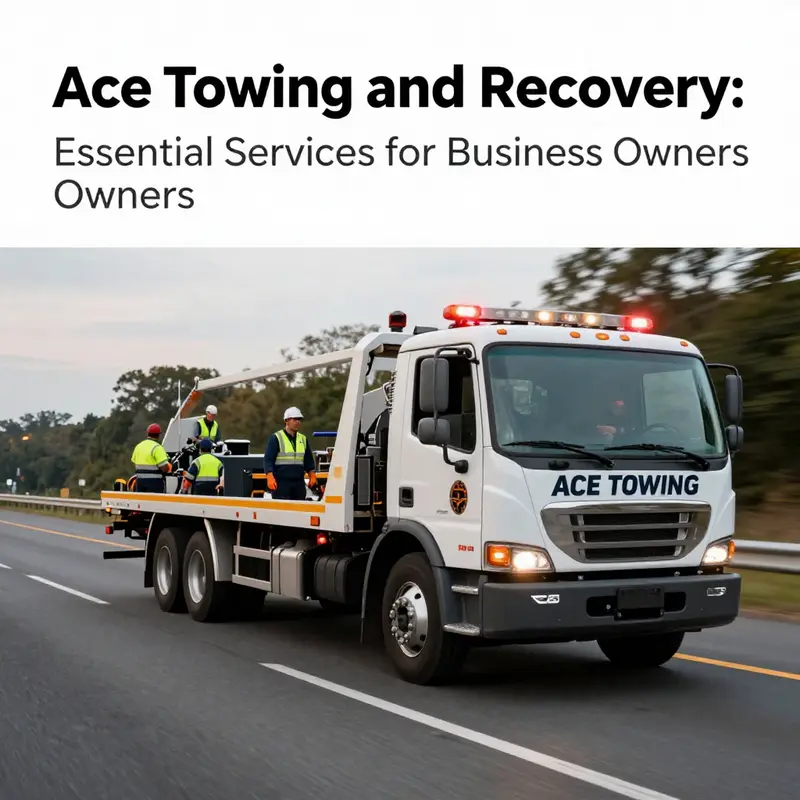
In the dense tempo of Florida’s traffic, Ace Towing and Recovery operates as a steadfast partner to public safety and mobility. The Miami-based firm, located at 13348 SW 62nd Ter, Miami, FL 33183, stands at the intersection of reliability, skill, and rapid response. When incidents disrupt flow, whether due to collisions, disabled vehicles, or sudden breakdowns, this operation becomes a critical thread in the safety fabric. The value of such a service lies not just in moving a car from a shoulder, but in preserving life, reducing the risk of secondary crashes, and restoring access for emergency responders. For motorists and first responders alike, timing meets capability and expertise with equipment that matters as much as willingness to help.
The essence of emergency response in towing rests on the equipment that can move a damaged or disabled vehicle without adding danger. The rollback tow truck stands out as a particularly effective tool. Unlike the traditional hook-and-chain approach, which drags vehicles at awkward angles and can cause additional damage, the rollback uses a hydraulically operated tilting bed. The bed lowers to ground level, forming a ramp that allows a vehicle to be loaded with minimal lift and secure restraint. This design reduces jolts, minimizes debris in lanes, and creates a stable path for recovery teams to secure a vehicle even on uneven or soft surfaces. In incident scenes with uneven shoulder space, steep slopes, or residual fluids, the rollback’s controlled approach minimizes risk to personnel and the towed vehicle. When responders need to clear a lane, a smooth, predictable lift can shave minutes from a response, translating into safer highways and more effective operations.
The practical impact extends beyond the immediate recovery. Clearer roadways mean faster access for fire, EMS, and police units, reducing the probability of further injuries and exposure to bystanders. For the operator, the rollback system is a strategic choice that enables rapid, repeatable recoveries in varied weather and lighting conditions common in Miami. Emphasis on safe handling translates into fewer damaged vehicles and less risk to the towing crew. In the arc of an incident, this yields fewer secondary collisions and a smoother return to normal traffic. The effect is operational and reputational: a service known for dependable gear, trained personnel, and attentive on-scene management earns trust from dispatchers, insurers, and customers.
From a business perspective, reliable rollback equipment signals a strategic stance that fleets aim to achieve without compromising safety or financial prudence. The balance between cost and capability is delicate; however, affordable, dependable rollback units offer a compelling ROI. They deliver strong uptime, versatile performance, and safer load control, which lowers the likelihood of vehicle damage that can erode margins. For independent contractors and fleet operators alike, investing in this class of equipment is prudent when the goal is to maximize return on investment while delivering high-quality service in emergencies. The Miami operation, with its address and service footprint, demonstrates how a focused regional business can be indispensable in a city where lanes converge and accident rates reflect the rhythm of daily life. The careful calibration of crew training, loading procedures, and safety checks enhances the reliability of these responses, ensuring that the equipment’s promise translates into real, tangible safety gains on the ground.
In the broader market, naming conventions matter. There exists another entity with a similar name—ACE TOWING & RECOVERY LLC—that operates in a different state and currently appears inactive. This distinction underscores how important local knowledge and direct exposure to the road network are to effective emergency response operations. A Miami-based firm benefits from intimate familiarity with surrounding roadways, typical traffic patterns, weather-related considerations, and the specific demands placed on responders in that urban corridor. That local acuity translates into faster scene assessment, better routing, and more efficient equipment deployment. It remains a reminder that, for the public, the value embedded in a single address—where a tow partner stands ready to answer a call—can be a vital difference when seconds count.
For readers exploring how these dynamics play out across the network of service providers, one might look at ACE Towing Service, accessible here, which exemplifies how a regional network can coordinate with on-scene teams to deliver timely, dependable assistance that aligns with the needs of motorists and responders alike. This kind of integration—where a local unit is part of a wider framework—highlights the importance of consistent equipment standards, crew training, and disciplined safety practices. As with any field that sits at the convergence of speed, safety, and responsibility, the quality of the relationship between the operator, the dispatcher, and the customer shapes outcomes as much as the gear itself. The scene is not static; it evolves with traffic volumes, construction, and weather, and so the best-equipped teams continually refine their loading procedures, route planning, and on-scene communication to stay ahead of unfolding events.
External resource: ACE Towing Service link: https://acex-towing.com/ace-towing-service/
Towlines that Move Communities: The Economic Footprint of Ace Towing and Recovery in Local Mobility
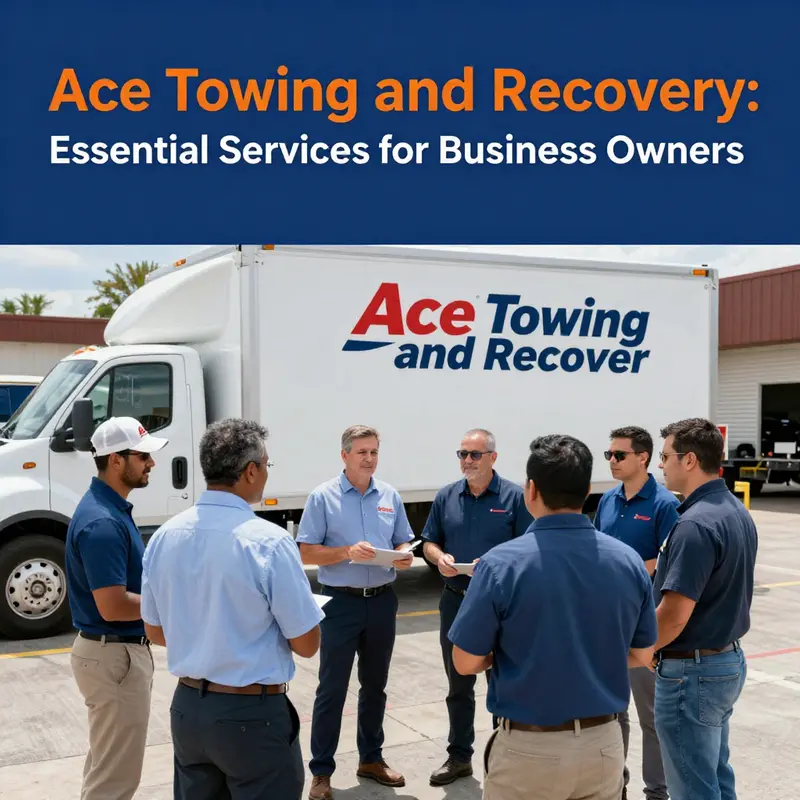
When a vehicle stalls on a sunlit Miami street or a rain-slick corridor in the Beltline corridor of the city, the immediate relief often arrives in the same form—a tow truck sliding into view, a practiced operator assessing safety, and a plan to restore movement. Ace Towing and Recovery, anchored at a Miami address that points to a locally rooted operation, represents more than a roadside service. It is a coordinated node within a broader urban economy, a business that translates quick response into durable economic activity. The service this company provides touches households, small businesses, and the fleets that keep the city’s rhythms moving—from groceries to ride shares, from school buses to local courier routes. In that sense, the company’s work is a quiet engine of mobility and economic stability, shaping outcomes long after the immediate tow has cleared the road.
To understand the economic impact of Ace Towing and Recovery, it helps to situate it within the expanding realm of roadside assistance. Globally, the industry is projected to reach a substantial scale, with North America as a leading region due to dense urban networks and high urban vehicle ownership. The projection of a multi‑billion-dollar market by the 2030s translates into a steady need for trained personnel, maintenance of a diverse fleet, and partnerships that connect insurers, repair shops, and law enforcement. In this ecosystem, Ace’s Miami operation contributes not only by delivering fast service but by anchoring a network of relationships that improve the reliability of transportation. When a breakdown occurs, a chain reaction can be prevented: a delivery is kept on schedule, a shift isn’t lost, and a family’s daily routine remains intact. The local chapter of this broader industry thus becomes a microcosm of how transportation-driven services underwrite social and economic continuity.
The economic contributions of Ace Towing and Recovery extend beyond the immediate service transaction. Directly, the company creates jobs—from drivers and dispatchers to shop l technicians who collaborate with local repair facilities. In a city whose economy blends tourism, trade, and residential life, even a modest workforce in a towing operation translates into incomes that circulate into neighborhoods through housing, groceries, and service spending. Indirectly, the company supports a web of local businesses that depend on dependable towing and emergency road services. Auto repair shops, for instance, benefit from a reliable intake channel for vehicles needing transport and later repair; insurers rely on predictable claim processing that includes swift vehicle recovery; and municipal agencies rely on consistent incident management to keep traffic moving. This triad of partnerships strengthens the community’s service capacity and resilience, especially during peak travel seasons or after storms, when the demand for immediate response peaks.
The ripple effects extend into infrastructure and regional development. A fleet that can reach a stalled car quickly reduces downtime for commercial fleets involved in last‑mile deliveries, manufacturing supply lines, and service industries that require tight scheduling. When vehicles return to the road promptly, traffic flows more smoothly, reducing congestion and, over time, minimizing wear on roads through fewer standstills and idling. These efficiencies feed back into the local economy by improving productivity, lowering operational costs for businesses reliant on mobile assets, and reinforcing the city’s attractiveness to investors who value reliable transportation networks. The Miami area, with its mix of dense urban cores and busy road corridors, benefits from such reliability, reinforcing its status as a logistics and commerce hub where every successful tow supports a chain of economic activities that extends far beyond the roadside.
From a Fleet Operations perspective, the capacity to blend wheel-lift and boom (winch) systems in tow trucks translates into faster, safer recoveries. This level of operational efficiency is not purely technical; it has tangible economic consequences. Faster service means reduced downtime for individual drivers and commercial fleets alike, which in turn translates into more predictable scheduling, improved customer satisfaction, and a lower likelihood of secondary delays. For a city that relies on timely arrivals—whether it is a school route, a hospital shuttle, or a fleet of service vehicles—these efficiencies contribute to a healthier business climate. The case for investing in a capable local tow operation becomes evident when stakeholders consider how mobility underpins everything from daily commutes to emergency response planning. The result is a multiplier effect: each on‑demand recovery supports a broader pattern of economic activity that keeps Miami’s streets functional and its neighborhoods connected.
The existence of multiple similarly named entities in the region and beyond highlights a practical reality for consumers and policymakers. Distinct entities with comparable branding can differ markedly in status, service area, and regulatory compliance. In the broader national landscape, one related entity with a similar name has limited activity in another state; another is listed but inactive. This reality underscores how important it is to connect a local operation to the community it serves—the specific Ace Towing and Recovery operating out of Miami is the one that directly affects local drivers and businesses. It also reminds readers that the economic contributions discussed here are contingent on local licenses, trained staff, and a stable customer base that value reliability and safety in roadside work. The local focus ensures that the Miami team remains responsive to community needs, contributing to safety on the streets while supporting the city’s economic network.
In the end, the economic footprint of Ace Towing and Recovery lies not only in the hands that lift a vehicle but in the broader ecosystem that such hands support. Every tow carves a small but meaningful path through the city’s hustle: it preserves the flow of commerce, it sustains the livelihoods of workers, and it sustains the trust that keeps drivers moving with confidence. The company’s role, therefore, is twofold. It first serves as a dependable critical service, ensuring that mobility is restored quickly when disruptions occur. It second acts as a facilitator of economic activity by enabling trusted collaborations among repair shops, insurers, and municipal partners. The Miami operation, grounded in a specific address and community, epitomizes how a localized service can contribute to regional resilience and prosperity while remaining a vital thread in the national tapestry of roadside support. For readers seeking a concrete example of service delivery, a representative page such as Ace Towing Service can illustrate how the company positions itself to respond, coordinate, and deliver value in everyday scenarios that keep people moving. Ace Towing Service
As a window into governance and public perception of the sector, observers can consult external profiles that track corporate activity and service history. For a broader sense of the company’s public presence and market footprint, see the external resource describing Ace Towing and Recovery Inc. on RocketReach. This external reference helps connect the local story to a wider corporate map and demonstrates how market participants track and evaluate roadside operators across regions. The combination of local service presence and national visibility highlights how Ace Towing and Recovery threads its way through both street-level realities and strategic economic networks, reinforcing mobility as a core driver of urban vitality.
External resource: https://www.rocketreach.co/ace-towing-and-recovery-inc
Final thoughts
The role of Ace Towing and Recovery extends beyond basic towing services. The company is integral to emergency response efforts and plays a significant role in supporting the local economy. By ensuring that businesses can rely on prompt, efficient towing and recovery solutions, Ace Towing and Recovery helps safeguard assets and minimize disruptions. Business owners should view this service as a crucial partner, ready to respond to the unpredictable nature of vehicle maintenance and emergencies.