
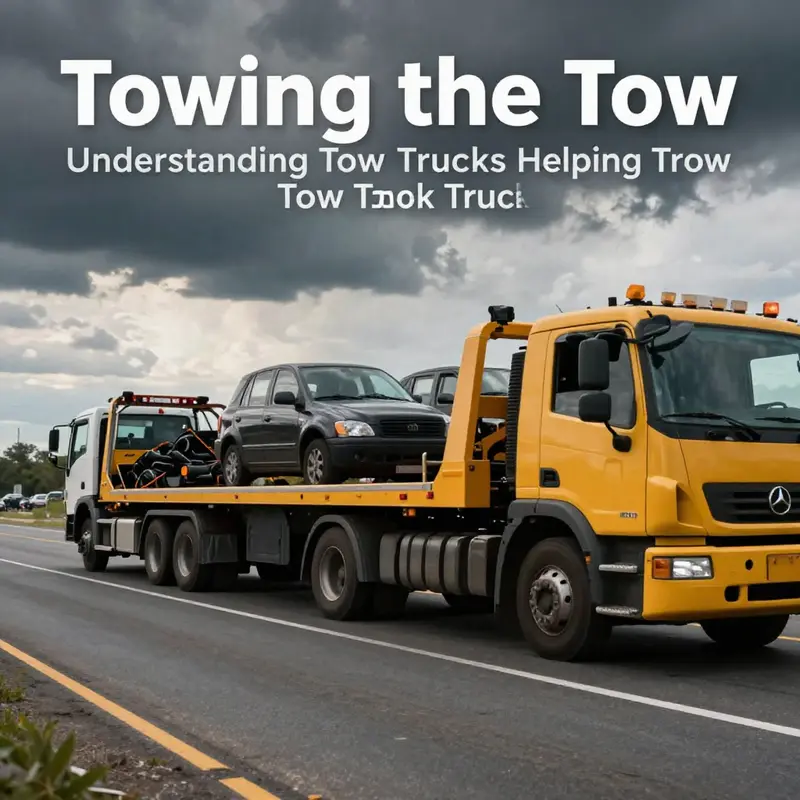
Across the landscape of roadside assistance, tow trucks serve vital functions. One unusual yet noteworthy operation involves a tow truck towing another tow truck. This situation typically arises under specific circumstances such as vehicle breakdowns, recovery operations, or transportation needs. Delving into these scenarios, business owners can better appreciate the complexities of towing logistics and the importance of adhering to safety protocols. The following chapters will systematically explore operational scenarios that necessitate one tow truck towing another, followed by critical technical and safety considerations that ensure efficient and safe operations.
Relays on the Road: The Practical Realities of a Tow Truck Towing Another Tow Truck
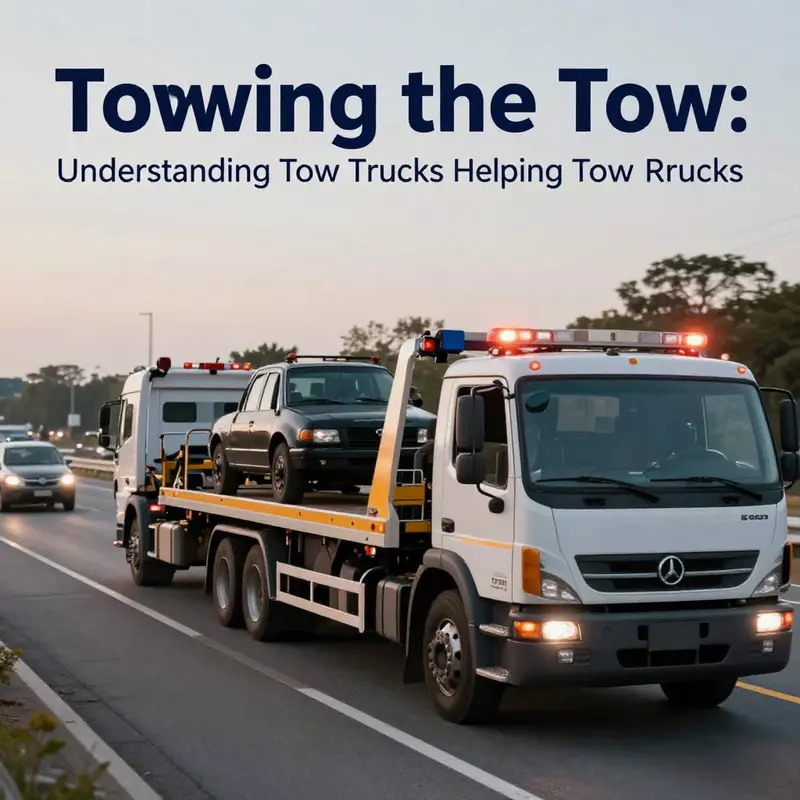
On the surface, the image of a tow truck towing another tow truck can feel almost like a logistics curiosity. Yet in the world of vehicle recovery and fleet mobility, it is a highly purposeful operation born of circumstance, timing, and the need to maximize uptime. A tow truck towing a tow truck is not simply a display of brute force; it is a carefully planned, safety-conscious procedure that requires precise equipment, trained operators, and a clear plan for movement through traffic or across a depot. In many ways it represents the intersection of recovery, transportation, and fleet logistics, where the goal is to return a non-operational unit to service as quickly and safely as possible while minimizing risk to other road users and to the units involved. The chapter that follows unfolds these scenarios in a way that treats the act not as a spectacle but as a technical responsibility with real consequences for safety, efficiency, and the continuity of service networks that many people rely on every day.
Recovery work often centers on the first problem: a disabled tow truck that cannot perform its assigned tasks. A breakdown, mechanical failure, or collision can render a service unit immobile in a road lane, a gas station, or a staging area. The most common response is to dispatch a larger, more capable tow truck—frequently a low bed or a rollback—that can come to the stranded unit’s location, load it safely, and transport it to a repair facility or a depot. This is not about moving one vehicle with another in a casual sense; it is about recreating mobility for an entire operation by removing a non-functional element from the scene and placing it into an environment where it can be fixed, inspected, and brought back into service. The choice of equipment matters here. A low bed, with its hydraulically adjustable platform, provides a stable loading surface that minimizes the risk of ground contact with sensitive components and suspension. It is particularly favored when the disabled unit has an undercarriage that would be compromised by traditional hook-and-chain methods or by dragging. The bed’s ability to be lowered and then raised for loading reduces the likelihood of shocks to axles, frames, or alignment, preserving future performance once the unit leaves the roadside. The rollback, meanwhile, offers a more compact solution that can maneuver into tighter spaces, then slide the disabled unit onto a flatbed for transport. Each method has its trade-offs, but both embody the same principle: the target is not to drag or lift in a way that invites additional damage, but to cradle the disabled machine in a controlled, engineered environment that respects its geometry and load path.
Beyond recovery from a roadside failure, there is a more deliberate logistical dimension to the scene: transporting a tow truck from one job site or depot to another. A vehicle that cannot legally operate on public roads, whether due to damage, registration issues, or regulatory constraints, still carries value as a tool for the fleet. Instead of leaving it sidelined, operators may arrange for a service unit to move it to a shop, a different depot, or a central maintenance facility. In such cases, the operation resembles a short-haul freight task more than a classic roadside rescue. A procedural rhythm emerges: a quick on-site assessment, a determination of the most appropriate loading method, a plan for securing and tying down the disabled unit, and a route that respects weight limits, road restrictions, and the capabilities of the transport unit. The goal is to minimize downtime and keep the fleet productive when other jobs are waiting. The equipment choice—low bed versus rollback—again becomes central, because it dictates how easily the non-operational vehicle can be loaded without disrupting its alignment or internal components and how securely it can be secured for transit across city streets or longer highway segments.
The technical side of these operations often centers on a few core elements that make or break the job. The low bed, with its hydraulically operated platform, enables loading onto a straight, level surface. This is a simple, elegant solution for vehicles with a low ground clearance or a fragile undercarriage, as it avoids the risk of contact with the vehicle’s suspension or drivetrain that could occur if the unit were pulled or dragged onto a flatbed. The rollback offers a different approach: it provides a tilt-and-slide system that allows the disabled unit to be rolled up onto the carrier before the bed is returned to a level position for secure transport. Both approaches rely on precise winching and anchoring techniques to keep the units from shifting during transit. The equipment must be kept in excellent condition, with regular checks of hydraulics, winches, chains, and straps. The operators must be adept at selecting the right tie-down patterns, applying the correct distribution of tension, and accounting for the weight distribution of both the donor and recipient units. The discipline of securing loads—ensuring that every anchor point is engaged, every strap is taught, and every chain is free of wear—translates directly into safer road travel and reduced risk to bystanders and other motorists.
Safety considerations sit at the heart of every decision in this work. Even a routine load transfer can become dangerous if sightlines are blocked, if traffic momentum is not properly managed, or if weather conditions degrade traction. A trained operator will survey the scene, identify potential hazards, and coordinate with spotters or traffic controllers when needed. They will ensure that the loading zone is free of obstacles and that the disabled unit is stabilized before any movement begins. A clear plan is communicated to all crew members, with a fallback approach if conditions suddenly change. PPE, high-visibility clothing, and appropriate lighting become essential when operations occur at night or in adverse weather. These elements form a safety net that protects not only the personnel involved but also other road users who navigate around the operation. The procedural emphasis here is obvious: avoid improvisation, minimize exposure time, and verify that every step is followed according to standards before the first inch of movement is made. In practice, the job rarely looks dramatic; it looks deliberate, methodical, and measured—an operational choreography that emphasizes control, predictability, and accountability.
From an operational viewpoint, the decision to tow a tow truck is as much about fleet logistics as it is about roadside care. A single non-operational unit can ripple through a service network, introducing delays and requiring reallocation of resources. A well-coordinated tow operation reduces downtime by ensuring rapid access to a repair facility or suitable depot. It can also preserve the integrity of the damaged unit, enabling technicians to inspect and diagnose issues without the added complications of a makeshift repair on the roadside. Fleet managers weigh the cost of towing against the cost of downtime, the urgency of the customer’s needs, and the long-term reliability of the fleet. When the recovery or transport is performed smoothly, it exemplifies the efficiency of modern roadside assistance and the asset-management discipline that keeps service levels high across urban and suburban areas.
To illustrate how these factors come together in real life, imagine a highway scene where a larger, heavy-duty low bed has to recover a mobile service unit that has suffered a mechanical failure just outside a toll plaza. The plan is straightforward but not simplistic: approach per the safest route, establish a perch for the bed that will not interfere with lanes, and begin a controlled loading sequence. The operator uses the low bed’s tilt function to align with the disabled unit, then lowers the deck to ground level and secures the unit with a careful choreography of straps and chains. On a parallel track, a second crew member monitors road angles, ensures the loading zone remains clear, and communicates with traffic control about closures or lane shifts. The operation proceeds in measured steps, with checks at each stage to confirm that nothing has loosened and that weight is distributed evenly. Once loaded, the truck is strapped down with redundancy—extra straps at critical anchor points—to guard against unexpected movement. The bed is then raised, the vehicle is stabilized, and the transport begins under a clear plan for route and timing. The entire process, though composed of multiple technical steps, reads as a single, cohesive mission: restore mobility to a non-operational unit while maintaining safety and service continuity for the wider network.
Within this ecosystem of recovery and transport, inter-agency and inter-fleet collaboration often come into play. A tow operator might coordinate with a dispatch center to confirm that the road is clear, or with a partner company that can provide additional equipment for a complex extraction. In dense urban environments, where parking, curb space, and traffic density pose constant challenges, the ability to dispatch the right asset promptly becomes a competitive differentiator. The discipline extends beyond the mechanical and into the realm of process hygiene: pre-briefings, post-task inspections, and documentation that records the load weight, securing method, and any anomalies encountered during the lift. This documentation supports ongoing maintenance decisions and informs future training so that every recovery operation becomes a little safer and a little more efficient than the last.
As the practice evolves, the industry continues to emphasize the idea that towing a tow truck is not a novelty but a specialized service with its own body of knowledge. The discussion around the versus-transport choices—low bed versus rollback, ground-level loading versus wheel-lift methods, and the appropriate use of stowage for non-roadworthy vehicles—reflects a mature understanding of how best to preserve assets while ensuring rapid response. The resources that guide these decisions, including industry primers on load safety and vehicle handling, highlight how specialized equipment is designed to reduce the likelihood of damage to either vehicle during loading, transport, and unloading. In other words, the operation is a textbook example of how modern tow fleets translate physical capability into practical reliability, and how a skilled crew turns potential downtime into a controlled, recoverable event rather than a crisis.
For readers exploring the practical and regional dimensions of these tasks, consider how urban centers with dense traffic patterns shape the approach to towing a tow truck. In metropolitan districts where roadways are narrow, where on-street parking is a premium, and where regulatory requirements govern vehicle movement, the decision to move a non-operational unit often hinges on the ability to coordinate with local authorities and to select routes that minimize disruption. In places where service demands are high, the value of swift, precise recovery and transport becomes even more pronounced. The operational logic is universal—safety first, asset protection, and speed of return to service—but the tactics adapt to geography, infrastructure, and the tempo of daily life in each community. This adaptive approach ensures that the act of towing a tow truck remains a reliable pillar of service delivery rather than a bottleneck in a busy operation.
For readers seeking a deeper dive into the design and performance features that enable these operations, the Low Bed Tow Truck Guide offers a detailed look at how beds are engineered to accommodate vehicles with low ground clearance and sensitive undercarriage components. This guide explains why eliminating lift and drag through proper platform design helps protect both the recovery vehicle and the unit being transported. It is a useful resource for professionals who want to understand the foundational rationale behind the equipment choices that shape recovery and transport missions. External resources like this contribute to a broader understanding of how the industry maintains safety, efficiency, and reliability when one tow truck has to move another.
Internal link note: for regional practice and deployment considerations in the capital area, see Washington DC tow truck service. This resource provides insight into how operators balance rapid response with local regulations and traffic realities in a major urban center. The link is included here to illustrate how a single scenario can reflect broader principles of safety, timing, and asset utilization across different markets.
External resource: Low Bed Tow Truck Guide: Performance, Technical Features, and Applications Explained. This guide details how low bed tow trucks are specifically designed for the safe transport of vehicles with low ground clearance—including other tow trucks—by eliminating the need to lift or drag them. It serves as a practical companion to the operational narrative presented here, offering technical context for the equipment choices discussed throughout the chapter.
In sum, the act of a tow truck towing another tow truck is not a spectacle but a carefully engineered operation. It rests on the interplay of correct equipment, disciplined procedure, and the ability to manage risk while maintaining fleet continuity. The scenarios—recovery of a disabled unit and logistical transport between sites—reveal a dimension of towing work that is as much about strategic asset management as it is about roadside assistance. Every successful response reinforces a simple truth: when a fleet depends on mobility, every non-operational vehicle is a stake in the ground that must be moved with care, skill, and coordination. The end result is not merely a recovered truck, but the preservation of service capacity and the maintenance of trust in the system that so many people rely on, every day.
When Heavy Meets Heavy: The Science and Safety of a Tow Truck Towing Another Tow Truck
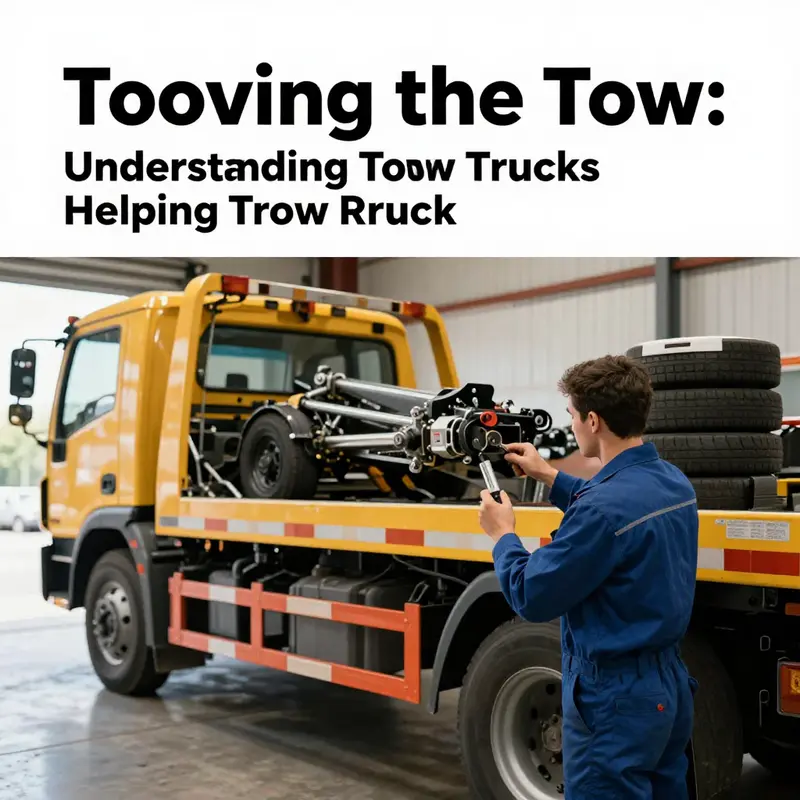
A tow truck towing another tow truck presents a rare, technically demanding sight on any road or recovery site. It is not simply a matter of chaining two heavy machines together and rolling forward. It demands careful evaluation of weight, balance, momentum, and road surface, plus a precise orchestration of equipment, crew training, and regulatory compliance. The scenario arises in several practical contexts: a disabled heavy-duty unit needing relocation to a repair facility, a recovery operation where one recovery vehicle must be moved after an incident, or a strategic transport where a non-functional unit is ferried to a depot for assessment. In each case, the operation tests the limits of the towing system and the operator’s ability to manage a load that is often nearly as heavy as the towing vehicle’s own rating. This chapter delves into the mechanics and safety discipline that underpin such recoveries, examining how engineers and operators translate broad standards into concrete, real-world practice on the highway or in heavy-vehicle yards.
Technical considerations begin with weight distribution and load capacity. A towing vehicle that must haul a disabled tow truck must meet strict criteria for gross vehicle mass and towing capacity, ensuring the combined weight of the two vehicles does not exceed the system’s safe working envelope. This is not a simple sum, because the geometry of the load changes how weight is transmitted to axles, tires, and suspension, and how braking force is applied during acceleration, deceleration, or an emergency stop. In many jurisdictions and operating guidelines, the towing vehicle’s rated capacity must exceed the weight of the towed unit by a margin that accommodates dynamic effects, such as slope, wind, and transient braking. For operators, this translates into a careful pre-tow calculation that accounts for the towed vehicle’s front and rear axle loads, its center of gravity, and how much of the weight will be transferred to the towing vehicle’s front axle via the hitch or coupling, and how much remains on the rear. In heavier operations, multi-axle rotator tow trucks—boasting six, eight, or even ten axles—offer superior load distribution, reducing stress on road surfaces and damping the peak loads that could otherwise degrade tire health or suspension components. The sophistication of these machines makes them well-suited to complex recoveries, but they also demand meticulous maintenance and test runs to ensure all payload pathways perform within designed tolerances before a live road scenario.
Towing methodology is another pivotal dimension. Among the options, rollback flatbed systems provide notable advantages when the towed unit is a tow truck whose condition could complicate a chain or hook approach. A rollback bed allows the towed machine to be loaded onto an adjustable platform with controlled tilt and height, minimizing undercarriage contact, scraping, or bottoming out. This approach is particularly important when the disabled unit retains some drivetrain or suspension integrity but cannot bear weight on its own. By elevating and sliding the towed unit into a stable position, the operator can achieve a secure, even contact pattern that keeps the vehicle aligned with the bed and prevents lateral movement during transport. In contrast, hook-and-chain methods introduce greater risk of jacking and unwanted stress concentrations on vulnerable components, especially when the towed vehicle’s tires or wheels are not perfectly aligned or when the tow truck’s chassis is loaded near its limits. For high-value or specialist heavy trucks, a rollback solution also reduces the chance of drivetrain damage during loading and unloading, preserving critical components that might otherwise complicate post-recovery repair work.
Integrated tow mechanisms, including the so-called Hudani or other chassis-integrated systems, can deliver additional strength and control for recovering or transporting heavy towed units. These integrated solutions merge the tow mechanism with the chassis, producing a stiffer, more stable rig that can manage unusual angles, uneven ground, or drivetrain irregularities in the disabled unit. When the towed truck has compromised steering, brakes, or suspension, the integrated approach offers a predictable path of movement, with fewer movable joints that could fail under load. The trade-off is complexity and cost, but the payoff is improved stability, greater control during the transfer of weight, and a safer ride for both rigs through curves and over imperfections in the road surface. Operators who use integrated systems also benefit from enhanced coordination with on-board safety and monitoring functions that can alert the crew to any unexpected shifts in weight distribution or braking behavior in real time.
Remote control and real-time safety monitoring have emerged as valuable capabilities in modern heavy recovery. Some advanced tow fleets deploy remotes that allow the operator to observe brake pressure, hydraulic movement, winch tension, and bed position from a vantage point distant from the immediate work zone. This capability reduces exposure to highway traffic or industrial hazards while enabling prompt intervention should an anomaly arise. In practice, remote monitoring supports two critical safeguards: early detection of improper load transfer and a rapid, controlled response to a sudden change in road conditions, such as a slick patch or an unexpected incline. Even with such technology, the human factor remains central. The operator must interpret data streams, anticipate how the system will respond to braking or steering actions, and maintain an unbroken mental model of the entire rig’s center of gravity as work progresses.
Safety considerations form the backbone of any operation that involves towing a tow truck. Operator training is not a formality; it is a prerequisite for safe execution. The dynamics of weight transfer, the potential for jackknife events, and the risk of destabilizing either vehicle demand a deep understanding of traction, braking, and emergency response protocols. Practitioners emphasize stepwise checks: confirm the load path and securement points, verify that all tie-downs and locking mechanisms are appropriate and fully engaged, and perform a controlled, incremental test to observe how the combined mass behaves under light acceleration and braking before committing to highway transit. Any shift in load, whether caused by a soft shoulder, crosswind, or an uneven surface, can produce dramatic changes in steering torque and braking response. Training also encompasses communication protocols with other road users, signaling conventions, and the use of warning devices to make the operation conspicuous to surrounding traffic.
Vehicle securing stands as a vital, non-negotiable practice. The towed unit must be fastened with redundant securing methods, leveraging high-strength straps, locking mechanisms, and protective padding where contact points risk damage. In some settings, wheel chocks and additional restraints are used to minimize tire movement while the bed traverses irregular ground or a slope. The aim is to achieve a stable, locked configuration that prevents any shift in weight distribution during motion, including when the operator must take evasive action or navigate a curve at speed. The securing process extends to the tow truck itself; all cautionary steps must ensure that the primary vehicle remains within its structural limits, with no undue strain placed on the hitch, bed hinges, or hydraulic systems. In practice, crews choreograph a sequence of securing steps that becomes almost second nature, but the first few times on a given job must be approached with scrupulous attention to detail and constant verification.
Road and environmental conditions demand constant assessment. A larger footprint and a heavier rig reduce maneuverability, making urban and suburban corridors more challenging than open highways. The operator must weigh factors such as road grade, surface texture, weather, and the presence of other vehicles. Winds, rain, or ice can magnify the risk of shift or loss of control when towing two heavy machines. Moreover, the operator must consider the potential for road surface damage due to the weight distribution, particularly on bridges, culverts, and resurfaced sections that may have limited load-bearing capacity. In some cases, local regulations require specific signage, lighting, or escort vehicles for heavy recoveries. Compliance and signage are not cosmetic requirements; they are essential for ensuring that the operation is visible, predictable, and within legal parameters. Vehicles involved in such operations must display appropriate warning devices, and crews must verify that all equipment—cranes, winches, ramps, and restraints—is maintained in working condition.
Compliance and licensing are not sterile appendages but practical guardrails that prevent improper use of heavy recovery equipment. Operators must ensure that their vehicles are licensed for the specific mode of operation and that any required permits or local rules are observed. Regular maintenance cycles for the entire system—including the bed, the winches, the hydraulics, and the control systems—help prevent late-stage failures that could escalate a routine tow into a hazardous incident. The emphasis here is not only on avoiding catastrophic failure but also on minimizing wear and tear on both vehicles, enabling longer service life and safer, more predictable performance on future recoveries. The goal is to establish a standard operating rhythm that balances the urgency of a recovery with the discipline of a controlled, safe process.
In the field, practitioners learn to translate these principles into a practical sequence that begins long before the first cable is attached. It starts with a pre-tow briefing, a precise assessment of the disabled unit’s condition, and a careful determination of how the weight will be shared between the two machines. The operator calculates the effective center of gravity for the tow and towed vehicles, anticipates how the braking system will respond when both are engaged, and plans for contingencies such as a sudden deceleration or an evasive maneuver by another road user. Throughout, the crew communicates clearly, reinforcing the shared mental model of the task at hand. They verify the road ahead, choose the most suitable route, and ensure that the towing operation is as predictable as possible for other drivers. The goal is not merely to move a broken-down machine but to do so with a level of safety and reliability that minimizes risk to bystanders, other motorists, and the two heavy vehicles involved.
For readers seeking practical references that capture local practice while illustrating the broader standards at play, a useful context emerges from the Washington, DC area. See tow-truck-service-washington-dc for a regional perspective on how these operations are approached in dense urban settings. While regional guidelines vary, the core principles—robust load capacity, secure load transfer, careful route selection, and stringent safety protocols—remain constant across jurisdictions. In this sense, the discipline of tow-truck-to-tow-truck recovery is a shared craft that blends engineering rigor with real-world problem solving, a blend that turns two heavy machines into a single, controlled, mobile unit capable of returning a damaged vehicle to the workshop, rather than becoming a hazard on the roadway. The overall lesson is clear: when two heavy machines meet in the same operation, success hinges on planning as comprehensive as the load itself, on equipment that remains within its design envelope, and on the disciplined, practiced hands of operators who treat safety as a living, evolving standard rather than a checkbox.
External reference: https://www.transport.wa.gov.au/vehicles/tow-trucks-technical-standards
Final thoughts
Towing a tow truck may seem like an unusual occurrence, yet it encompasses vital operational segments within the towing industry. Understanding the specific scenarios when this applies—such as breakdown situations, recovery efforts, and transportation logistics—can empower business owners. Additionally, adhering to technical and safety considerations ensures the integrity of operations and protects both personnel and vehicles involved. Engaging with the complexities of this task highlights the multifaceted role of tow trucks in effective roadside assistance.