
The loss of a tow truck driver in a tragic collision on the Trans-Canada Highway near Strathmore, Alberta, underscores the alarming risks that roadside workers regularly face. This unfortunate incident not only brings a personal tragedy but also signifies a larger conversation about safety in the towing industry. The circumstances surrounding this collision reveal systemic issues related to occupational health and safety that demand immediate attention. This article aims to unpack the grave implications of tow truck driver fatalities and evaluate the necessary safety protocols and regulations that can protect these essential workers. As we explore the crucial data on collisions and their consequences in the first chapter, we will subsequently examine unrivaled safety measures and regulations that should follow to minimize these risks and promote safer working environments for tow truck operators.
null
null
When the Road Turns Tragic: Safety, Responsibility, and Reform After a Tow Truck Driver’s Death
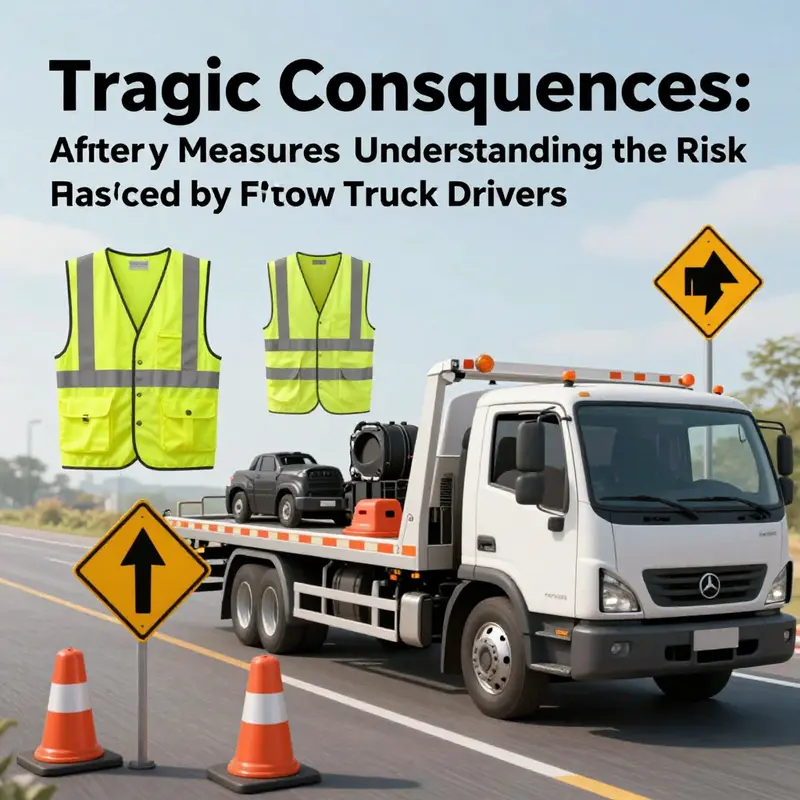
The collision on the Trans-Canada Highway near Strathmore that claimed the life of a tow truck driver is more than a singular tragedy. It is a stark, unsettling reminder that roadside work sits at the intersection of urgency and vulnerability. Emergency responders circle the blackened edges of the incident, the roadway is slowed to a crawl, and a family begins a process that will extend far beyond the moment of impact. In the wake of such events, communities and regulators search for lessons that can harden the thin line between swift aid and avoidable harm. This chapter delves into the safety measures and regulatory responses that emerge in the aftermath of a tow-truck fatality, stitching together the practical scene-based protocols with the broader questions of accountability, compensation, and systemic reform. Although the specifics of each jurisdiction differ, the core concerns—protecting workers at the roadside, ensuring a rigorous investigative process, and strengthening industry standards—are shared across places where tow trucks serve as the immediate link between disruption and relief.
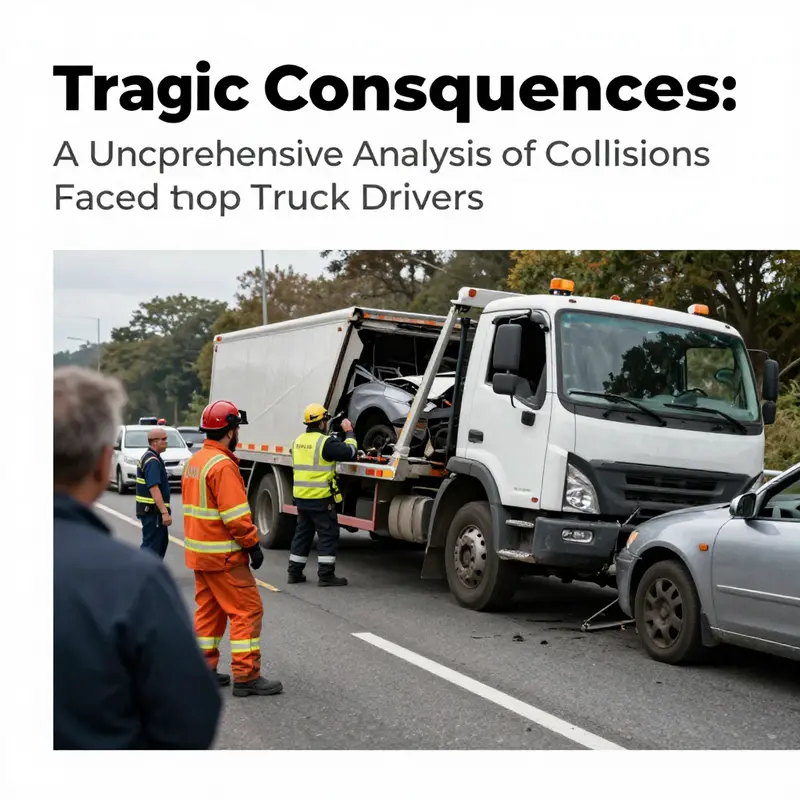
At the scene itself, the priority is not simply to recover a vehicle or clear debris, but to secure a space where responders, drivers, and other motorists can operate with a minimum of risk. Immediate scene safety management becomes a triage of signals, positioning, and communication. Warning signs are deployed to alert oncoming traffic, and the operator’s own vehicle is treated as a critical anchor point for the safe management of the site. Directing traffic, especially on a high-speed or high-volume highway, requires trained personnel who understand the choreography of approaching vehicles, the wind, and the glare of headlights in the dark hours or inclement weather. The primary task is to prevent secondary incidents that could compound the tragedy. In many cases, this means clear, decisive actions by police and emergency responders, along with forensic teams who preserve the integrity of evidence for the investigation. If the tow truck operator is found without vital signs, law enforcement and forensic officers take control of the area, ensuring that evidence is not contaminated while the crash data, witness statements, and surveillance footage are collected meticulously. The balance between rescuing life and preserving evidence is delicate, but it is ironclad in the professional mindset that governs accident response.
The immediate aftermath also begins a long-running dialogue about what support looks like for families who lose a primary breadwinner in the line of duty. Work-injury insurance regulations, where they exist, often extend beyond medical treatment to provide funeral assistance, one-time death compensation, and pensions for dependents. These provisions are not merely acts of mercy; they are recognitions that the hazard of roadside work casts a shadow that extends far beyond the roadway. They acknowledge that the moral economy surrounding the roadside is as important as the legal one. In practice, accessing such support involves formal applications, the submission of proof of employment, and timely coordination between the employer, the insurer, and the family. The process can be labyrinthine, but it has the potential to soften the most severe blows for loved ones who confront a future they did not choose. This is not to romanticize tragedy, but to outline how a just system can respond with dignity when a life is lost in the course of public service.
Beyond the human dimensions, the investigation of the incident forms the backbone of accountability. Traffic police and investigators are charged with reconstructing events, gathering evidence from the scene, interviewing witnesses, and reviewing surveillance footage to determine cause and fault. The goal is not to assign blame in order to punish, but to understand why and how the accident occurred so that the same mistake cannot recur. When violations or negligence are found, the law steps in to hold responsible parties to account. In many jurisdictions, this means a careful synthesis of traffic regulations, employer safety policies, and broader road-safety mandates. The outcome is not a verdict that simply closes a file; it is a catalyst for reform. In practical terms, such investigations can lead to tailored recommendations for the towing company involved, including enhanced training, stricter vehicle maintenance checks, and refined on-scene procedures that reduce exposure to risk for the next crew that arrives at a roadside site.
The consequences of a fatality can reverberate through the industry in ways that extend far beyond one incident. In the hours and days after a tragedy, regulators often reassess safety management across the towing sector. The drive toward stronger safety culture translates into tangible measures: mandatory safety training for drivers, more frequent inspections of tow vehicles, and the adoption of technologies designed to protect roadside workers. Dashcams, once a controversial or optional feature, are increasingly treated as standard equipment that can deter negligent behavior, provide objective accounts of incidents, and inform ongoing risk assessments. Operational procedures, too, are standardized so that every shift follows a single, proven protocol for scene setup, traffic control, and communication with dispatch. These changes aim to reduce the incidence and severity of future crashes by removing guesswork from high-stakes moments. The practical effect is a more predictable and better-protected work environment that acknowledges the inherent hazards of roadside assistance and treats them with the seriousness they deserve.
Public awareness and cultural change also play a crucial role in how a community responds to a fatality on the road. At the scene, the priority is to preserve evidence and avoid moving bodies or disturbing critical clues, a reminder of the gravity of the moment and the integrity of the investigation. This is paired with a broader message to road users: slow down, stay alert, and respect the space around emergency and service vehicles. In low-visibility conditions—nighttime, heavy rain, or fog—the risk multiplies, and the public’s vigilance becomes a key layer of protection for those who operate along the roadside. The broader communication strategy emphasizes that tow operators are essential workers who routinely place themselves in harm’s way to restore services and safety for others. The public discourse, then, shifts toward not only reacting to a tragedy but actively preventing the next one through consistent safety practices, enforceable standards, and sustained investment in the well-being of those who keep traffic moving when systems fail.
In this light, the interplay between regulation and practice becomes clearer. While there may not be a single, universal rule that governs every aspect of a tow-truck tragedy, the processes that follow a fatal collision align with a framework built on legal protocols, safety standards, and accountability. The result is a system that strives to learn from loss and to translate that learning into concrete protections for workers and communities alike. A crucial part of that translation involves industry leadership that refuses to let tragedy be absorbed as an inevitable risk of the profession. Instead, it should serve as a turning point—a moment when training programs, inspection regimes, and everyday procedures are elevated so the next roadside incident, if one occurs, is met with a more robust, more humane, and more effective response.
As part of this ongoing transformation, it is helpful to consider how the lessons from the Strathmore incident and its Canadian context translate to global practices. International guidelines on accident response underline similar imperatives: secure the scene, protect life, preserve evidence, and communicate clearly with all stakeholders. They also emphasize that response work must be underpinned by a systemic commitment to safety that begins long before an accident occurs. Pre-crash planning, such as driver training and vehicle maintenance, reduces the likelihood of failures at critical moments. Post-crash measures, including transparent investigations and sustained public education about roadside safety, close the loop by transforming tragedy into prevention. In one sense, the local tragedy becomes a global case study in how a disciplined, compassionate, and comprehensive approach to accident response can save lives, support families, and strengthen the industry’s moral obligation to protect those who serve on some of the most dangerous stretches of road.
To connect the practical with the aspirational, consider how operators can integrate these principles into everyday practice. A tow company can adopt a simple, consistent response protocol that every driver rehearses during onboarding and regularly drills during shifts. Training should cover scene management, signaling strategies, vehicle positioning, and safe traffic control practices in both daylight and poor visibility. Vehicle maintenance programs must include checks for braking, lighting, and reflective responses, ensuring that the tow truck itself does not become a hazard in the chaos of an incident. Technology can reinforce discipline: dashcams for accountability; GPS and telemetry to coordinate response times; and communication tools that keep crews in constant contact with dispatch without pulling attention away from the scene. The aim is not to create bureaucratic rigidity but to embed best practices into the culture of the company so that safety becomes a second nature aspect of every mission at the roadside.
In this moment of reckoning, it is also important to recognize the human voices behind the statistics. The loss of a tow truck driver reverberates through colleagues who carry the memory of their partner’s dedication, the families who face uncertain futures, and the community that relies on their swift, careful intervention after a collision. The narrative of safety, therefore, must be told with empathy and specificity. It should honor the worker’s commitment to helping others while insisting that safeguarding measures be credible, enforced, and continuously improved. When policies are justified by the aim of reducing harm to those who serve at the roadside, they gain legitimacy beyond political debate and become shared ground for industry, labor, and the public. The road may remain dangerous, but the path toward safer practice becomes clearer when tragedy is translated into concrete action, backed by training, technology, and strong regulatory frameworks.
As this chapter progresses into the broader arc of the article, consider how the example set by a well-organized response in one region can inspire improvements elsewhere. The need for a robust safety culture is not simply about compliance—it is about recognizing that roadside work is essential for resilience on a transportation network that spans vast distances and seasonal challenges. It is about ensuring that every tow operator returns home at the end of a shift, and about safeguarding families who depend on the steady rhythm of an industry that serves the public good. The trajectory from accident to reform is not instantaneous; it requires sustained commitment from policymakers, industry leaders, and the public alike. But the direction is clear: proactive prevention, transparent accountability, and compassionate support can transform a scene of loss into a catalyst for enduring protection.
For readers seeking practical avenues to explore these themes further, the overview of accident response and scene management echoes international guidelines that emphasize the same sequence of actions: secure, inform, protect, preserve. These shared principles form a universal backbone for roadside safety that transcends borders and regulatory systems. While local laws will always shape the specifics of compensation, investigation, and enforcement, the core idea remains constant: the safety of emergency and roadside workers is a non-negotiable priority, and every fatality becomes a call to strengthen the fabric of protection around those who serve the public in moments of vulnerability. In this spirit, communities can translate sorrow into safer roads, not by adoring tragedy, but by embracing the discipline and care that prevent repetition.
To complement this discussion, consider the aligned practices demonstrated by peer organizations and professional networks, which often publish guidance on on-scene safety, driver training, and incident debriefing. For those seeking a concise blueprint of how a professional towing service might frame its response protocols, see the outlined approach in the industry resource related to towing services in Washington, DC, which emphasizes disciplined scene control and standardized procedures as foundational elements of safety. towing service Washington, DC
External perspective can further illuminate this topic. International guidelines and case studies from road-safety authorities reinforce that robust accident response is a multi-layered endeavor—one that blends immediate on-site actions, post-incident investigations, worker support, and ongoing safety reform. The Australian Transport Department’s accident response framework, cited in the broader research context, illustrates how a comprehensive set of procedures builds resilience into the response system, balancing speed with accountability, and urgency with careful preservation of evidence. It is a reminder that even as protocols differ in language and detail, the underlying commitments to protection, evidence, and learning are shared across borders and industries. See the external resource for a broader lens on accident response in road safety: https://www.transport.gov.au/road-safety/accident-response.
In sum, the tragedy on the Trans-Canada Highway becomes a lens through which the road to reform is clarified. It reveals how accident-scene safety management, compassionate but practical worker support, rigorous investigation, and proactive industry reforms can converge to make roadside work safer. It underscores that while one life lost is a human catastrophe, the lessons drawn from that loss can shield others from similar harm. The chapter that follows will continue to map this terrain, anchoring future policy discussions in the lived reality of those who risk their safety to keep others moving. The road remains essential, and the people who serve on it deserve systems that honor their courage with credible protection, fair accountability, and sustained commitment to better, safer outcomes for all those who depend on them.
Final thoughts
The tragic death of a tow truck driver not only serves as a stark reminder of the dangers faced by those in the towing industry but also emphasizes the urgent need for improved safety measures and regulations. With a clear understanding of the risks highlighted in our analysis, business owners must take proactive steps to safeguard their workers. Implementing training programs, providing proper safety equipment, and adhering to industry regulations can significantly reduce these tragic incidents. Ultimately, it is our collective responsibility to ensure that tow truck drivers return home safely after each shift, reinforcing the crucial role they play in our communities. Protecting these workers not only saves lives but also fosters a more secure and efficient roadside assistance landscape.