
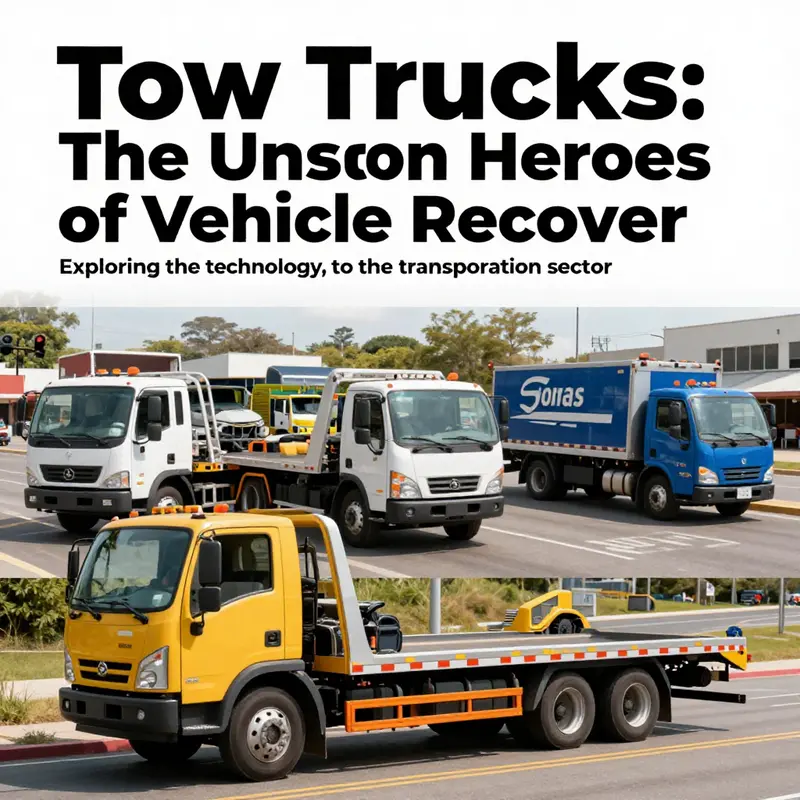
In a world where road safety and efficiency are paramount, tow trucks stand as vital instruments in vehicle recovery, traffic management, and public safety. Understanding the mechanisms behind these specialized vehicles, alongside their economic contributions and their integral role in law enforcement, illuminates the importance of tow trucks in our daily lives. This exploration will delve into the sophisticated technology and design of tow trucks, their economic impact on the transportation sector, and how they enhance law enforcement and road safety efforts.
Lifters, Booms, and the Road: Inside the Modern Tow Truck’s Mechanisms
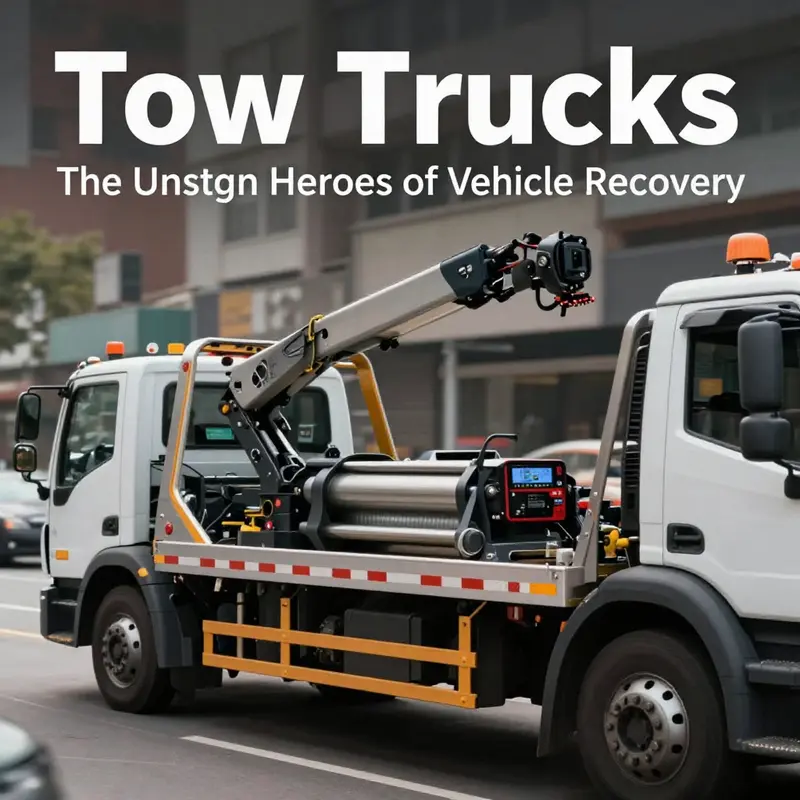
A tow truck is more than a carrier; it is a compact workshop on wheels where hydraulic power, steel geometry, and smart controls converge to reclaim order from the roadside. The vehicle hides a carefully engineered system that marries strength with restraint, designed to lift, pull, and transport damaged or disabled cars without compounding their harms. At the core of today’s machines is a lifting and towing system that is not a single device but a family of mechanisms chosen to fit the scene, the target vehicle, and the space constrained by traffic, weather, and urban streets. This is why modern fleets vary in form yet share a common goal: to restore mobility swiftly while preserving safety for all road users.
One of the oldest concepts—hook and chain tow—still appears in some manuals, but it is largely deprecated because of the risk it poses to the vehicle being recovered. The metal hook, linked to a chain, can strain frames and suspensions in ways that might worsen the scene before it improves it. In contrast, the picker tow truck, with a telescopic hydraulic boom, represents a leap in reach and precision. The extendable arm can plunge into tight corners and narrow lanes where a car cannot be simply driven onto a platform. Operators command the arm with a wireless remote, allowing exact extension, lift, and retraction from a safe distance. This separation between the operator and the immediate danger zone is not merely a convenience; it is a critical safety feature in busy urban environments where pedestrians, other vehicles, and uneven surfaces create risk at every angle.
A wheel-lift system shifts the recovery paradigm again. A metal yoke slides under one end of a vehicle, usually near the wheels, and a hydraulic winch lifts the wheels clear of the road while the chassis remains supported. With this arrangement, the on-board tires bear less wear, the suspension suffers fewer micro damages, and the towed vehicle can be moved without dragging its undercarriage along rough pavement. For smaller tow trucks, the wheel-lift approach offers a practical balance of simplicity and efficiency, enabling quick recoveries in parking lots, on ramps, or along curbside lanes where space is tight.
For heavier scenes, the fleet relies on heavier-duty configurations capable of handling substantial loads. These systems combine heavy-strength frames, powerful engines, and scaled lifting mechanisms that can manage substantial masses with controlled stability. The emphasis is not just on raw weight but on the dynamic behavior of a loaded vehicle during recovery. A robust crane, reinforced chassis, and precision hydraulics ensure that the vehicle under tow remains steady as it is hoisted, loaded onto the bed, and secured for transit. In many ways, these machines resemble mobile engineering workshops, where each action—lifting, winching, strapping, and stabilizing—must occur in a carefully choreographed sequence to prevent surges, sway, or sudden shifts that could endanger the crew or other road users.
Another modality is the tilt tray, where a platform either fixed or tilting permits a vehicle to be driven onto the bed itself, after which it is aligned and secured for transport. This method shines when the towed car has significant damage or a compromised drivetrain, reducing the need to lift heavy frames or transfer weight to a lifting ring. Across all types, the design philosophy centers on controlled contact with the vehicle, careful weight distribution, and the ability to restore alignment between the recovered car and its path forward, whether toward a repair shop or a storage lot.
Safety is woven into every mechanism through a suite of mandatory features. Fire extinguishers, rear underrun protection, proper signage, lighting, and securement devices are not mere afterthoughts but integral components of a compliant, safe operation. Operators require rigorous training to understand the sequence of actions, the limits of each mechanism, and the signals that guide safe interaction with traffic and bystanders. In practice, the most effective recoveries blend mechanical prowess with clear planning, situational awareness, and coordinated communication with on-site personnel and dispatch centers. This is where the urban reality of road rescue meets the disciplined technology that keeps it humane and predictable for everyone involved. When a scene demands rapid response, a well-choreographed combination of boom reach, wheel contact, tray stability, and securement can turn a potentially chaotic incident into a managed recovery that preserves life and property. For practitioners seeking broader context on standards and compliance that govern these devices, see the Australian government’s Tow Truck Regulatory Information. In daily practice, however, the most compelling evidence of a tow truck’s mechanism is the quiet reliability of its controls—how a driver’s decisions translate into steadiness on the road and safe passage for all.
For practical reading on local coordination and service availability, consider the nearby resource towing service in DC.
External reference: For formal regulatory context and technical standards, the Australian Government provides a comprehensive overview at https://www.transport.gov.au/road-safety/vehicles/tow-trucks.
Rolling Gatekeepers: Tow Trucks and the Economics of Modern Transportation
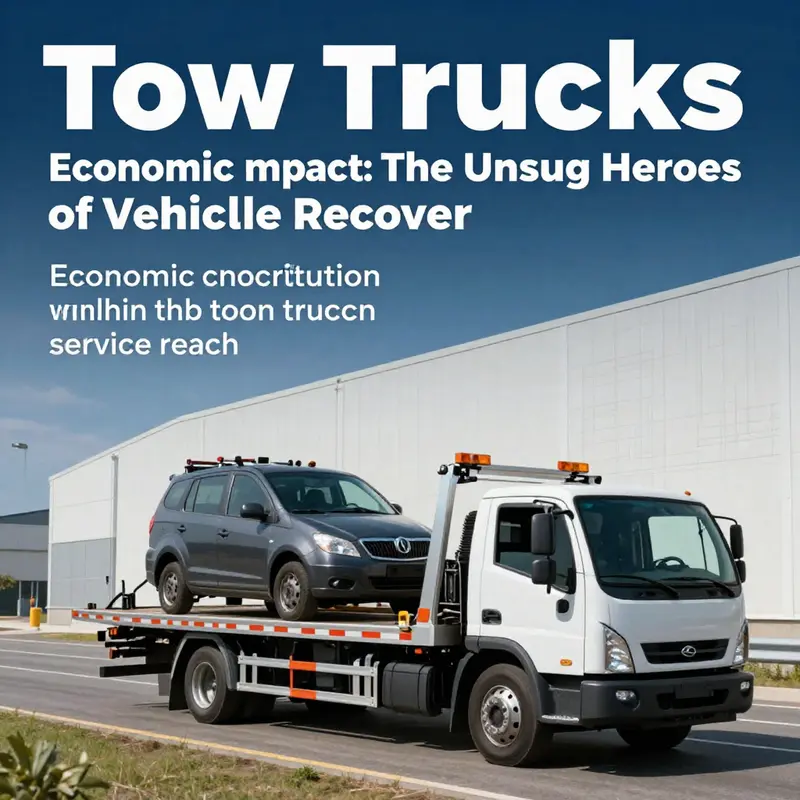
Tow trucks operate at the intersection of road safety and logistics, a lean mobile asset whose value is measured in hours saved, miles kept moving, and the resilience of the broader supply chain. When a vehicle breaks down on a highway or an accident disrupts a corridor, a tow truck doesn’t merely remove a vehicle; it reopens a choke point and preserves downstream productivity. In today’s economy, every minute reclaimed translates into dollars saved for operators, retailers, and consumers. The economics of this mobile recovery system flows from the ability to rapidly deploy, assess the condition of a non-drivable asset, and execute a safe, efficient removal that minimizes further disruption. The result is not just a roadside service, but a strategic lever in the cadence of commercial movement and urban life itself. The value of tow trucks lies in their reliability and speed, two factors that translate directly into reduced downtime for a wide range of freight activities, from consumer goods to industrial inputs, and into steadier traffic conditions that dampen the total cost of congestion across a region.
Market forces illuminate the scope of this contribution. Recent market analysis places the global tow trucks market at about USD 3.5 billion in 2024, with projections rising to roughly USD 5.8 billion by 2033. That trajectory, a compound annual growth rate around 6 percent from 2026 to 2033, reflects not only rising urban populations but the expansion of e-commerce and just-in-time delivery networks that demand faster, more predictable recovery from incidents on the road. As cities grow denser and freight corridors become more congested, the value of efficient towing services compounds: it accelerates the return to normal operations after a disruption and, by doing so, protects margins for carriers, fleets, and roadside assistance providers alike. From a macroeconomic lens, the sector’s growth signals a broader commitment to keeping the physical infrastructure moving, a commitment that translates into fewer idle assets and shorter downtimes across the entire transportation network.
The role of tow trucks extends beyond mere incident management; they are instrumental in emergency response and road safety, with downstream economic implications for productivity. Quick, well-coordinated recoveries reduce the likelihood of secondary incidents caused by stalled vehicles, debris, or temporary lane blockages. Each saved minute reduces fuel burn, vehicle wear, and labor costs that would otherwise ripple through a logistics chain. In this context, tow operations intersect with fleet management strategies, safety protocols, and regulatory environments that encourage rapid, compliant recovery practices. As fleets adopt more sophisticated tools, the organizational value of a tow truck grows; it becomes a node in a digital ecosystem that tracks incidents, optimizes route choices, and predicts maintenance needs before failure occurs. The integration of AI and data analytics into towing workflows—predictive maintenance alerts, optimized dispatch routing, and real-time incident tracking—further elevates the efficiency and economic value of the service. These technologies lower operating costs, help manage driver hours, and trim fuel usage, all while enhancing reliability for partners who rely on steady delivery windows.
For investors and policymakers, the implications are meaningful. The steady demand for roadside recovery services provides a resilient niche within the broader transportation sector, a domain that also includes airlines, rail, and infrastructure services. The sector’s performance trends are shaped by fuel prices, labor availability, and regulatory changes, yet the fundamental need for rapid, safe vehicle recovery remains constant. Investors can engage with the broader dynamic through specialized funds or by tracking related commercial vehicle services as a proxy for logistics resilience. In urban markets where congestion costs are high and delivery expectations are aggressive, the economic case for robust tow capabilities strengthens, underscoring how a simple roadside asset can stabilise the entire movement of goods. In practical terms, this means a local fleet serves as a critical enabler of the supply chain’s reliability, a fact evident in dense city corridors where the cadence of recovery directly influences the speed of commerce. For a practical sense of local responsiveness in a dense city, see the Washington DC towing service. External reference: https://www.marketsandmarkets.com/Market-Reports/tow-trucks-market-1943.html
Tow Trucks at the Crossroads of Law Enforcement and Road Safety: A Quiet, Critical Partnership
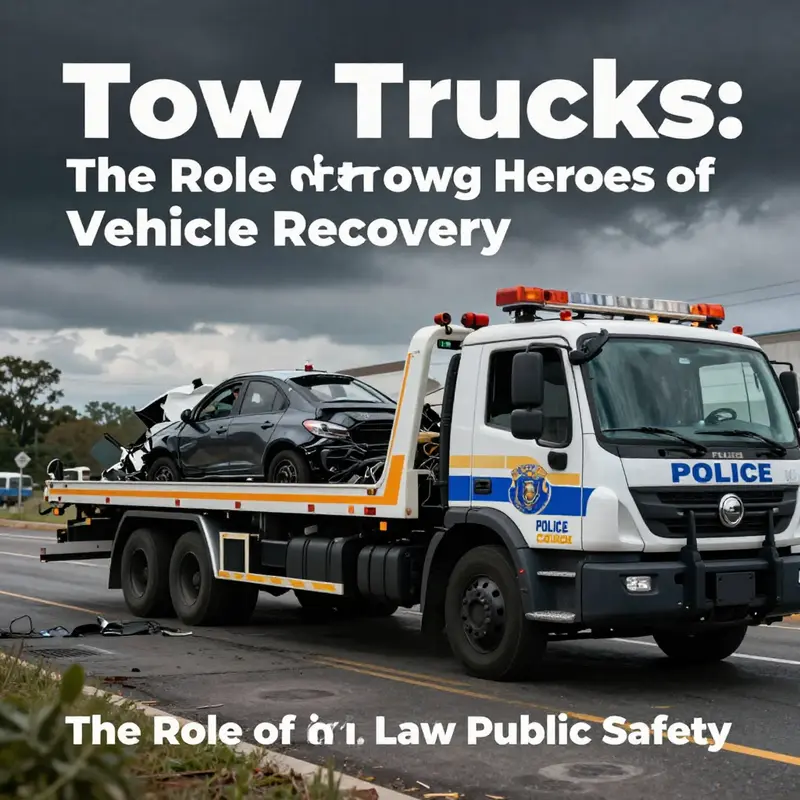
On busy interstates and quiet suburban lanes alike, tow trucks operate at the edges of everyday visibility. They are not first responders in the sense of firing alarms or applying bandages, but their role is no less vital. Each roadside pull, every recovery from a shoulder, is a precise act of public safety. The operator must read the scene quickly, secure the vehicle, protect bystanders, and weigh the fastest route to restore traffic flow. In law enforcement parlance, a tow is more than removal; it is scene management. It can determine whether a road stays a scene of disruption or becomes a corridor that carries people home or to work without delay.
Traffic safety hinges on swift clearance. Disabled vehicles, wreckage, or illegally parked cars create bottlenecks that escalate risk. Tow crews bring winches, booms, and sturdy chains to bear on stubborn jobs. They must choose the right technique for the vehicle’s condition, distance, and the road’s geometry. The goal is to move the problem off the travel lanes with minimum disturbance and maximum protection for everyone nearby. On highways, their speed is a match to the tempo of emergency vehicles; in city centers, their precision prevents urban gridlock. This is why dispatch centers coordinate closely with police and fire units, aligning risk assessment with the choreography of responders.
Operator training is a continuous routine of drills and real-world decision points. A tow crew must read signals, manage traffic control devices, and set up a safe work zone in seconds. They also confront hazards that go beyond mechanical risk. There are tales of equipment failures, weather complications, and the sudden, unpredictable hazards that come when steam, fuel, or boiler-like pressures are involved near a roadside recovery. The incident where a tow truck was lifted twelve feet by escaping steam from a malfunctioning boiler—even as it underscored the extraordinary danger involved—reads like a warning and a testament. Such moments underscore why courage, meticulous planning, and adherence to safety protocols are non-negotiable in this line of work.
Beyond emergencies, tow trucks fulfill a civic function by removing abandoned or illegally parked vehicles that obstruct visibility and complicate law enforcement efforts. They support the orderly management of roads, clearing lanes to reestablish safe speeds and predictable traffic patterns. The operational toolkit—winches, booms, strops, and cables—permits a spectrum of recoveries, from dragging a car out of a ditch to lifting a damaged vehicle onto a flatbed for transport. In many communities, these operations are coordinated with law enforcement to document scenes, preserve evidence when needed, and ensure that towing aligns with local regulations. The workflow is a partnership: the police steward the incident scene while the tow crew executes the practical recovery that makes the scene safe again.
At the heart of this partnership lies a common discipline: public safety comes first, and efficiency follows. The right tow operator can ease congestion, prevent secondary crashes, and relieve stress for drivers who have been pulled from danger. It is a vocation that blends technical skill with judgment—knowing when to stabilize, when to lift, and when to wait for a safer window to act. In metropolitan zones and quiet stretches alike, the presence of a trained tow team signals that order is recoverable, that roads can be returned to normal flow, and that the public can move forward with confidence. For more on the practical side of tow service in dense urban corridors, see Tow Truck Service in Washington DC.
Communities increasingly expect these crews to behave as guardians of the roadside experience, not just service technicians. That expectation shapes how crews engage with drivers, manage scenes with pedestrians, and document evidence when required. It also pushes operators to adopt safer equipment, better lighting, and clearer signaling so that careful work does not become a risk to motorists. In many jurisdictions, a formal code of conduct governs interactions, ensuring respectful handling of vehicles and occupants, transparent reporting, and coordination with dispatch to prevent miscommunication on crowded streets.
Ultimately, the tow truck is a linchpin of coordinated emergency response, bridging the gap between incident and clearance. It embodies a quiet professionalism that supports law enforcement, supports firefighters, and sustains the rhythm of daily life on the road. For readers seeking a broader understanding of these dynamics, the Guardian’s account of emergency-response roles provides a complementary perspective: https://www.theguardian.com/uk-news/2023/sep/12/tow-trucks-essential-role-emergency-response.
Final thoughts
Tow trucks are more than just recovery vehicles; they are technological marvels, economic contributors, and vital assets to public safety. By facilitating vehicle recovery from challenging situations and aiding law enforcement in maintaining safety on the roads, tow trucks offer invaluable services to society. Business owners and stakeholders in the transportation sector should recognize the strategic importance of tow trucks, appreciating how they enhance safety, drive economic growth, and contribute to effective traffic management.