
Purchasing a used truck is a significant investment, especially for business owners who rely heavily on these vehicles for their operations. One of the crucial factors to consider is the truck’s towing capacity. Understanding how much weight a truck can adequately tow not only ensures compliance with safety regulations but also helps in optimizing daily operations. A truck with insufficient towing capacity can lead to costly breakdowns, inefficiencies, and even safety hazards. This is why being well-informed about towing capacity is imperative when you’re selecting a used truck. Whether you’re hauling equipment, transporting goods, or managing heavy materials, knowing this key specification can make a world of difference in performance and reliability. At Zoomlion, we recognize the challenges faced by business owners and are committed to supporting your needs with the right tools and insights. In this article, we will guide you through the essential steps to check towing capacity so that you can make a wise purchasing decision to keep your operations running smoothly. Read more about our towing services in Burke and ensure your business has the support it needs.
Importance of Knowing Towing Capacity for Business Owners
Understanding towing capacity is vital for business owners, especially those using vehicles for operations like hauling equipment or transporting materials. Here are several key reasons why knowing towing capacity is essential:
- Safety First: Exceeding a vehicle’s towing capacity can lead to mechanical failures and safety hazards on the road. Staying within limits ensures safe vehicle handling and reduces accident risks. This is crucial for maintaining a good reputation in the industry.
- Cost Efficiency: Proper knowledge of towing capacity can prevent costly repairs and maintenance. Overloading can lead to premature wear and tear on engines and suspension systems, translating to higher operational costs in the long run. Learn more about the financial implications here.
- Operational Efficiency: Selecting the right vehicle with an adequate towing capacity helps streamline logistics and ensures that business operations run smoothly. Choosing appropriate vehicles can help in minimizing downtime and maximizing service efficiency, which is critical for business success.
- Regulatory Compliance: Staying informed about towing limits aids in compliance with safety regulations. This knowledge is crucial to avoid fines and legal issues that can arise from improper vehicle use, protecting both the business and its assets.
- Flexibility in Operations: With the right towing capacity, businesses can tackle a broader array of tasks, from moving heavy trailers to transporting construction equipment. This versatility contributes to overall business efficiency and allows for better project management. Explore more about effective fleet management here.
Understanding and utilizing towing capacity not only enhances the performance of vehicles but also plays a crucial role in fostering business growth and sustainability. By making informed decisions, business owners can optimize their operations while ensuring safety and compliance.
Best Practices for Checking Towing Capacity When Evaluating a Used Truck
When you’re considering purchasing a used truck, understanding its towing capacity is crucial, especially for business owners who rely on their vehicles for hauling equipment or materials. Here are some actionable steps to effectively check the towing capacity of any used truck you’re evaluating:
- Verify Manufacturer Specifications
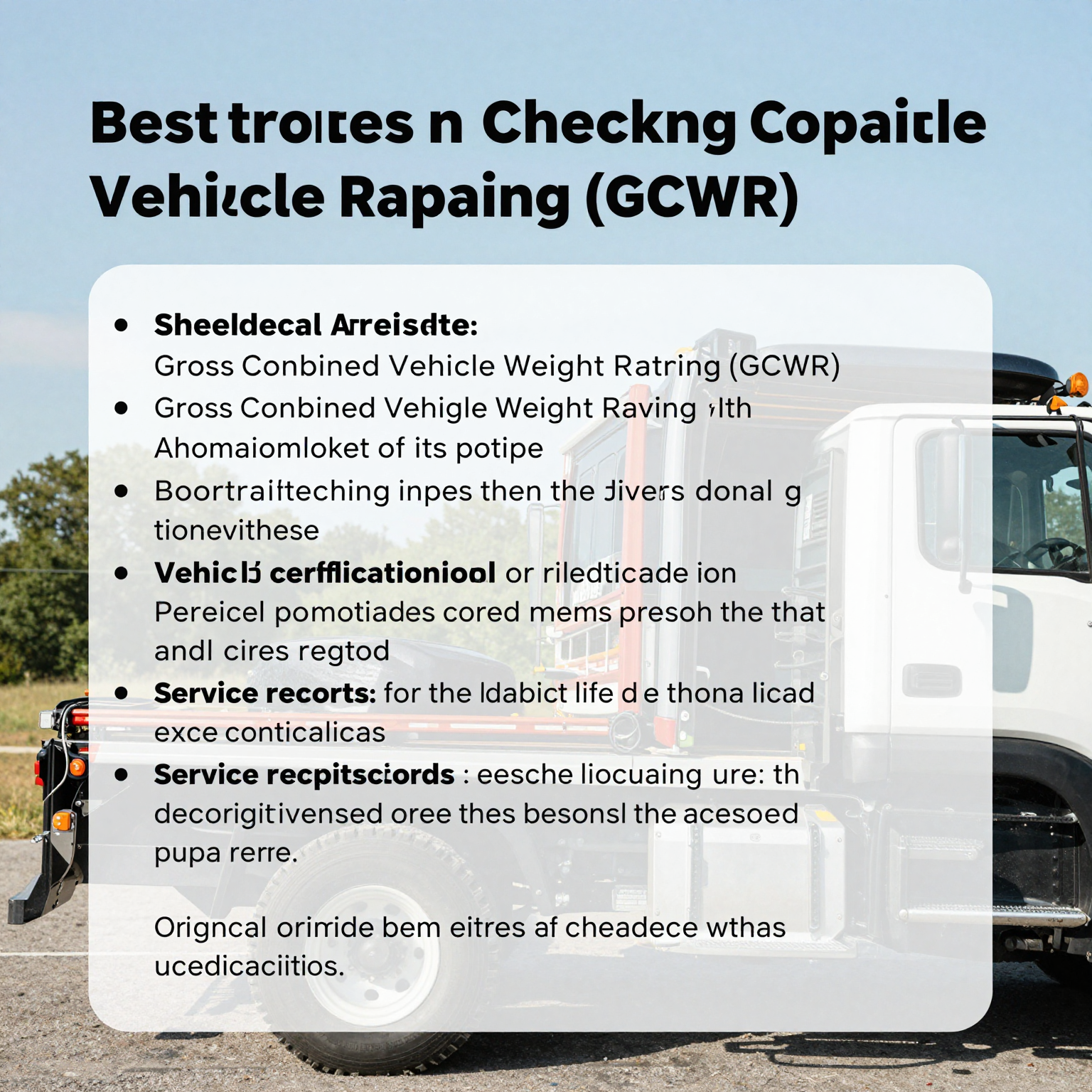
- Look for the truck’s certification label, usually found on the driver’s side door jamb. This label contains critical information such as the Gross Combined Vehicle Weight Rating (GCWR) and Gross Trailer Weight (GTW).
- Use Vehicle Identification Number (VIN) for Records
- Find the VIN and utilize it to retrieve original factory specifications. You can often do this through a local dealership or an online VIN decoder tool. It helps ensure that you’re looking at the correct towing capacities from the manufacturer.
- Consider Modifications
- Pay close attention to any modifications that may affect towing capacity, such as suspension upgrades or changes to the engine. A truck that has been modified may not meet the original towing specifications.
- Inspect the Condition
- Review service records for any history of towing-related repairs. Look for signs of wear on components like the transmission, coolant system, and brakes, as these can impact safety when towing.
- Check the Hitch and Trailer Components
- Ensure that the hitch and trailer components are rated for the towing load you intend to carry. A mismatched rating can lead to dangerous situations while towing.
- Consult the Owner’s Manual
- The owner’s manual contains deal information regarding the truck’s towing capacity and should be consulted. Never exceed the lowest-rated component in your towing setup, whether that’s the hitch, frame, or brakes.
- Conduct a Test Drive
- If possible, perform a test drive while towing a trailer. This makes it easier to assess handling, braking response, and stability under a load.
- Get a Professional Inspection
- For peace of mind, consider having a mechanic familiar with towing systems inspect the truck prior to purchase.
By following these best practices, you can make a more informed decision and ensure the used truck you choose meets your towing needs. For additional information on towing services and related queries, feel free to check out Ace Towing Services.
Finding Towing Capacity in Vehicle Manuals and Labels
When purchasing a used truck, understanding the towing capacity is crucial for ensuring safety and efficiency in your business operations. Two reliable sources of this information are the owner’s manual and towing capacity labels.
Owner’s Manual
The first place to look when determining your vehicle’s towing capacity is the owner’s manual. This comprehensive document typically includes a dedicated section on towing. Here, you will find detailed instructions on how to calculate your towing capacity using the formula:
Towing Capacity = Gross Combined Weight Rating (GCWR) – (Curb Weight + Payload)
The owner’s manual also provides safety warnings about exceeding these limits, which can lead to dangerous situations. For example, Consumer Reports notes that using unreliable sources can lead to overloading, resulting in brake failure or loss of vehicle control (Consumer Reports).
Towed Capacity Labels
Another critical source is the towing capacity label located on the driver’s side door jamb. This label displays essential metrics such as the Gross Vehicle Weight Rating (GVWR) and Gross Combined Weight Rating (GCWR), which are key to determining the maximum trailer weight your vehicle can handle. According to Toyota USA, this label is often the most straightforward source of towing capacity information (Toyota USA).
Importance of Reliable Sources
Relying on manufacturer specifications from the owner’s manual or official manufacturer websites is essential. The National Highway Traffic Safety Administration (NHTSA) cautions against using third-party data, as they may not account for specific vehicle configurations (NHTSA). It is imperative for business owners to utilize these accurate sources to avoid potential risks associated with towing capacity limitations.
In summary, checking both the owner’s manual and towed capacity labels will provide a clear understanding of your truck’s capabilities, ensuring safe and effective towing operations for your business needs.
Comparison of Truck Models and Towing Capacities
When it comes to selecting a used truck for business, understanding the towing capacity is crucial. Here’s a comparison of some popular truck models, focusing on their towing capacities and features relevant to business owners.
| Truck Model | Towing Capacity | Additional Features |
|---|---|---|
| Ford F-150 | 14,000 lbs | 3.5L EcoBoost V6 engine, advanced driver-assist features. Learn more about towing services |
| Chevy Silverado 1500 | 13,400 lbs | 6.2L V8 engine, high-strength steel frame, configurable cargo box. Discover more about truck services here |
| Ram 1500 | 12,750 lbs | 5.7L HEMI V8 engine, luxury interiors, and a high-tech infotainment system. |
| Ford F-250 Super Duty | 24,700 lbs | 6.8L V10 engine, enhanced towing features,available in various cab configurations. |
| Chevy Silverado 2500HD | 36,000 lbs | 6.6L V8 engine, heavy-duty durability, and advanced trailering system. |
| Ram 2500HD | 21,400 lbs | 6.4L HEMI V8 engine, with a strong frame for heavy payloads. |
Choosing the right truck with the appropriate towing capacity can significantly impact the efficiency and effectiveness of your business operations. Consider vehicle specifications closely before making a purchase.
Expert Insight on Towing Capacity
As business owners often rely on trucks for hauling materials and equipment, understanding towing capacity becomes crucial. Automotive expert and editor-in-chief of Motor Trend, Bob Garrity, emphasizes its importance:
“Towing capacity is no longer just a niche specification-it’s a core performance metric that directly influences consumer purchasing decisions, especially in the SUV and truck segments. As families and outdoor enthusiasts increasingly use vehicles for towing trailers, boats, and campers, manufacturers are investing heavily in stronger chassis designs, improved cooling systems, and advanced transmission technologies to maximize towing capability.”
- Bob Garrity, Motor Trend
This quote underscores the relevance of towing capacity beyond basic hauling; it’s a benchmark that reflects ongoing innovations in vehicle design and capabilities. For further information on towing service options, learn more about our Burke Towing Service.
Consequences of Ignoring Towing Capacity
When business owners ignore towing capacity, they expose themselves to a myriad of risks, including safety hazards, legal liabilities, and operational inefficiencies. Understanding these consequences can help in making informed choices when purchasing and using vehicles for trade.
1. Safety Hazards
Ignoring the towing capacity can lead to severe safety issues. According to the National Highway Traffic Safety Administration (NHTSA), exceeding a vehicle’s rated towing capacity increases the likelihood of accidents. Statistics indicate that over 10% of trailer-related crashes are directly linked to overloaded vehicles. This can result in loss of control, brake failure, or suspension damage, significantly increasing the risk of causing accidents and injuries on the road (NHTSA).
2. Legal Liabilities
Exceeding the towing limits can have serious legal consequences. Many states impose fines for violating towing laws, which can range from $200 to $1,000. In certain jurisdictions, like California and Texas, operating beyond the legal towing capacity may invalidate insurance claims following an accident. Thus, business owners could be liable for damages that occur during an incident stemming from overloaded towing, leading to significant financial loss and legal battles (AAA).
3. Operational Inefficiencies
Additionally, operational inefficiencies arise from an inability to manage logistics effectively. Driving with an overloaded vehicle can strain resources, reduce fuel efficiency, and increase maintenance costs due to heightened wear and tear. Such inefficiencies not only decrease profitability but may also compromise service quality and timeliness, ultimately impacting customer satisfaction.
In conclusion, the risks of towing capacity ignorance are not just theoretical; they have real-world implications that can endanger safety, incur legal liabilities, and lead to operational inefficiencies. It is critical for business owners to ensure that their vehicles are suitable for their towing needs, adhering to manufacturer guidelines, and understanding the weight limits involved in their operations.
Understanding Towing Capacity and Its Issues
When considering the towing capacity of trucks, it’s essential for potential buyers to recognize the disconnect between advertised towing capacities and actual performance. Many truck owners face significant issues due to misinformation about what their vehicles can handle.
Towing Capacity Discrepancies
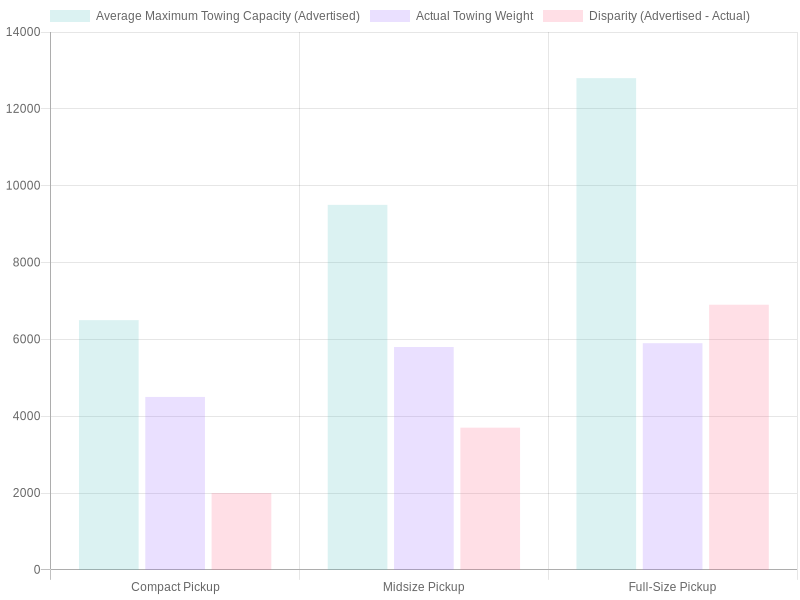
According to the recent analysis by J.D. Power for the 2026 model year, the average maximum towing capacities vary considerably among different truck sizes:
| Truck Size | Average Maximum Towing Capacity (Advertised) | Actual Towing Weight | Disparity (Advertised – Actual) |
|---|---|---|---|
| Compact Pickup | 6,500 lbs | 4,500 lbs | 2,000 lbs |
| Midsize Pickup | 9,500 lbs | 5,800 lbs | 3,700 lbs |
| Full-Size Pickup | 12,800 lbs | 5,900 lbs | 6,900 lbs |
Source: J.D. Power 2026 Analysis
Conclusion
This chart illustrates that despite manufacturers advertising maximum towing capacities that may reach up to 12,800 pounds in full-size pickups, actual towing weights are frequently much lower, with many owners towing below 6,000 lbs. Such disparities highlight the importance of being informed about towing specifications before purchasing a truck, especially for business owners who rely on accurate performance expectations. For further insight into towing services, check out our towing services in Arlington or our towing services in Washington DC.
In conclusion, understanding towing capacity is crucial for business owners when purchasing used trucks. As we discussed, towing capacity directly impacts a vehicle’s ability to perform essential work functions, such as transporting heavy equipment or hauling trailers. The calculations derived from the Gross Combined Weight Rating (GCWR) can guide you in making informed decisions to select a truck that suits your operational needs. Ensuring the right towing capacity also contributes to safety, compliance with regulations, and optimal business efficiency. Remember, selecting a truck that cannot handle the loads you require can lead to higher operational costs, potential damage to the vehicle, and safety hazards. Therefore, knowledge of this key metric not only assists in effective fleet management but also plays a vital role in protecting your investment in the long term.
Don’t wait – contact us today to discuss your needs, request a quote, or learn more about how we can support your mission to protect lives and property!