
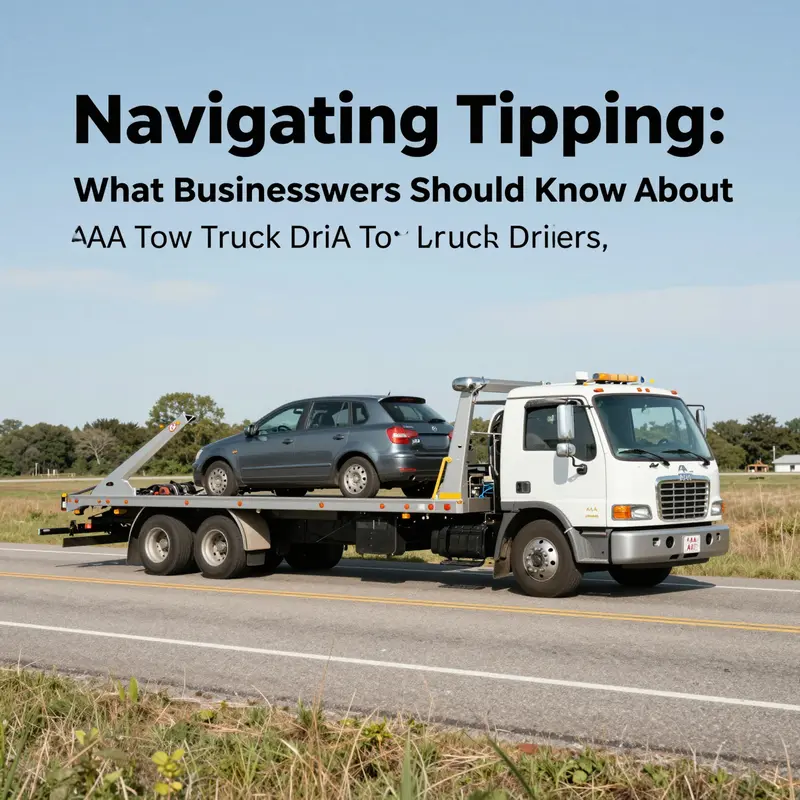
Understanding the appropriate tipping practices for AAA tow truck drivers is essential for business owners who rely on roadside services. Tipping helps acknowledge the efforts of drivers who go above and beyond in providing assistance. This comprehensive guide delves into how much to tip, factors that influence tipping amounts, and common practices, ensuring that you can show appreciation appropriately when these services are needed.
Gratitude on the Road: A Practical Guide to Tipping AAA Tow Truck Drivers
When you find yourself stranded with a stalled vehicle, the role of a tow truck driver often extends beyond the simple mechanics of hauling. In many regions served by membership-based services, tipping is a common way to acknowledge careful work and steady communication under stressful conditions. The general guideline suggests tipping between 10% and 20% of the total service charge. This range helps balance genuine appreciation with practical realities, especially since AAA drivers are typically salaried by the organization for towing and related services. A driver who saves you time, explains what is happening, or helps with safety measures can deserve the higher end of that spread.
AAA pays drivers directly for the service, so tipping remains optional but valued. Think of tipping as a thank you for extra effort: staging the vehicle for safe towing, securing a load, helping you manage traffic hazards, or offering clear directions to a safe location. The amount you tip should reflect your satisfaction with the service, not a required fee. If the service is routine and uneventful, a modest tip within 10% is appropriate. If the driver goes above and beyond — perhaps guiding you through a difficult maneuver, staying with you during a tense moment, or explaining insurance and paperwork calmly — you might move toward 20% or more.
As a practical rule, you tip after the service is completed and the total cost is known. A typical example: if the tow costs around 150 dollars, a tip of 15 to 30 dollars is reasonable. If the driver’s service was outstanding, closer to 30 dollars will feel right. People often tip in cash, since it’s quick and discrete, but many drivers also accept mobile payments if offered. Since AAA is involved, you may wonder whether tipping is expected or permissible. Check your membership agreement or ask AAA if you’re unsure about gratuities. In most cases, tipping remains a personal choice rather than a policy obligation.
Context matters, and your judgment matters too. Some jobs are more involved than others, such as those that include a battery jump-start, lockout, fuel delivery, or securing a vehicle on a flatbed. In scenarios with heavy traffic, adverse weather, or high stress, a larger tip can reflect the extra risk and effort the driver takes to ensure safety and smooth handling. If you want to prepare in advance for future roadside visits, consider reviewing broader tips on how to navigate towing options in your area; a practical starting point is the page on towing services in Washington DC, which provides guidance useful for understanding service expectations and how tipping can fit into the overall experience. You can read more on that page here: towing service in Washington DC.
Ultimately, tipping is a gesture of appreciation that recognizes care, skill, and calm under pressure. It communicates respect for the driver’s time and expertise, reinforces positive interactions in stressful moments, and reinforces the value of courteous service. The exact amount is less important than the thought behind it: a timely, respectful expression of gratitude that acknowledges a job well done. If you frequently rely on roadside assistance, keeping a small reserve of cash or a ready digital method for tipping can help maintain the civility and dignity of the moment, without complicating the situation when you need help most. External resources can further illuminate tipping norms as you plan future requests and compare experiences across providers.
External reference: How Much to Tip a Tow Truck Driver – The Balance: https://www.thebalance.com/how-much-to-tip-a-tow-truck-driver-3305827
The Subtle Balance of Gratitude on the Road: Decoding What Influences the Tip for an AAA Tow Truck Driver
When a car breaks down, relief often comes with the arrival of help. A familiar roadside scene unfolds: steady hands, calm guidance, and the sense that a tough moment is under control. In these moments, tipping becomes a way to acknowledge effort beyond the basics. Yet for AAA tow services, the dynamics of tipping are a little different. The driver is usually paid by AAA for the towing and related work, which means a tip is not a financial necessity. Still, many people choose to tip as a sincere gesture of appreciation, especially when the service feels extra careful, prudent, or personal in its approach. That gesture, small as it may seem, travels with a simple sentiment: you value the driver’s time, professionalism, and the extra steps they took to keep you safe under pressure.
The general guideline that often circulates among motorists is a tip in the range of 10% to 20% of the total service charge. This rule is practical because it connects the size of the tip to the scale of the work performed. If a tow ends up costing around $150, a tip between $15 and $30 is a reasonable target. When the service stands out—perhaps the driver navigated a tricky situation, offered clear safety instructions, or stood by you during a prolonged waiting period—lean toward the higher end, or even beyond if a particular effort felt above and beyond the call of duty. The key is to reflect your level of satisfaction, not to force a number based on a ritual. Tipping remains optional, and most importantly, it should align with your budget and the context of the encounter.
How you actually give that gratitude matters, too. Cash has long been the traditional method because it’s immediate and discreet. But many drivers today also accept mobile payments when permitted. If you’re unsure whether a digital gratuity is appropriate, you can ask politely or simply hand over a tip in cash if you have it. The act itself can be a meaningful signal of thanks, yet it should never feel coercive or obligatory. A grateful, respectful attitude goes a long way, and often, a brief note or verbal appreciation can accompany a tip with no pressure attached.
Beyond the number and method, the tipping decision can hinge on several situational factors. Towing can range from a straightforward haul to a long, complex operation that involves securing a vehicle in a difficult parking scenario, coordinating with other road responders, or explaining options to you in a clear, unhurried manner. The time of day, weather, and the driver’s communication style all shape how you perceive the value of the service. In some instances, what you’re paying for isn’t purely the physical labor but also the driver’s problem-solving, patience, and the sense of safety they foster during a stressful moment. Those elements might justify a larger gesture when the service feels exceptionally competent and empathetic.
Cultural norms and regional expectations can also color tipping behavior. People in certain areas tend to tip more consistently for roadside assistance, while others may be more conservative. Because AAA is a nationwide service, a universal rule is often less important than a compassionate assessment of the specific encounter. If you’re ever uncertain about AAA’s policies on gratuities, you can review your membership terms or contact AAA directly for guidance. The guidance offered by the official site can help you align your gesture with policy while still honoring the driver’s effort. For readers seeking broader context on local service delivery in a nearby city, a practical reference point is a local towing service page that illustrates how nearby providers present their services and understand customer needs on the ground.
If you want to explore a local example of how towing services describe their work in Washington, DC, you can check out the Washington, DC towing service page. It provides a sense of the pace, attention to safety, and customer-centered explanations that pair well with the supportive role a tow driver plays in a roadside emergency. This kind of context helps frame tipping as part of a broader culture of service and gratitude, rather than as a rigid fee. For policy details and further guidance, you can consult the official AAA site: https://www.aaa.com.
Tipping the Road: A Balanced Guide to Gratuities for AAA Tow Truck Drivers
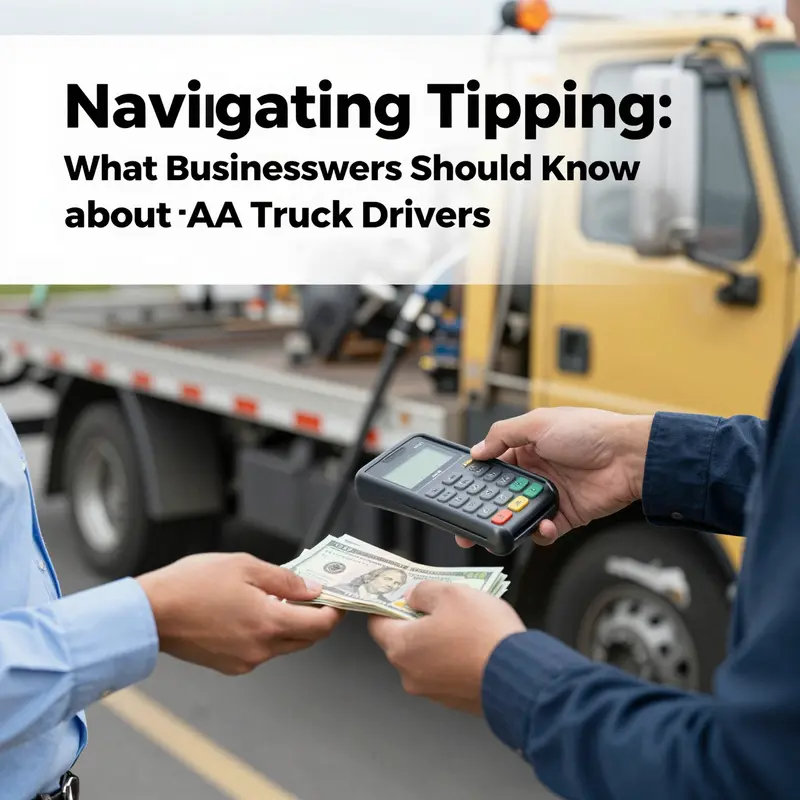
On a night when the highway wore a glaze of rain and the dashboard lamp cast a pale glow, a tow truck arrived with steady professionalism. The driver surveyed the scene, asked a few clarifying questions, and moved with a calm efficiency that turned a tense moment into a controlled recovery. In moments like that, it’s natural to wonder about tipping. The short answer is that tipping AAA tow services is not required; the driver’s pay comes through the organization as part of your membership. Yet a small gratuity is a meaningful signal of appreciation when the service exceeds the ordinary and when the driver shows genuine care, practical advice, or extra safety measures. Across consumer guidance and real-world anecdotes, the consensus is clear: tipping is discretionary, not a mandate. If you feel satisfied with quick arrival, careful handling of your vehicle, and the kind of helpful, non–scripted guidance that eases stress, offering a tip can be a thoughtful gesture without pressuring your budget. A common range you’ll see recommended by many resources is five to twenty dollars, though some situations merit more and others less. The principle to keep in mind is that the tip should reflect the value of the service you received in that moment and your ability to express gratitude, not a fixed price to be paid for a promised outcome. For a tow that costs around one hundred fifty dollars, tipping between fifteen and thirty dollars is a typical demonstration of thanks. If the service was outstanding—arriving promptly, solving a tricky problem, taking extra steps to safeguard your vehicle, or offering clear, practical follow‑up advice—you might lean toward the higher end of that range. Conversely, if the interaction was mechanical and uneventful, you may decide to skip the tip or keep it modest. The driving principle is simple: tip if you want to acknowledge exceptional effort; opt out if the service was adequate and you’re protecting your budget. It’s also worth noting that, in many cases, AAA drivers are paid by the company rather than by tips from customers, which lowers the expectation for gratuities. If you choose to tip, cash remains the most universal method and is appreciated precisely for its speed and simplicity. Some drivers also accept mobile payments, though you should verify that this option is available. This flexibility can be especially helpful when you’re dealing with a stressful moment and want to keep things simple. In addition to the money question, consider your local norms and the logistics of the call. Tipping etiquette can vary by region, time of day, and the severity of the situation, so a brief note of thanks or a warm expression of gratitude can be as meaningful as a monetary gesture. If you want to explore nearby options or understand what a reputable local service looks like, you can look into Arlington-area towing options like this page: towing service Arlington VA. This kind of context can help you build a sense of proportional generosity for future roadside episodes. Ultimately, the choice to tip is yours, grounded in your satisfaction and your circumstances, and the goal is to show appreciation without turning gratitude into obligation. When in doubt, consult your AAA membership terms or reach out directly to AAA for guidance. For a broader take on tipping etiquette beyond roadside assistance, you can consult reputable guidance in external resources, such as The Spruce’s article on when to tip a tow truck driver: https://www.thespruce.com/when-to-tip-tow-truck-driver-4138967.
Final thoughts
Tipping AAA tow truck drivers is not only a gesture of gratitude but also a reflection of the quality of service provided. For business owners, understanding how much to tip can foster goodwill and encourage excellent service in the future. By considering the factors influencing tipping decisions and familiarizing yourself with common practices, you can appropriately express your appreciation when roadside assistance is needed. Remember, while it’s appreciated, tipping remains a personal choice.