
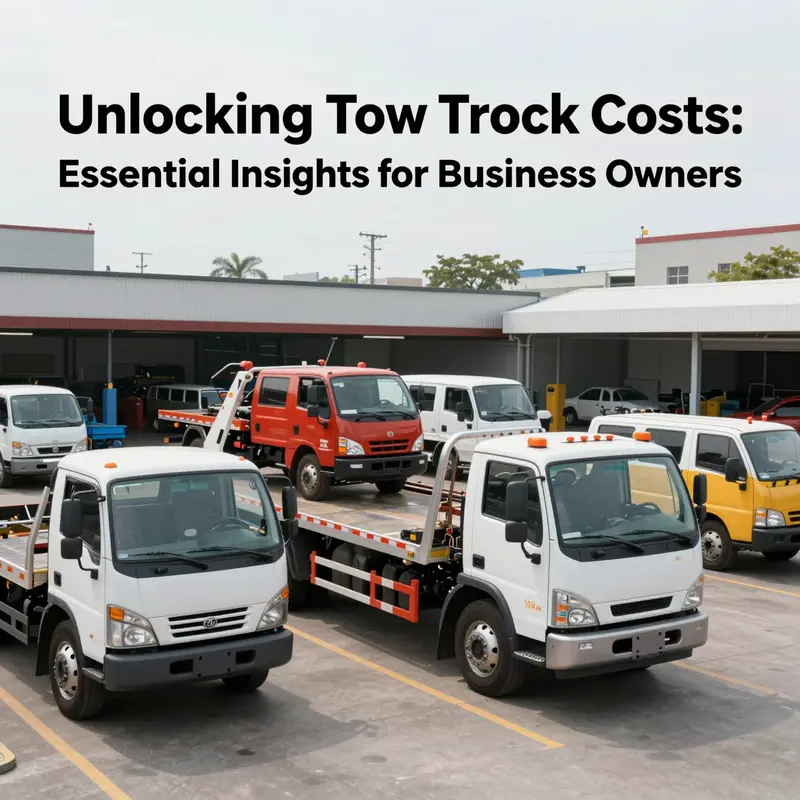
Understanding the cost of tow trucks is vital for business owners in the roadside assistance or recovery industries. Pricing can vary dramatically based on the size, capabilities, and whether the unit is new or used. From small to medium trucks ideal for light recovery operations to heavy-duty models suited for demanding tasks, knowing what to expect financially can guide your purchasing decisions. This article delves into the costs associated with both small to medium sizes and medium to heavy-duty models, ensuring you are well-equipped to make informed choices that align with your business goals.
Tow Truck Costs Demystified: A Practical Guide to Small- and Medium-Duty Purchases and Hire Prices
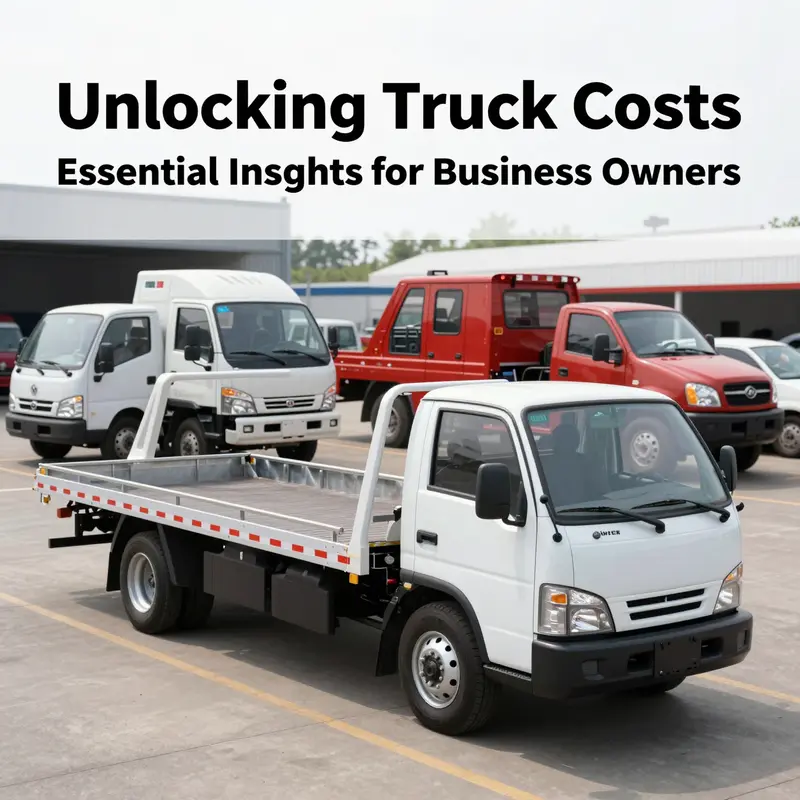
Understanding the price tag on a tow truck requires more than a glance at a sticker or a per-mile rate. For operators weighing buy versus hire, the spectrum of options is shaped by size, capacity, and whether the unit is new or used. In the small- to medium-duty category (roughly 5 to 15 tons), new units typically run from about 18,000 to 39,800 dollars, with variations based on configuration and features. A compact 4×2 model in the 15-ton class might land in the mid-20s to mid-30s thousand dollars, while lighter 5-ton variants sit toward the lower end of the range. Heavier configurations with enhanced recovery gear can push prices higher. For the heavier end (20- to 50-ton configurations), new units commonly range from around 20,000 to 70,000 dollars, depending on engine power, chassis layout, and recovery gear. Flatbed configurations can add to the cost, especially when zero ground contact is desired. In the 8- to 15-ton flatbed category, prices commonly run from about 15,500 up to 29,000 dollars. Used tow trucks provide an entry point around 15,000 to 25,000 dollars, with age and maintenance history being key caveats. Heavy-duty models in the 50-ton range and beyond can reach well into the 70,000-dollar territory, driven by horsepower and specialized equipment. The bottom line is that ownership costs are a function of size class and the type of recovery technology, with maintenance, insurance, storage, and depreciation shaping the long-term math. For optimal decision-making, buyers should forecast annual tow events, typical distances, and the mix of vehicle types to compare ownership against outsourcing over a 12- to 36-month window.
Beyond the sticker price, ongoing costs—fuel, maintenance, spare parts, insurance, and downtime—drive total cost of ownership. A wheel-lift or partial flatbed may have lower upfront costs but can incur higher handling complexity or insurance risk over time. The balance between upfront capital and recurring expenses matters most for small fleets or solo operators. If your work leans toward frequent light- to mid-weight recoveries, a compact 5- to 15-ton unit can be cost-efficient; for heavier jobs or off-road recoveries, a 20- to 50-ton setup may be more economical in the long run despite higher initial and operating costs. The decision is rarely binary and depends on workload, cash flow, and risk tolerance.
Powerful engines and chassis configurations offer faster recovery cycles, but they increase fuel use and maintenance needs. Full flatbeds provide zero ground contact and are ideal for delicate or high-value vehicles, but they tend to carry a price premium in purchase and maintenance. Wheel-lift setups are lighter and cheaper to operate but may limit certain recoveries and require more handling in some scenarios. In the broader market, pricing can vary by region, demand, and supplier incentives. A practical approach is to model a local service area, estimate call volumes, and compare ownership and hired-service costs over a forecast horizon. That forecast should also account for insurance, storage, and downtime, not just the sticker price. If you’re evaluating hiring vs buying, consider a hybrid approach that maintains a core fleet for routine work while outsourcing complex recoveries that would strain capacity or insurance margins. Finally, remember that pricing extends beyond the vehicle itself: regional competition, labor costs, and the availability of rental or fleet agreements can influence what customers ultimately pay. The goal is to forecast cash flow and uptime, not chase the lowest upfront price.
In short, the economics of small- to medium-sized tow trucks hinge on a lattice of decisions. The sticker price is only the entrance fee to a broader set of ongoing costs that shape profitability. Buyers should weigh purchase price against maintenance, insurance, storage, and depreciation, while those who hire should account for base rates, mileage, time of day, and vehicle handling requirements. Reliability, throughput, and the ability to protect customers’ vehicles are as important as the initial price, and they often determine whether a tow operation thrives in a competitive market.
Tow Truck Pricing Unfolded: A Practical Guide for Medium- and Heavy-Duty Fleets
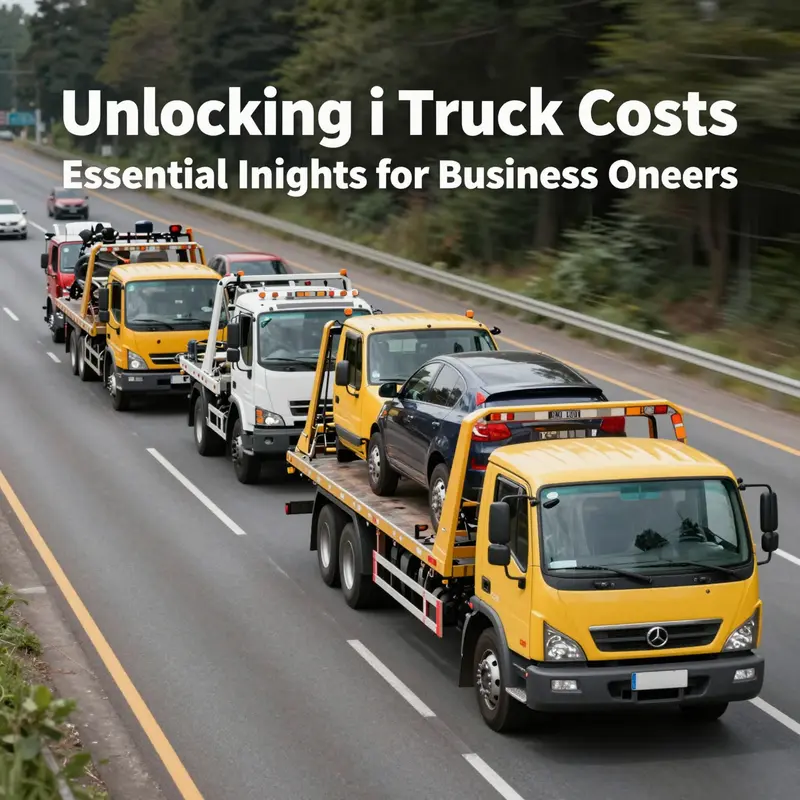
Pricing for medium- and heavy-duty tow trucks is not a single figure. Buyers typically face a family of prices that hinge on size, configuration, and whether the unit is fresh from the factory or previously owned. For fleets and responders, the value proposition includes upfront cost, reliability, lifespan, and the ability to recover a broad range of vehicles with minimal downtime. In the 20-50-ton range, price decisions reflect engineering choices that influence safe, efficient recoveries under varied conditions. The result is a spectrum rather than a single price point, and understanding that spread helps avoid overpaying for features that aren’t needed while ensuring critical capabilities are present.
New versus used and configuration are the two dominant axes. New units with robust hydraulic systems, higher horsepower, and modular or integral designs generally sit at the high end of the spectrum, while basic configurations land toward the lower end. In market terms, you might see new medium- to heavy-duty units described in a broad band roughly from the mid-twenties to the upper sixties of thousands of dollars, depending on power, reach, and added recovery suites.
Flatbed rollback units in the 8-15 ton class can command higher prices because of the added deck and stabilization systems. New units in this subcategory often land in the mid-teens to upper twenties (thousand dollars).
When you extend into the larger 20-50-ton tier, price dynamics shift again. The scale and the load capacity demand stronger frame construction, more powerful winches, heavier-duty hydraulic circuits, and often more advanced stabilization and control systems. In this range, new units are commonly described with a spread from roughly the low twenty-thousands to around seventy thousand dollars, reflecting how much value is placed on the exact configuration and added recovery features.
Used offerings sit on a different axis. Used medium- and heavy-duty tow trucks typically range from about fifteen thousand to fifty thousand dollars, depending heavily on age, mileage, condition, and the presence of essential components such as winches, chains, lights, and safety features. A well-kept, low-mileage unit may command the higher end of that range, especially if it comes with a turnkey set of recovery accessories and documentation that supports reliability.
A few concrete illustrations from current listings help ground these concepts without getting lost in abstractions. For a 22-foot steel carrier model designed for a broad set of towing needs, a used option might be listed around thirty thousand dollars, with the trade-off between age and fully equipped status often determining the final figure. In the heavy-duty end, a 16-20 ton capacity unit from the late 2000s could sit in a price window roughly thirty to fifty thousand dollars, again contingent on condition and mileage. These examples illustrate how the same class of truck can present very different price points depending on care, equipment, and life-cycle status.
Across the spectrum, the investment in a tow truck is not merely the cost of a chassis and a winch; it is the cost of reliable, scheduled recovery capability that can be scaled to the demands of a fleet and the realities of the road.
Final thoughts
Investing in the right tow truck is a strategic decision that can significantly affect your operational efficiency and profitability. By understanding the detailed pricing structures for both small to medium and medium to heavy-duty trucks, business owners can strategically budget and select vehicles that not only meet their needs but also enhance service delivery. Whether you are expanding your fleet or entering the towing business, knowledgeable investment into the right equipment can foster success and growth.