
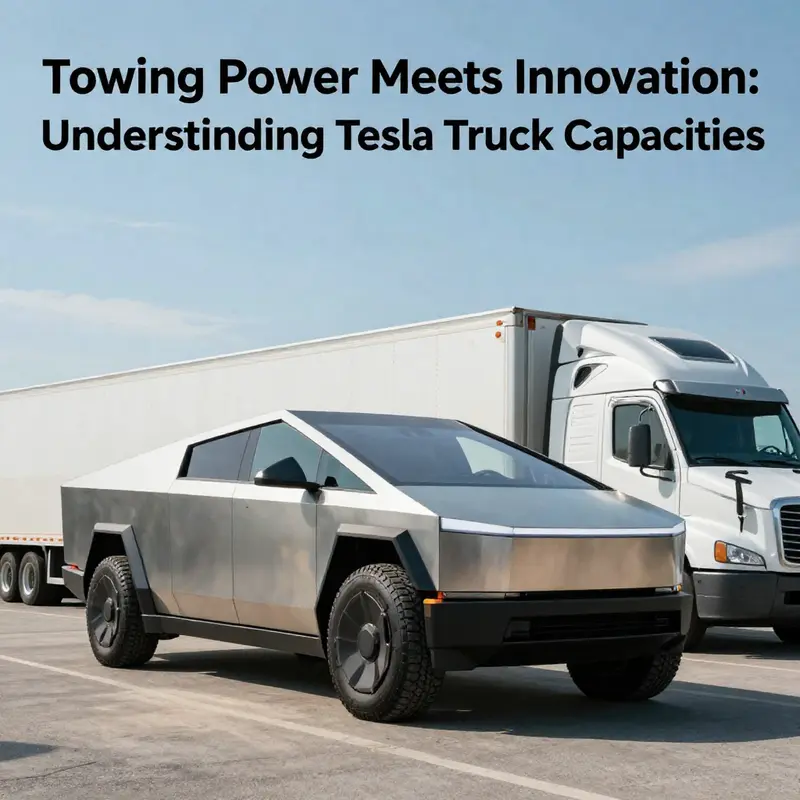
Tesla trucks, specifically the Cybertruck and Semi, are revolutionizing the world of towing with their exceptional capacities and innovative features. Business owners seeking reliable towing solutions will find that the Cybertruck can handle an impressive load of up to 11,000 pounds, ideal for various applications. Meanwhile, the Tesla Semi redefines heavy-duty transport capabilities with a maximum payload of around 80,000 pounds. In this exploration, we’ll delve into each model’s towing capacities and specifications, comparing them with industry competitors to see how they stack up in the market.
Tow Limits Redefined: How Much Can a Tesla Truck Really Tow?
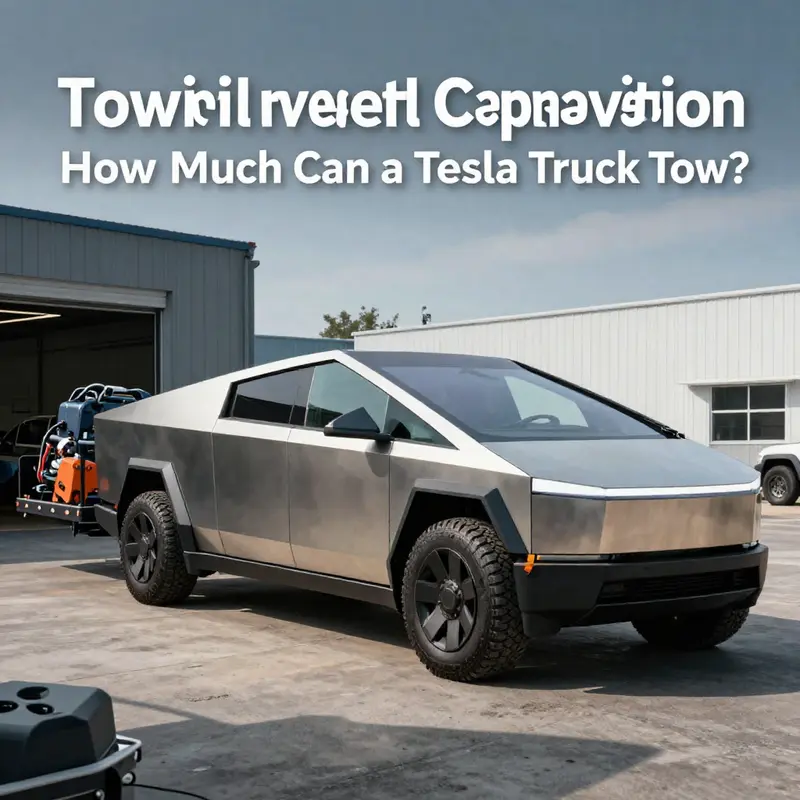
When the question turns to capacity, the Tesla Cybertruck immediately anchors the conversation in a realm of impressive numbers. The Tri-Motor AWD version is rated to tow up to 11,000 pounds (about 4,990 kilograms), a figure that places it at the high end of what light-duty electric trucks can haul. That rating isn’t just a marketing badge; it signals a machine built for sustained pulling tasks, from trailers and boats to heavy construction gear. In the real world, where weight distribution, hitch design, and road conditions all matter, the number still serves as a strong baseline for planning big pulls and long runs with confidence. The Cybertruck’s towing capability likewise positions it ahead of many non-electric rivals in this segment, reinforcing the perception of electric trucks as viable workhorses rather than mere commuter alternatives. This capability is the result of an integrated approach to performance that blends electric torque, chassis tuning, and intelligent suspension, rather than a single standout feature.
At the core of this capability is the truck’s three-motor setup, which delivers robust torque across a range of speeds and loads. The Tri-Motor AWD configuration is engineered to sustain high-load conditions without the usual drop in traction that can accompany heavy trailers. Yet power is only part of the story. The Cybertruck’s electronically adaptive air suspension adds a critical layer of stability during tow tasks. With 305 millimeters of suspension travel and a ground clearance of 406 millimeters, the system can adapt to uneven surfaces and shifting trailer dynamics. This combination—high peak torque, modulated traction, and a suspension tuned for load responses—helps the vehicle stay composed behind a heavy trailer, reducing sway and improving control during acceleration, cornering, and braking.
Beyond raw pulling power, the Cybertruck is designed as a versatile workhorse. Integrated 120-volt and 240-volt outlets extend the truck’s utility beyond propulsion. Those outlets can power tools on a job site or keep other equipment charged while you’re on the move, a practical advantage when towing on remote sites or during multi-task days. And in the event of an outage, the Cybertruck can provide up to 11.5 kilowatts of power directly to a home, turning the vehicle into an emergency energy source. This capability matters not just for convenience, but for reliability in areas where outages can interrupt critical operations that depend on a tow vehicle as much as the load itself.
The magnitude of 11,000 pounds begins to provoke comparisons that frame public perception. In the context of heavy towing, the Cybertruck’s capability has been likened—playfully yet informatively—to the mass of a large animal, underscoring the scale of what many people routinely move on a trailer. While such metaphors shouldn’t replace spec sheets, they help visualize the sheer heft involved in towing large, stable loads. In practice, hauling a trailer or boat at or near the maximum rating demands careful attention to trailer setup, weight distribution, and wind resistance. Even with a capable powertrain and suspension, the actual effectiveness hinges on hitch selection, tire ratings, and the condition of the towing path.
For anyone contemplating a heavy tow in a busy environment, the Cybertruck’s architecture offers a compelling balance of capability and practicality. The existence of substantial outlets, paired with the potential for home power support, suggests a potential workflow where a single vehicle serves both as a towing machine and as a mobile power hub. In scenarios where a job requires moving heavy equipment between sites or crossing uneven terrains, the vehicle’s adaptability can translate into time savings and better on-site logistics. It also invites consideration of the broader ecosystem around towing—how a vehicle’s electrical and hydraulic ballast interacts with trailer brakes, sway control, and load distribution to maintain stability even under demanding conditions.
For local practicalities, a nearby tow-truck service can provide essential on-site support if ever a load becomes unmanageable or if unexpected road conditions challenge the tow. For readers in the Washington DC area seeking reliable, on-demand assistance, a trusted local option can be found here: tow truck Washington DC. This link is intended to connect readers with a service that understands the complexities of heavy towing in urban and suburban corridors, where traffic, grade changes, and limited staging space can influence outcomes.
In all, the Cybertruck’s 11,000-pound towing rating signals more than raw power. It marks a commitment to a versatile platform capable of combining high-strength pulling with practical on-board power and thoughtful suspension tuning. It is easy to see why this truck sits at the intersection of capability and practicality for both professionals and enthusiasts who need a reliable vehicle for demanding towing tasks. As with any high-demand vehicle, prospective buyers should carefully match the configuration to their typical loads and routes, ensuring that tow equipment, hitch classes, and weight distribution strategies align with the intent of use. The figure is a guidepost—an assurance that electric propulsion can deliver serious towing performance while still offering the ancillary benefits of power outlets and emergency home support.
External reference for deeper technical context: https://www.tesla.com/cybertruck
Heavy Haul Redefined: Unpacking the Tesla Semi’s Freight Towing Capacity

When people ask how much a Tesla truck can tow, they often expect a single, simple number like with light pickups. In the world of heavy freight, the conversation centers on how a tractor-trailer can move weight over long distances while staying efficient and compliant with road rules. The Tesla Semi shifts the frame of reference from a pure pulling force to a holistic hauling capability. It is designed to move substantial cargo with electric efficiency, and its towing capacity is best understood through two linked measures: the maximum gross combination weight (GCW) and the payload, alongside how the vehicle performs under load on the open road. The official figures anchor the discussion: a maximum GCW of about 37.2 tons (82,000 pounds). That figure includes the weight of the tractor, the trailer, and the cargo. In contrast, the payload rating—the cargo you can load onto the trailer—is about 48,000 pounds (roughly 21.8 tons). The tractor’s own weight, plus the trailer, must all stay within the GCW ceiling, while the cargo alone is capped by the payload number. To put it plainly, the Semi can haul up to about 21.8 tons of freight under optimal configurations before the scale tips beyond legal limits, with the trailer’s weight and any ballast still contributing toward the total GCW. This distinction matters because it clarifies why “towing capacity” in heavy-duty logistics isn’t a single figure but a balance between payload, vehicle weight, and regulatory boundaries. The difference also helps fleets plan routes, load configurations, and hub-to-hub schedules with greater confidence, knowing how much freight can be moved per trip without crossing a line that could trigger compliance issues. The numbers themselves invite a practical interpretation: the Tesla Semi’s payload rating signals the maximum freight you can carry, while the GCW caps the entire combination’s weight. In highway terms, that means a sigh of relief for managers who must calculate not just the cargo but the weight of the entire rig on every climb and descent. The mathematics matter because they influence tire wear, braking dynamics, and even the cadence of loading at depots. The Semi’s powertrain—dual electric traction systems—delivers robust torque at low speeds, which translates to confident starts with a fully loaded trailer and sustained performance on grades. In other words, the propulsion system is tuned to move heavy weight efficiently, not merely to achieve a flashy peak pull. Yet the performance story isn’t told by peak power alone. The design team’s aerodynamic choice—an air-resistance coefficient around 0.36 Cd—reduces drag, which matters when you’re carrying a heavy load across hundreds of miles. Lower drag means less energy per mile, enabling a larger practical payload over a given route and giving fleet operators more predictable energy budgeting for long hauls. Range, too, plays a central role. The Semi is capable of up to about 800 kilometers (roughly 500 miles) on a single charge under optimal highway conditions, a figure that reframes how fleets approach charging infrastructure and downtime. If a long-haul schedule involves several legs with limited charging opportunities, the balance of GCW, payload, and range becomes a live optimization problem. It is one thing to haul a heavy payload on a straight highway with ample recharging options; it is another to do so through rolling hills, urban corridors, and variable weather, where energy use can swing based on grade, wind, and temperature. In practice, the Tesla Semi sits comfortably within US Class 8 standards, where the gross vehicle weight and the total combination weight are the key constraints for legal operation. The distinction between GCW and GVWR is subtle but important: GVWR defines the vehicle’s own weight limit, while GCW governs the load the combination can legally carry. For many operators, the GCW figure is the practical ceiling on what can be moved, while payload identifies how much freight gets loaded onto the trailer. The ability to accelerate from 0 to 60 mph in about 20 seconds with a fully loaded tow demonstrates that electric traction can meet the demanding on-ramp and grade requirements of modern freight networks. This performance, paired with a wide, efficient payload window, makes the Semi a meaningful option for long-haul fleets seeking to reduce fuel costs and emissions without compromising reliability. Market implications flow from these specifications as much as from any battery chemistry or charging cycle. Large brands have already placed orders, signaling a broader shift toward electric trucking in freight-intensive sectors. The promise is straightforward: lower operating costs through energy efficiency, complemented by the flexibility to operate across a network of distribution centers and corridors where charging can be staged to minimize downtime. In dense regions such as Washington, DC, fleets increasingly rely on robust local support for on-site charging and rapid roadside assistance, underscoring why a dependable towing service matters for freight operations. For fleets seeking reliable local support in the DC area, professional services are available at towing-service-washington-dc. External realities will continue to shape adoption: regulated weights, maintenance cycles, and the evolving charging ecosystem all interact with payload and GCW to determine the true daily capacity of electric heavy-duty transport. For readers who want the official source data, the Tesla Semi page provides the precise specifications behind these figures, including the payload, GCW, and range. External resource: https://www.tesla.com/semi#specs
Tow Power in the Electric Arena: Evaluating Tesla’s Truck Towing Against Modern Rivals
Tow power in the electric arena often centers on the balance between capability and efficiency. Among electric pickup offerings, one model has proven durable in the towing sphere, delivering a maximum rating of 11,000 pounds (4,990 kg). This figure is widely cited and verified across dealership displays and automotive press, signaling a robust towing profile that can handle a broad range of trailers—from utility campers to mid-sized work trailers—when weight and balance are managed carefully. Yet the landscape isn’t static, and when one peers at the numbers from competing brands, the picture shifts in meaningful ways.
A rival electric pickup can tow up to 13,500 pounds (6,123 kg), placing it clearly above the Cybertruck at its peak. Another strong option comes in around 13,300 pounds (6,033 kg), narrowing the gap. A third capable model sits just above the Cybertruck’s ceiling, at roughly 11,580 pounds (5,253 kg). Taken together, the Cybertruck remains competitive within its class, though the upper end of the segment now enjoys a higher ceiling for heavy trailers.
Towing ratings, of course, are not the only factor deciding how useful a truck will be on the road. The number reflects what the manufacturer considers a safe, controlled pull under specific test conditions. Actual performance depends on drivetrain tuning, suspension geometry, wheel design, hitch setup, and, crucially, the payload you carry in the bed. When a truck is loaded with passengers and gear, or when towing long, heavy or poorly balanced trailers, the effective tow might dip below the advertised maximum. For prospective buyers, this is a reminder to size trailers with a margin for safety and to understand the dynamic nature of tow ratings.
The Cybertruck’s emphasis on durability, efficiency, and a clean, low-drag profile helps it remain a compelling option for many households and light commercial tasks. It offers substantial payload capacity alongside towing ability, which means it can haul equipment and cargo with fewer trips. For buyers who study the numbers carefully, the decision often weighs the smallest details: how often the trailers will be used, the typical load, and how much range will be used while towing. Electric propulsion adds a layer of predictability to performance in many scenarios, since instant torque is available at the moment of demand and the motor cooling system is designed to sustain use without early fatigue.
For truly heavy freight operations, the Tesla Semi belongs to a different category altogether. Its design centers on moving large payloads with efficiency across long hauls. The vehicle’s maximum gross vehicle weight rating (GVWR) is about 36.29 metric tons (approximately 79,800 pounds), which dwarfs consumer pickups in sheer mass-handling capability. While the Semis’ primary function is freight, its engineering demonstrates that the electric platform can push into the realm of heavy-duty transport. The vehicle’s performance under load—accelerating from a standstill to highway speed in roughly 20 seconds even with a fully loaded tow—speaks to the torque and control built into the powertrain and drivetrain architecture. It is a reminder that the measuring sticks for electric trucks differ by class, and that each segment prioritizes different outcomes: maximum tow for a pickup versus maximum payload and efficiency for a freight tractor.
In daily practice, the towing figure for a pickup like the Cybertruck represents a practical threshold for households and small businesses. It supports towing recreational trailers, utility trailers, and site equipment without requiring specialized heavy-duty equipment. The decision, then, becomes a balance between appetite for towing and the desire for electric efficiency. Range, charging infrastructure, and total cost of ownership all ride alongside the numeric tow rating, shaping how often and how far the vehicle will be used in tow mode. For urban and regional work, the ability to tow with fewer visits to the pump translates into meaningful operational savings, while the need to plan for charging on longer journeys remains a central planning task.
For readers considering towing logistics, practical advice still applies: factor in weight distribution, braking capacity, and trailer length; ensure your hitch and braking system are up to the task; and recognize that towing with any electric vehicle will affect range more than driving unladen. For those seeking local support on the road, a dependable tow service can provide real-time assistance and safety margins. If you’re near a major city, you can explore options such as a local towing service in Washington DC for regional needs—towing service in Washington DC. This kind of service offers the contingency planning that complements the vehicle’s own capabilities.
External resource: official specifications for the Cybertruck provide the primary numeric reference. See https://www.tesla.com/cybertruck/specs for the authoritative data, and consult broader reviews to understand how real-world towing differs from test bench figures and marketing numbers.
Final thoughts
Tesla trucks offer remarkable towing capabilities that cater to business needs, with the Cybertruck providing 11,000 pounds of towing capacity ideal for a diverse range of tasks, and the Semi reimagining heavy-duty transport with its payload capacity of 80,000 pounds. As the trucking and towing landscape evolves, Tesla remains at the forefront, providing innovative solutions that enhance operational efficiency. For business owners, investing in Tesla trucks presents a robust opportunity for reliable transportation and heavy-duty performance, ensuring your logistics can keep pace with modern demands.