
When a vehicle breaks down or gets involved in an accident, the first thought is often how to get help quickly. For business owners, understanding the intricacies of how tow trucks locate cars can improve decision-making and enhance customer service. This article delves into the essential components of this process, beginning with the pivotal role of dispatchers and then examining the technological advancements that streamline the towing service. By grasping these elements, you can ensure every emergency is handled efficiently and effectively.
The Dispatcher’s Map: How Tow Trucks Pinpoint Your Car Without a Built-In Locator
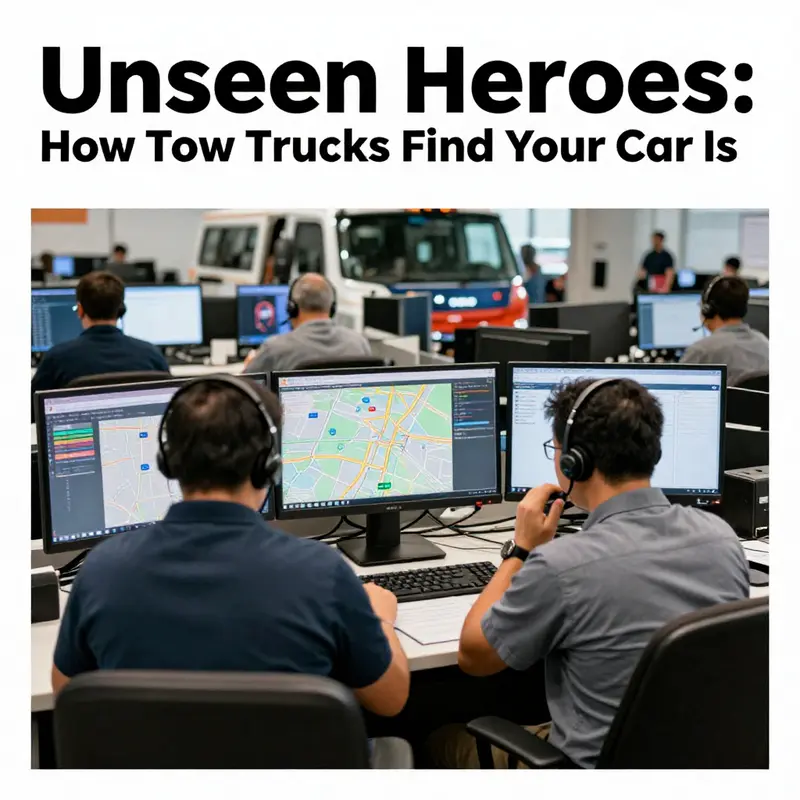
When a car stalls, slides off the road, or sits stranded in a parking lot, people often imagine a tow truck with some hidden, built‑in locator that automatically knows exactly where the car is. In practice, tow trucks do not possess a universal, self‑activating beacon that scans streets and pinpoints a vehicle from a distance. Instead, the chain of knowledge runs through a single, central figure in every job: the dispatcher. The dispatcher is the human brain and the software backbone of the operation, a command center that translates a problem on the ground into a precise, workable plan of action. From the moment you call for help, the dispatcher becomes the crucial intermediary, translating location descriptions into a real‑time map of nearby assets, weather conditions, traffic, and safety considerations. What sounds simple on the surface—a driver arrives where you are—rests on a sophisticated process born of coordination, data, and communication, not on a magical built‑in detector in the tow truck itself.
At the heart of the process is a phone call or a digital request for help. When you reach out, you become the source of truth for the system: your location, the state of your vehicle, any hazards you can describe, and the surrounding environment. The dispatcher’s first job is to capture that information clearly and accurately. They ask for an exact location, but they also know that a street address may be inconvenient or ambiguous in certain settings. Descriptions of landmarks, nearby intersections, or unique features—like a gas station canopy, a hotel drive, or a municipal building—are not merely helpful but sometimes essential. In urban centers, a caller might provide multiple locators: a street name and number, cross streets, or a geofence with GPS coordinates. The dispatcher then converts that live, situational data into a formal job ticket that travels through a central software system, much like a conductor guiding an orchestra of moving parts.
The notion that a tow truck could autonomously locate a car is appealing, but it ignores the realities of road conditions, privacy, and the limits of sensing technology in ordinary fleets. Most modern tow fleets do equip their vehicles with GPS trackers for fleet management and route optimization. Yet these trackers tell the dispatcher where the truck is and where it is headed, not where your car stands in the middle of a highway shoulder or a dimly lit parking lot. The dispatcher uses real‑time fleet data to identify the nearest available truck, but that determination hinges on the information you provide. In other words, your location is the seed; the software and the fleet’s GPS are the engines that drive the response. The dispatch system cross‑checks the difference between a truck’s miles away versus the time it would take to reach you, balancing speed with the need to bring the right kind of equipment for your vehicle. A car that can be towed with a wheel‑lift will require a different configuration than a car that needs a flatbed; the dispatcher weighs these factors and assigns the most suitable unit accordingly.
This coordination is not a rigid one‑size‑fits‑all protocol. It hinges on the specific conditions of the moment: the time of day, traffic patterns, weather, and road hazards. The dispatcher scans these variables as they would a map, choosing routes that minimize danger and maximize safety. If the road ahead is slick, if there is an accident blocking a lane, or if a heavier storm is bearing down on a particular corridor, the dispatcher can preemptively reallocate a truck to a safer angle for arrival. In this way, the dispatcher doubles as a safety officer, continuously assessing risk and adjusting the plan to safeguard you, the operator, and other road users. The software often integrates mapping tools that visualize traffic density, incident reports, and potential bottlenecks, helping the dispatcher pick a route that keeps the tow driver informed and the arrival time as tight as possible.
The actual moment of arrival still belongs to the truck operator, the person who performs the physical work of hooking, loading, and transporting the vehicle. The dispatcher’s role, however, is to equip that driver with the right information before they depart. They confirm the vehicle type, so the operator chooses the proper rig—whether a wheel‑lift or a flatbed—and they communicate any special considerations. A car with a damaged frame, a stranded SUV with a high center of gravity, or a vehicle with a dangerous leak may require extra precautions and different equipment configuration. The dispatcher also relays safety instructions tailored to the conditions on the ground. If the roadside is busy with traffic, if there’s a need to block the wheel with chocks, or if visibility is poor due to rain or fog, those precautions become part of the pre‑departure briefing. The aim is to set up the driver with a clear, safe, and executable plan before the vehicle is touched.
As the journey unfolds, the tower of information grows more intricate. Dispatchers often employ mobile apps and integrated telematics to monitor the status of their fleet. They watch the location of the nearest units, the progress of each dispatch, and the time elapsed since the job was opened. If a truck encounters a problem—traffic detours, a stalled route, or a sudden change in weather—the dispatcher can pivot quickly, reallocating resources to maintain efficiency and safety. Because the dispatcher is the nexus of data streams, their decisions can also reduce the risk of miscommunication at the scene. When a driver arrives, they already know the precise problems to look for and the steps the dispatcher has deemed safest. The end result is not a single pickup but a small, orchestrated recovery operation that keeps risk in check and minimizes the chance of further damage to your vehicle.
One of the persistent misunderstandings is the belief that the tow truck itself has a mysterious sensor that detects your exact position. In reality, the system relies on the quality of information supplied by you and the dispatcher’s ability to translate that information into action. The dispatcher’s questions are purposeful: Is the vehicle on a busy street or a private driveway? Is it accessible from the curb or would the truck need to be positioned in a specific way? Are there hazards such as power lines, uneven pavement, or soft shoulders? The answers help determine not just which truck to deploy, but how to approach the problem on the ground. If a road is icy, the truck’s tires may need chains or additional weight distribution; if the car is in a parking garage, the driver may require a compact rig designed to maneuver through tight spaces. The dispatch workflow adapts to these realities, rather than pretending the car is found by a hidden beacon.
For urban travelers who may worry about privacy or precision, there is a practical reassurance. The dispatcher invests in clear communication with the caller. The more specific the information the caller provides, the faster the right truck arrives. This means identifying exact location details, describing nearby references, and confirming the vehicle’s condition. If a caller can’t recall an exact address, mentioning a business or landmark, the cross streets, or a photo of the scene can accelerate the process. In areas with dense street networks, a little extra detail can dramatically shrink response times. The dispatcher, in turn, uses that information to optimize the sequence of events: which unit should go first, which route to take, and how to guide the driver around hazards without escalating risk. The result is less idle time in traffic, fewer miscommunications on the roadside, and a smoother, safer transfer from stranded to secure.
The relationship between dispatcher and driver is a partnership built on shared situational awareness. The dispatcher does not stand idly behind a desk; they actively monitor the assignment, adjust for conditions, and keep the driver informed throughout the journey. They are the in‑between that translates a chaotic roadside moment into a controlled operation. If you need to be reached, the dispatcher will call or text to confirm details, offer safety instructions, or provide updates on ETA. If a problem arises—like a horse of a lane closure that forces a detour—the dispatcher can promptly contact the driver with alternate routes, re‑prioritize the order of calls in a busy zone, or even dispatch a backup unit if the situation requires more hands on deck. This dynamic, real‑time coordination is what keeps the process from turning into a frustrating guesswork exercise and instead makes it a predictable, repeatable service.
The bottom line is simple: tow trucks do not locate your car through a hidden device on your vehicle. They locate it through a well‑oiled system that depends on your input, the dispatcher’s data, and fleet‑level intelligence. The dispatcher is the map, the compass, and the nerve center that coordinates the response. The driver is the hand that executes the plan, and the vehicle is the asset that must be handled with care and proper equipment. In that sense, understanding the dispatcher’s role helps you understand the real mechanics of roadside recovery. It highlights why precise, descriptive location information matters, why there can be a moment of back‑and‑forth to confirm details, and why the most efficient recovery depends on clear communication. If you ever wonder how a tow truck finds you so quickly in a busy city or a quiet suburb, you can picture the dispatcher standing at the center of a network, guiding a fleet through a living map that marries technology with human judgment. For readers seeking practical pathways to experience the service in familiar locales, consider the option in Washington, DC, where reliable local towing service is accessible in moments through a dedicated provider’s network, and you can learn more about the local service presence by visiting the dedicated page for towing service in Washington, DC.
In the broader landscape of roadside support, the dispatcher’s role is mirrored by the same principles across towns and cities. Whether you are in a bustling metropolitan corridor or a quiet suburban street, the system relies on you providing accurate location cues and on the dispatcher translating those cues into a time‑sensitive action plan. The interplay between your real‑world surroundings and the digital tools the dispatcher employs creates a dependable flow from distress to resolution. It is this interplay that has reshaped how quickly a problem is acknowledged, how accurately a location is interpreted, and how safely a vehicle is retrieved and transported. It is also a reminder that, while technology can accelerate response and render data more usable, the human element—the experience, judgment, and empathy of the dispatcher—remains indispensable to delivering timely, responsible service. If you want to explore the practical dimensions of this service, you can consult the broader guidelines that roadside assistance programs offer as part of their frameworks, and you can review the official resource that outlines the scope and purpose of roadside assistance programs for the public: https://www.nhtsa.gov/road-safety/roadside-assistance
Following the Signal: How Tow Trucks Locate Your Car Through Tech, Dispatch, and Telemetry
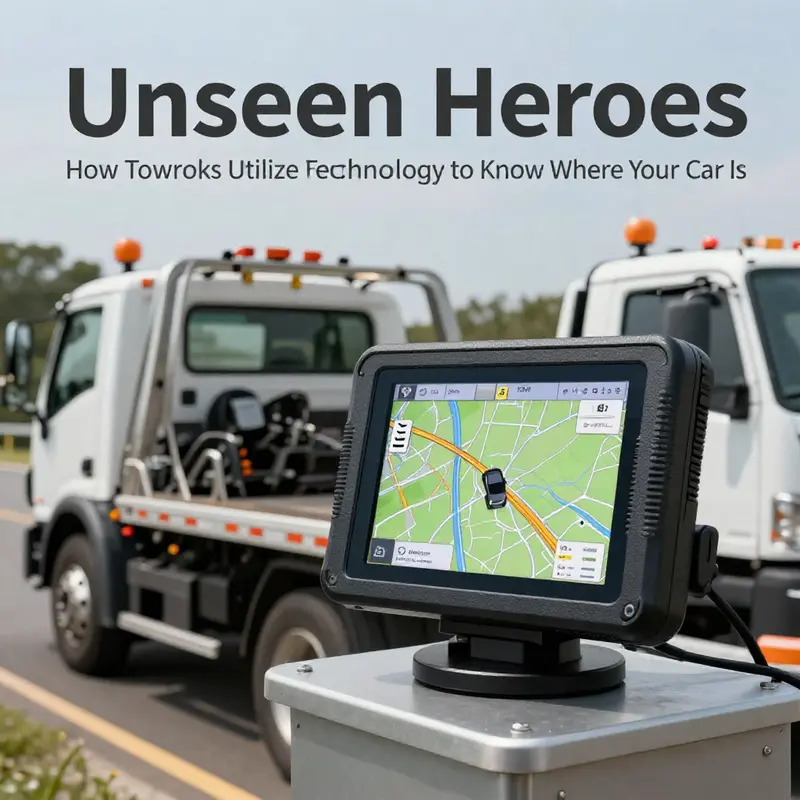
When people ask how tow trucks know where your car is, the best answer is usually a careful one: they don’t magically know the exact spot on a map unless you give them the information and the supporting technology does the heavy lifting before the truck arrives. The image of a lone vehicle cruising the streets with a hidden sensor for every stalled car is appealing, but the real system is built from human input and layered digital tools. The process starts with you and the moment you reach out for help, and it ends a few minutes later with a tow truck arriving at the precise location you described. Between those two points, a web of telematics, dispatch software, and fleet logistics coordinates the search, prioritizes safety, and aims for a quick, reliable response. The result is a coordinated flow rather than a single device watching every street corner. Tow trucks, in effect, act as the visible link in a chain that traces your location from your call to a secure, safe ride to wherever you need to go next.
When a breakdown or an emergency occurs, the first link in this chain is your decision to call for help. You may reach a roadside assistance provider, a towing service, or emergency services. The information you provide matters a lot. You mention your current location, describe your surroundings, and share details like nearby landmarks, street names, or mile markers. You might also provide GPS coordinates or point to a map on your phone. Modern smartphones simplify this step by automatically sharing location data with services that have the right permissions, but the accuracy still depends on how precise you can be about where you are at the moment you call. In practice, the dispatcher doesn’t depend on a perfect pin on a map alone; they compile the data you give with what their systems can determine from your call, your description, and any app-based location services that can be connected to the incident. The dispatcher’s job is to convert that mixed information into a concrete deployment plan: which tow truck is closest, which is free, and which can reach you fastest without compromising safety or efficiency. If you’re in a densely trafficked area, or if an accident has created a bottleneck, the dispatcher may also factor in live traffic conditions to avoid routes that would erase the time gained by proximity.
A critical point often overlooked is that the precise “where” of your car is not a constant stream of live tracking from the tow truck once it’s on the way. Instead, the location of your vehicle is established at the moment you request assistance and is then fed into the dispatch system as the scene details. Your car’s true location, defined at the moment of the call, becomes part of the request payload. Some of this data comes from the vehicle itself through built-in telematics systems or connected mobile apps. In vehicles equipped with such systems, location data can be transmitted to the roadside provider or to the customer service portal, letting the dispatcher see a near-exact coordinate rather than relying solely on a verbal description. The same data pipes can be used later to guide customer updates about arrival times, creating a more transparent handoff from the scene to the tow.
In parallel with your location, the dispatch center relies on robust routing software. These systems map out the fleet in real time, showing the positions of all available tow trucks and their interconnections with the road network. The software weighs multiple factors: distance to the scene, current traffic speeds, road closures, weather conditions, and the priority of the call. It then assigns the most suitable vehicle to the job, often the one that can reach you fastest while maintaining safe driving practices and efficient fuel use. The result is a dynamic puzzle that is solved in seconds, with the dispatch screen updating as new information flows in. The software also helps the operator communicate with the driver en route, sending turn-by-turn instructions and any changes in the scene details, such as the presence of a second vehicle or a need for additional equipment. It is in this ecosystem that the concept of “where your car is” becomes a precise, shareable data point rather than a vague impression.
On the road, the tow truck itself is more than a vehicle with a winch and a hook. The fleet is often equipped with GPS and telematics that the company uses for managerial purposes: monitoring location for safety, tracking fuel consumption, recording maintenance needs, and ensuring that drivers follow the fastest safe routes. This onboard technology is not primarily about watching the car you’re in; it’s about watching the truck you’re in and making sure the operation runs smoothly from dispatch to delivery. For example, the system can alert a dispatcher if the truck has deviated from its assigned route, if the driver is braking too hard, or if a scheduled maintenance item might affect performance. In practice, these tools help ensure timely service and accountability across the fleet. They contribute to a sense of reliability for the customer, even if the car itself isn’t being continuously tracked by the tow truck after it’s loaded.
The distinction between locating your vehicle before service and following it during transport is subtle but important. Before arrival, the “where” often originates from your phone or the vehicle’s telematics. After the car is loaded onto the tow, the primary concern shifts to the truck’s journey: its own position, the route it travels, and the safety of the operation. Some customers worry about privacy or being tracked in real time. Reassuringly, in most professional towing operations, the towed vehicle is not actively tracked by someone watching its exact location in real time. What is tracked is the truck’s own progress and the secure handoff of the vehicle at the destination. The customer may receive periodic updates on ETA or progress through the provider’s app or call center, but this does not imply a continuous, real-time feed of the towed car’s location beyond what is necessary to ensure a safe and efficient transfer.
To illustrate how this comes together in a typical scene, imagine a motorist who experiences a breakdown on a suburban street. The call is placed, and the dispatcher captures a location from the caller, possibly augmented by a map on the caller’s phone. The system then matches an available tow truck that can reach the spot quickly while considering traffic. The driver receives the assignment with a suggested route and any scene details. If the vehicle is equipped with telematics, the location data may be shared with the dispatcher, providing a precise point that speeds up arrival. As the tow truck approaches, the driver may be guided by a live map showing the caller’s location relative to the truck’s position. When the tow is complete, the car is secured, loaded, and transported to the chosen destination. The truck’s GPS remains active for fleet management, not for continuous surveillance of the towed car.
The practical takeaway is that the language of “knowing where your car is” is really a layered, distributed system. The initial pinpoint comes from the caller’s location, which can be augmented by the vehicle’s telematics or a connected app. The dispatch software translates that information into an actionable deployment, selecting a nearby tow truck and plotting the fastest safe route. The tow truck’s onboard systems help the company monitor the journey and keep the operation efficient, while the customer receives updates on progress. No single device must perform a magic detection of your car; instead, a coordinated network of data points and human decisions does the work. The result is a robust, responsive service that can reach you quickly, even as you navigate the stress and uncertainty of a roadside problem.
In settings where a local provider emphasizes rapid response in a specific region, a practical tip emerges: use the service’s app or your phone’s location permissions to share your position when you request help. This does more than speed up arrival; it creates a clearer signal for the dispatcher, reducing ambiguity and the chance of miscommunication about your exact location. If you’re unfamiliar with the process, a quick call to a local company can also reveal whether they can accept precise location data from your vehicle’s telematics or a linked app, and how they handle updates during the response. For anyone curious about a concrete example of a local option, consider the Washington DC area, where a regional towing service emphasizes rapid response and clear communication through its service pages. towing service Washington DC.
The landscape of location information is not just about speed; it is also about reliability and safety. Modern dispatch workflows prioritize accuracy because a precise location helps the tow truck reach a scene without guesswork, reducing the risk of delays and unsafe maneuvers in traffic. It enhances safety for the driver, the vehicle being towed, and the surrounding motorists. It also supports accountability, as the data trail can document when a call was placed, how the location was determined, and how the vehicle was dispatched and delivered. For consumers, this translates to a more predictable experience: a realistic ETA, fewer miscommunications, and a transparent sense of progress as the tow truck moves toward the scene and then steers the vehicle toward its intended destination. In short, the way tow trucks know where your car is is less about a single sensor and more about a networked approach that blends human timing with digital precision.
External resource: For a broader overview of roadside assistance programs and safety considerations, you can consult the National Highway Traffic Safety Administration’s roadside assistance guidance at https://www.nhtsa.gov/road-safety/roadside-assistance
Final thoughts
Understanding how tow trucks locate vehicles is essential for business owners relying on towing services. By recognizing the dual importance of human expertise and technological advancements, companies can enhance their operational efficiency. When emergencies arise, timely action leads to satisfactory resolutions for all parties involved. Adopting a proactive approach in dealing with towing services ensures a smoother, more reliable experience for customers.