
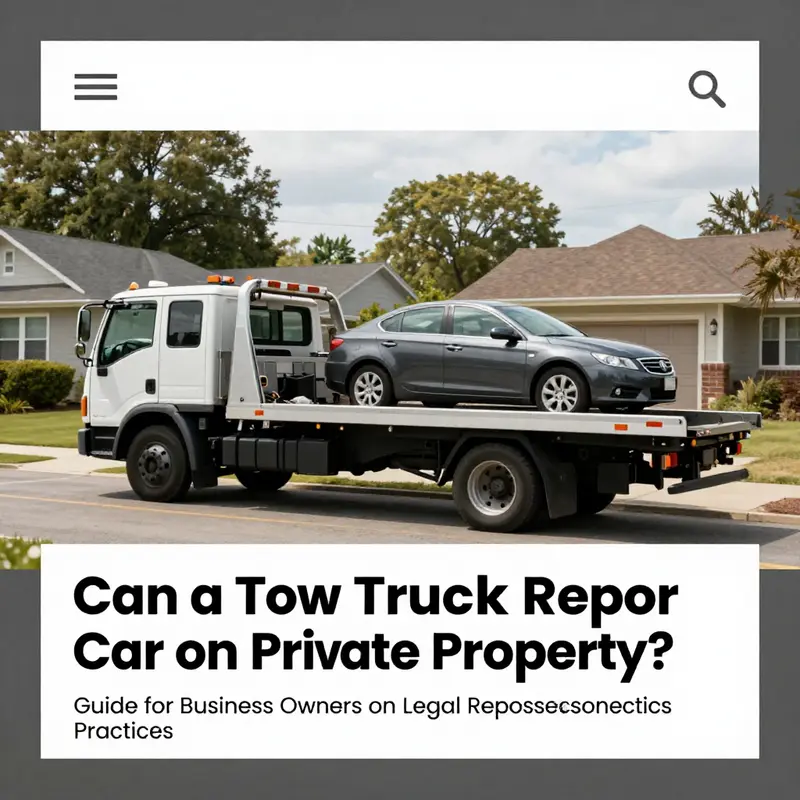
Understanding vehicle repossession on private property is crucial for business owners who may deal with financing vehicles. The implications of a tow truck repossessing a vehicle can be significant. This article delves into the legal framework surrounding repossession, the processes and methods employed by tow trucks, and the consumer rights that protect individuals from unlawful practices. Each chapter will provide insights essential for navigating this complex landscape, ensuring business owners are well-informed.
Private Property, Real-World Repossession: Navigating When a Tow Truck Can Repossess Your Car
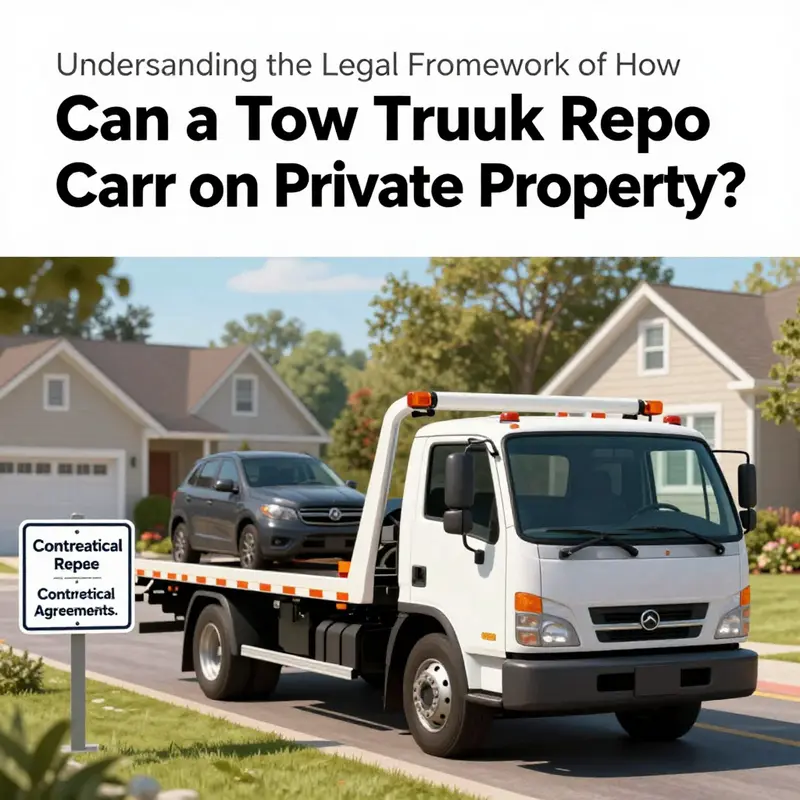
The question of whether a tow truck can repossess a car on private property sits at the intersection of contract, property rights, and state law. The short answer is nuanced: it depends on who has the legal right to reclaim the vehicle, what terms govern the loan or lease, and how local rules translate into practical action. In many cases, a lender contracts with a repossession agent to recover a car when payments fall behind. The agent then acts within the boundaries of that contract and the jurisdiction’s statutes. On private property, this means the vehicle can be taken if the lender has a lawful right to repossess and the property owner or manager has given the agent authority to act in that space. Yet the landscape is not a free-for-all. Authorities and property managers balance the lender’s rights with the owner’s privacy and the property’s policies, creating a framework in which legality hinges on compliance with procedure, notice, and what the property allows or forbids.
In practice, the mechanics of a private-property repo can vary widely. One common method is on-hook towing, where the tow truck attaches to the vehicle in a manner that is designed to minimize damage and maximize safety. In some contexts, the owner’s awareness or consent may accompany the process; in others, a tow may occur with little or no prior notice, particularly when the contract explicitly authorizes immediate recovery. Regardless of the approach, the operation typically must avoid trespass, break-ins, or use of force against people or structures. The lender’s agreement with the repossession agent often limits the agents to retrieving the vehicle itself, not entering residences or locked spaces such as garages. The overall legality rests on a blend of contract terms and the applicable state laws.
A growing body of guidance emphasizes transparent and lawful practice. California, for example, codifies several prerequisites that aim to prevent abusive towing while still permitting legitimate recovery when conditions are met. Towing can occur when the vehicle is illegally parked, when clear no-parking signs are posted, and when owners are given notice before action. After removal, the vehicle must be stored at a designated facility with a clear fee schedule and retrieval process. In some situations, police or local law enforcement permission may be required, especially when the action could be deemed a property invasion. These steps are not mere formalities—they protect owners from arbitrary seizure and provide a structured path to reclaim. The point is not to erase the lender’s right to recover, but to ensure that right is exercised within a legal framework that safeguards consumers and property owners alike.
Owners who want to protect themselves can start by looking for posted warnings and understanding the parking rules in their area. If a tow occurs, gathering documentation—loan or lease agreements, payment history, and communications with the lender—can help establish the basis for the tow. It’s prudent to contact the lender or the authorized towing company to confirm legitimacy and to request a transparent explanation of charges. If the situation feels unlawful or unclear, reporting to local authorities or seeking legal counsel can clarify the rights and remedies available. The real-world takeaway is that repossession on private property is not a blanket permission granted to any towing outfit. It is a carefully bounded act grounded in contract and law, designed to resolve delinquency without invading personal space or property more than necessary.
For readers seeking a regional lens, a practical reference point is the way private-property towing is handled in nearby jurisdictions, where you can observe how enforcement and access issues play out on the ground. See Washington DC towing services for a regional perspective and real-world examples of how procedures unfold in a dense urban setting. Washington DC towing services.
Ultimately, the path from contract to repossession on private property hinges on precise legal rules, clearly defined property rights, and a disciplined execution by licensed professionals. If you own or manage property, or if you’re navigating a delinquent loan, your best defense is understanding the specific rules that apply where you live, documenting everything, and seeking informed guidance when questions arise. The formal framework is not a mystery to unlock; it’s a map to follow, one that protects your property, your finances, and your right to due process.
External reference for statutory context: https://leginfo.legislature.ca.gov/Faculty/Statutes/Code/Civil_Code/2040-2050.html
From Driveway to Docket: Revealing the Realities of Repossession on Private Property
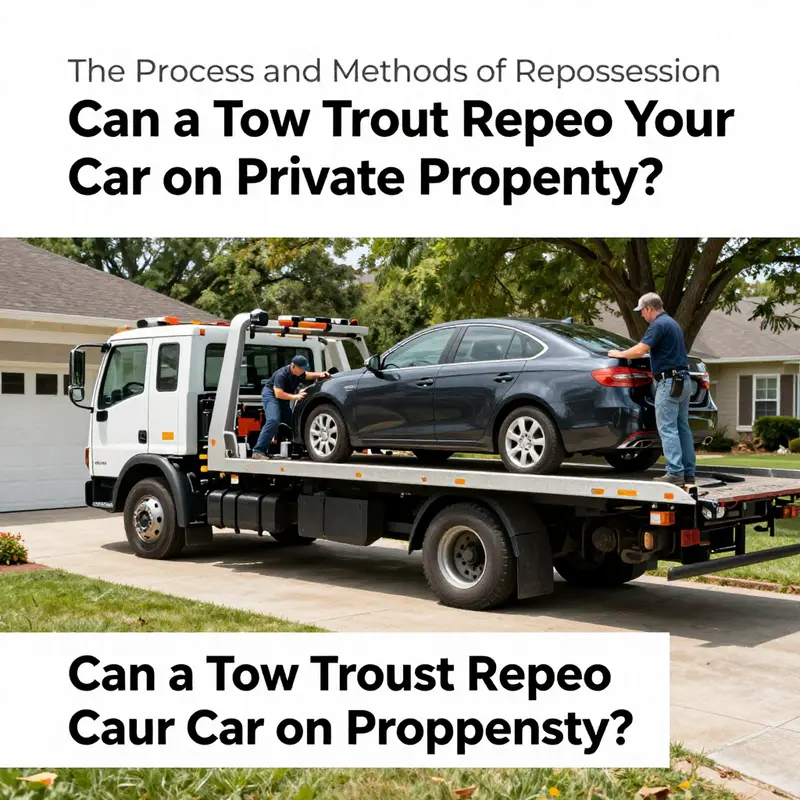
Repossessing a car from private property is not a capricious act born from a lender’s whim. It rests on a carefully drawn balance between contract rights and the owner’s property and personal safety. When a lender uses a repossession agent, the agent acts under a security agreement that makes the automobile collateral. In most cases the contract gives authority to recover the vehicle after default on the loan. Under the Uniform Commercial Code, secured creditors may repossess collateral without a court order, provided they avoid breach of the peace. This phrase means the action must remain nonviolent, non-threatening, and non-confrontational. A repo on a driveway, a private lot, or a closed garage may proceed if these conditions are met and the property owner is not obstructed. The key point is not to surprise the debtor with a sudden, forceful removal, but to operate within the law and the terms of the contract. For readers navigating this topic, the legal framework is a map, not a mandate to grab what is owed. The reality is more nuanced than headlines suggest, shaped by both the financing agreement and local property rules.
Operators verify default by checking loan records, payment histories, and the status of the account. They then plan a method that reduces risk for both parties. On-hook towing, where the tow hook attaches to the vehicle frame, is common when the owner is present or when the lender has clear authorization. It is efficient and minimizes damage, but it still requires careful handling to avoid disputes. In more difficult settings—on a muddy driveway, in a narrow lane, or behind a locked gate—the crew may employ winches, pulleys, and higher clearance recovery vehicles. In those cases the goal is safe extraction with minimal collateral damage, rather than a dramatic spectacle. Flatbeds can offer full vehicle transport with the least wear, yet they may not always be practical in tight spaces. The equipment choice is driven by the car layout, surface conditions, and the space around the vehicle. This is not a one size fits all operation; it is a series of calculated steps designed to keep everyone safe while securing the lienholder’s interest. For readers seeking regional context, see the practical overview of local towing capabilities at tow-truck-service-washington-dc.
Legal considerations shape every move. Trespassing concerns arise if the operator enters the debtor’s home, garage, or fenced area without consent or a court order in places that demand it. Some jurisdictions require notice before seizure, especially when private property is involved. A strong emphasis on non-breach means even a lawful repossession can become unlawful if force, threats, or intimidation are used. That is why repossession teams work under strict guidelines and industry standards designed to keep the process orderly and non-disruptive to neighbors or bystanders. The terms of the financing agreement, the type of property, and local statutes will determine whether notice is needed or if a court order is required in a given situation. For the consumer, this means staying informed about the loan terms and understanding rights described by consumer protection agencies. In practice, many repossessions occur with caution and coordination, prioritizing non-disruptive methods and clear boundaries about what may be entered or touched on private land. Keeping lines of communication open with lenders can reduce escalation and help both sides reach a practical resolution when possible.
From a homeowner’s perspective, clarity matters. If a car is near a driveway or in a private lot, a lender may pursue recovery through the carrier they hired. Yet a patient dialogue with the lender can prevent escalation. Documented communication, verification of default, and awareness of local rules can reduce misunderstandings. If the property is accessible, a private lot owner may permit retrieval without a formal challenge, but if access requires entering a building or crossing a threshold beyond the property boundary, it becomes a legal gray area. For readers seeking practical guidance on the mechanics of towing in the region, see the regional service overview linked above. The broader point is that repossession on private property is a governed process that balances lender rights with the debtor’s legal protections. As laws evolve and case law tests boundaries, the emphasis remains on non-disruptive, lawful actions that respect both contract terms and private property rights.
Ultimately, understanding the framework helps both sides anticipate risk and avoid unnecessary conflict. The process hinges on contract law, property rights, and the common law notion of breach of the peace. By following the rules, repossession can be conducted with minimal disruption, preserving safety for the driver and the vehicle, and shielding the owner from unwarranted intrusion. For more on the standards and types involved in repo towing, see the external resource linked in the research notes: https://www.repotowingsolutions.com/complete-analysis-of-repo-towing-standards-and-types
What You Can Expect When a Tow Truck Shows Up on Your Property: Consumer Rights and Protections
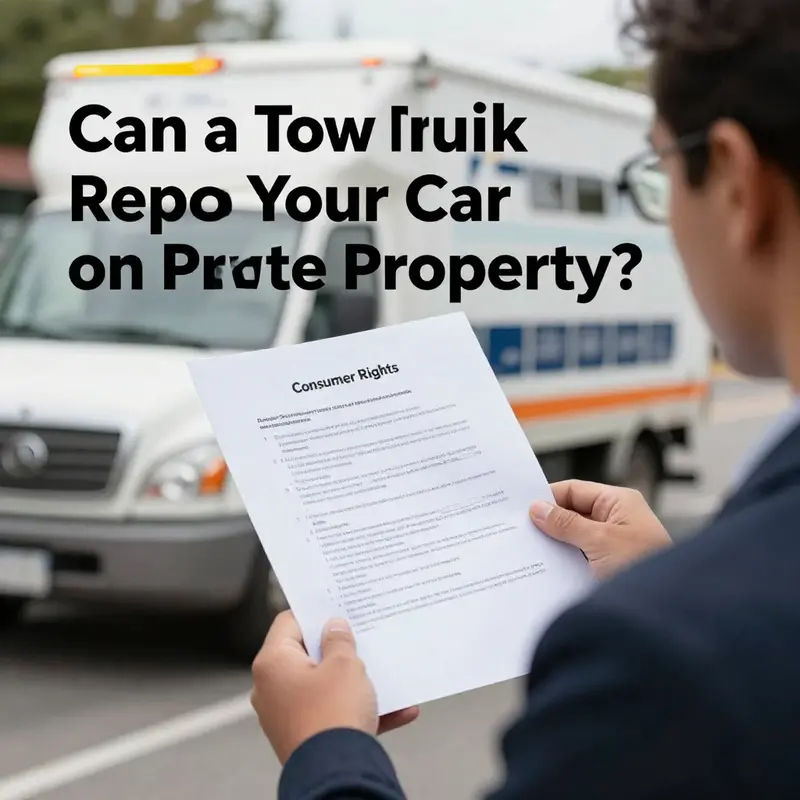
Understanding consumer protections when a tow truck arrives on private property
When a lender or repossession agent seeks to recover a vehicle from private property, certain limits and safeguards apply. Repossession is often lawful, but it is not a free-for-all. The right to recover a vehicle does not allow unsafe, violent, or unlawful behavior. Repossession agents must follow contract language and state rules while avoiding force, threats, or unlawful entry.
A foundational rule is simple: no force, no threats, no breaking and entering. Agents may not break locks, force open garages, or climb fences. They cannot enter a home or a locked structure to reach a car. If the vehicle sits in an open driveway, a visible parking area, or past an unlocked gate, it may be lawfully taken. But if accessing the car requires trespassing or damaging property, the agent must stop and seek other lawful remedies.
The financing contract and state laws shape what follows. Many loan or lease agreements explicitly grant the lender a right to repossess after default. State statutes then determine acceptable tactics and consumer protections. These rules often address when repossession may occur, notice requirements for sale, what the creditor must do with the vehicle after recovery, and how the borrower can redeem the vehicle by paying the balance. Understanding the contract terms is vital. Where the contract and state law diverge, state law usually governs.
If an agent attempts to take a vehicle, document everything. Photograph the scene. Note whether locks were forced, whether a gate was closed, and whether the agent entered a locked area. Record names, company badges, and vehicle numbers on the tow truck. Clear documentation helps if you later claim wrongful repossession or property damage.
You also have rights regarding your personal property inside the vehicle. Repossession focuses on the secured collateral—the car itself. Agents must typically allow retrieval of personal items. If the tow driver refuses, insist on an inventory or get contact details for the impound lot. Many states require the lender to give notice on where the vehicle is stored and how to recover personal belongings.
When repossession crosses a legal line, remedies exist. Wrongful repossession can be challenged in court. Courts may order return of the vehicle, award damages for improper seizure, or require compensation for property loss or damage. Consumers can report unlawful conduct to state consumer protection offices and federal authorities like the Consumer Financial Protection Bureau. If you suspect trespass or theft, contact local law enforcement immediately and present documentation.
Practical steps reduce risk and confusion. First, communicate early with your lender if you face trouble paying. Lenders sometimes offer reinstatement, payment plans, or voluntary surrender terms that avoid abrupt repossession. Second, keep clear records of payments and communications. Third, if a repo agent appears, request proof they represent the creditor and take images of identification. Fourth, be prepared to assert your rights calmly, and avoid physical confrontation.
Towing companies and repossession firms must follow industry and legal standards. They should avoid deceptive practices, follow safe recovery methods, and provide required notices about storage location and sale procedures. If you need to verify a company’s practices or find an authorized local towing firm, consider contacting reputable local operators such as towing companies in Washington, DC for guidance on legal recovery methods and storage rules.
Fees, sale processes, and redemption windows differ by state. After repossession, you usually face storage or towing charges and a deadline to redeem your vehicle by paying what you owe. If the lender sells the vehicle, state law often requires a fair sale and notice to the borrower. The borrower may owe a deficiency balance if the sale does not cover the loan.
Knowing your rights helps you respond effectively. Repossession on private property is possible, but it is regulated. Agents cannot use force or trespass, contract terms and state law set the boundaries, and you have remedies when those boundaries are crossed. For a concise overview of the legal framework and industry practices, refer to this resource: https://www.alibaba.com/news/can-a-tow-truck-repo-your-car-on-private-property-20260209.
Final thoughts
Navigating the complexities of vehicle repossession on private property is essential for business owners. A well-understood legal framework, knowledge of repossession processes, and awareness of consumer rights create a protective environment for businesses dealing in vehicle financing. By equipping yourself with this knowledge, you can mitigate risks associated with repossession and ensure compliance with legal mandates, ultimately fostering better relationships with clients and financial partners.