
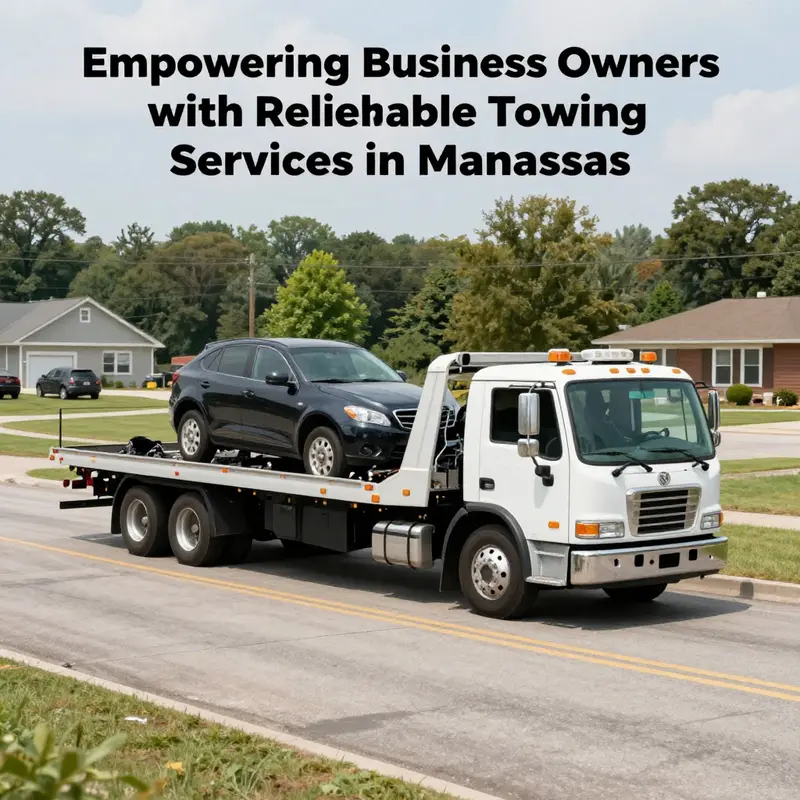
In the bustling community of Manassas, effective towing services are paramount, especially for businesses needing rapid roadside assistance. Recognizing a towing company’s role goes beyond mere vehicle retrieval; it’s about ensuring timely support that enhances customer and employee safety. This article delves into Tow Truck Manassas, reviewing its local offerings, how it compares to nearby firms, and the level of service quality it consistently provides. By examining these elements, business owners can better understand the towing landscape and make informed decisions for their emergency roadside needs.
Tow Trucks on the Move: Mapping Manassas’s Local Towing Network
Manassas sits along the routes that drivers rely on day and night. When a car stalls on a warm summer stretch or fog-slicked back road, the first call becomes a lifeline back to safety. Local towing services in Manassas operate not as a single provider, but as a compact, responsive network designed to cover both the town and the surrounding suburbs. The choreography of this ecosystem hinges on proximity, reliability, and clear communication that turns a stressful moment into a straightforward recovery.
One operator with a long history in the area operates from 9713 Sudley Manor Drive. This location represents more than a postal address; it is a hub where drivers find quick responses and straightforward pricing. The emphasis is on reliability and affordability, two factors drivers weigh heavily when a vehicle breaks down or an accident blocks a lane. The value of prompt arrival can be the difference between a long wait in dangerous traffic and a safer, orderly recovery. For residents and travelers, this local presence provides a sense of continuity and accountability in a service that matters.
Beyond that central option, a handful of nearby providers extend the reach of the network. For instance, a mobile repair capable service sits roughly 1.5 miles away, offering on-site mechanical assistance that can keep a car. For people whose vehicles are still drivable but exhibit a roadside fault, this on-site support can prevent a tow altogether or shorten a tow to a simple roadside fix. In another direction lies a service that can field calls across a wider radius, ensuring help reaches even those farther from downtown. Together, these options form a robust coverage map for Manassas and its outskirts, letting drivers feel that relief is never far away when the road turns against them. The equipment used in towing matters as well. A light car might benefit from a wheel-lift approach that minimizes contact with the undercarriage, while heavier trucks and SUVs often require a flatbed to ensure safe transport without further damage. Operators emphasize careful loading, proper strapping, and the use of protective pads to prevent scratches and dents. For motorists, understanding that the right rig is chosen for their vehicle adds to the peace of mind during a stressful moment.
To navigate this landscape wisely, many turn to public feedback platforms that thread real experiences into a practical guide. Yelp, for example, aggregates customer reviews that highlight response times, the condition of equipment, and the professionalism of the crew. While online opinions can vary, the accumulation of recent feedback helps new callers gauge which provider is best suited to a given moment and location. For those who want fresh data along with a geographic sense of scale, map-based listings provide the immediacy of a real-time audit trail. In practice, drivers often compare distance, price, and posted hours when deciding which operator to call in an emergency. When reading reviews, look for consistency in response times, how loading was handled, and whether follow-up support was offered if a problem arose after the tow.
When choosing a tow service, consumers look for several core traits. Speed is essential, but it is not the only criterion. Clarity about pricing before a job begins reduces the shock of the final bill. A well-equipped tow truck with the right setup for the vehicle type matters, whether it is a car, a SUV, a van, or a light truck. Dispatch accuracy matters too; a good operator asks the right questions about location, vehicle condition, and the expected arrival window. In Manassas, the best options keep a consistent presence on the road, with crews that communicate clearly, arrive prepared, and treat the situation with a calm, professional demeanor. This is not merely about getting a car onto a flatbed; it is about preserving safety, reducing risk during loading, and ensuring the driver feels supported through the episode. Before any tow, a responsible operator will perform a brief on-site check to determine if the car can be moved safely and whether a tow is the best immediate option, or if a simple roadside fix might suffice.
That sense of support stems from the way the local towing network integrates with the broader transportation environment. Road conditions, weather, and traffic patterns all influence how quickly assistance can reach a stranded motorist. The proximity of service providers near central corridors and residential streets—paired with the availability of on-site repairs—creates a flexible system. In practical terms, this means a driver on Sudley Manor or nearby neighborhoods can be confident that help exists within a few miles, and often within minutes. The knowledge that nearby trucks are ready to deploy can transform a daunting roadside moment into a manageable turnaround, with minimal disruption to plans and obligations. In winter and during storms, trained crews adapt their loading methods to maintain traction and stability, recognizing that safety must come first even as time remains critical.
A closer look at the local options is available on the Manassas towing page. Manassas towing offers a snapshot of how the network maintains redundancy and reliability, ensuring that the service remains accessible when it is most needed. By embedding this page into the overall narrative, the article grounds the general discussion in a concrete local footprint, linking reader expectations with a practical point of contact and a tangible place to begin any towing inquiry.
Ultimately, the story of Manassas towing is the story of a community prepared to respond. The small scale of the town lineup allows each provider to tailor its approach to the circumstances, whether a vehicle stalls on a quiet side street or a highway accident creates a more complex recovery. The real strength lies in how the community pieces together different capabilities into a coherent safety net. It is not just about moving a vehicle from point A to point B; it is about restoring mobility, reducing stress, and offering reliable assistance when the clock is ticking. For anyone who has ever felt stranded on a remote stretch, the local network represents a steady, confident option within reach, ready to bridge the gap between breakdown and back on the road.
External resource: MapQuest listing
On the Road Home: Evaluating Manassas Tow Truck Against Nearby Towing Options
When a vehicle stalls on a sunlit shoulder or after a sudden crash, the choice of who arrives first, who asks the right questions, and who explains the bill with honesty can determine how quickly a stressful moment becomes manageable. In Manassas, the road to a reliable tow starts with a local shop whose footprint is the geography around Sudley Manor Drive and the neighboring routes that thread through Northern Virginia. This chapter looks beyond the obvious appeal of speed and into the more nuanced advantages that a nearby, locally rooted towing service brings to residents and travelers alike. It is a story not of brand names or nationwide reach, but of proximity, local knowledge, and the simple but powerful idea that trust grows when help is close at hand and the people who answer the phone know the streets by heart. In this context, the Manassas area has a spectrum of options, yet the real distinction often lies in how quickly a tow can be dispatched, how clearly the price is explained up front, and how the service continues to feel personal even as the clock ticks toward a resolution.
Proximity matters in the most tangible way. When a vehicle gives out on a busy corridor or on a quiet residential street, every minute of delay carries a practical and emotional cost. A local operator, grounded in the same traffic patterns, can anticipate common bottlenecks and select routes that avoid known hiccups. The benefit is not only faster arrival times, but also a smoother journey for the driver and passengers who are already navigating the embarrassment or anxiety of a breakdown. In Manassas, where neighborhoods knit together with the surrounding commercial corridors, a nearby tow truck can reach the scene with a shorter travel distance and a more predictable price tag. The straight line from the shop to the roadside is rarely the only factor at play, but it is often the most noticeable one when seconds matter and every mile of detour matters to the bill.
The second pillar is the depth of local road knowledge. A shop rooted in Manassas tends to understand the lay of the land—the fastest lanes to take around Sudley Manor, the occasional detours caused by construction along major arteries, and the most efficient maneuvering when a vehicle must be loaded and transported. This familiarity isn’t about flashy expertise; it’s about practical navigation. It translates into fewer unnecessary turns and a more direct path to the final destination, whether that destination is a repair shop, a preferred dealership, or a personal garage. For drivers who are new to a region or who have lived there for years, that intrinsic sense of direction becomes a measurable comfort. It’s the quiet confidence that the person on the other end of the line can chart a sensible course even when the road ahead is unclear, and it often reduces the cognitive load on anyone already overwhelmed by a roadside emergency.
Pricing transparency is the third hallmark. The era of mysterious surcharges and fluctuating quotes is not a relic in the abstract; it can still surface in moments of stress. A local operator who emphasizes clear, upfront pricing provides a kind of emotional relief that complements the practical relief of a prompt tow. Without hidden fees tied to time of day, distance traveled, or unexpected complications, the bill becomes a straightforward sum: a fair charge for the service rendered. This clarity matters precisely when the alternatives might involve longer waits or negotiable terms that require more questions and more time to settle. A transparent approach helps customers plan for the unexpected, allowing them to focus on their immediate safety and the next steps after the tow arrives.
Personalized service completes the trio of advantages. Locally owned operations often have an easier time maintaining a steady line of communication with customers. The person who answers the call, the dispatcher who tracks progress, and the driver who arrives at the scene share the same goal: to restore mobility with courtesy and competence. In many situations, this translates into a series of small but meaningful gestures—checking in after the vehicle has been loaded, confirming the expected arrival window, or offering practical advice about next steps once the vehicle is in tow. The sense that a neighbor or a familiar local business is behind the service can transform a tense moment into a manageable one. It is not merely about moving a car from point A to point B; it is about preserving dignity, reducing stress, and ensuring that the road still feels navigable even when a car fails to start.
The landscape around Manassas includes a range of nearby providers, each with its own strengths. The larger regional operators may offer extensive coverage and robust logistics, yet they can sometimes be slower to arrive and harder to tailor to a single customer’s needs in a time of pressure. On the other side, smaller regional players deliver strong personal attention, but their capacity to scale during peak demand may be limited. The value proposition for someone stranded beside a local street, however, frequently comes down to the same three pillars—proximity, local road knowledge, and pricing transparency—paired with the personal touch that only a locally rooted shop can sustain.
For residents and visitors alike, the choice of who to call is rarely a single decision; it is a composite assessment built from experience, recommendations, and the observed behavior of a company over time. A helpful rule of thumb is to consider how a tow provider communicates before ever arriving on the scene. Do they offer a rough estimate? Do they confirm the ETA and keep it updated as conditions change? Do they convey respect for the time and safety of everyone involved? These questions, when asked in plain terms, often reveal the character of a local operator and shape whether the eventual outcome is a simple tow or a reaffirmation of community trust in a moment of need.
In this sense, the landscape of Manassas towing is less about choosing among brands and more about choosing a partner who can be relied upon in the same neighborhood that gives the city its character. A nearby shop with transparent pricing and a deep understanding of local routes becomes more than a service; it becomes a dependable ally when a vehicle falters, turning a potentially disruptive incident into a survivable, even ordinary, disruption of daily life. For those seeking a pragmatic, neighborly approach to roadside assistance, this is the kind of reliability that makes the distinction between transient trouble and a resolvable moment—one that keeps you moving toward your next destination with minimal friction.
For readers who want to explore local options further while keeping place and proximity in view, the Manassas-towing page offers a concise entry point into the regional landscape. It provides a snapshot of how a local operator’s approach translates into tangible outcomes on the road. This perspective matters because it frames the decision not as a choice between competitors, but as a choice to partner with a nearby organization whose roots are in the community and whose daily work reflects the priorities of local travelers. External information and user reviews on the MapQuest listing can augment this understanding by offering a glimpse into real-world experiences and the consistency of service across different situations.
External reference and further reading can be found at the following source: https://www.mapquest.com/business/manassas-tow-truck-9713-sudley-manor-dr-manassas-va. For those who want a direct path to more context about local towing options and up-to-date feedback from customers, the Manassas-towing page also serves as a useful gateway, anchoring the discussion in a practical, visitable resource: Manassas-towing.
null
null
Final thoughts
Choosing a reliable towing service is crucial for business continuity and customer satisfaction. Tow Truck Manassas stands out for its commitment to service quality and responsiveness, ensuring that local businesses can confidently rely on their expertise during emergencies. By understanding the local towing landscape and making informed choices, business owners can enhance their overall operational readiness and provide reassurance to clients and employees alike.