
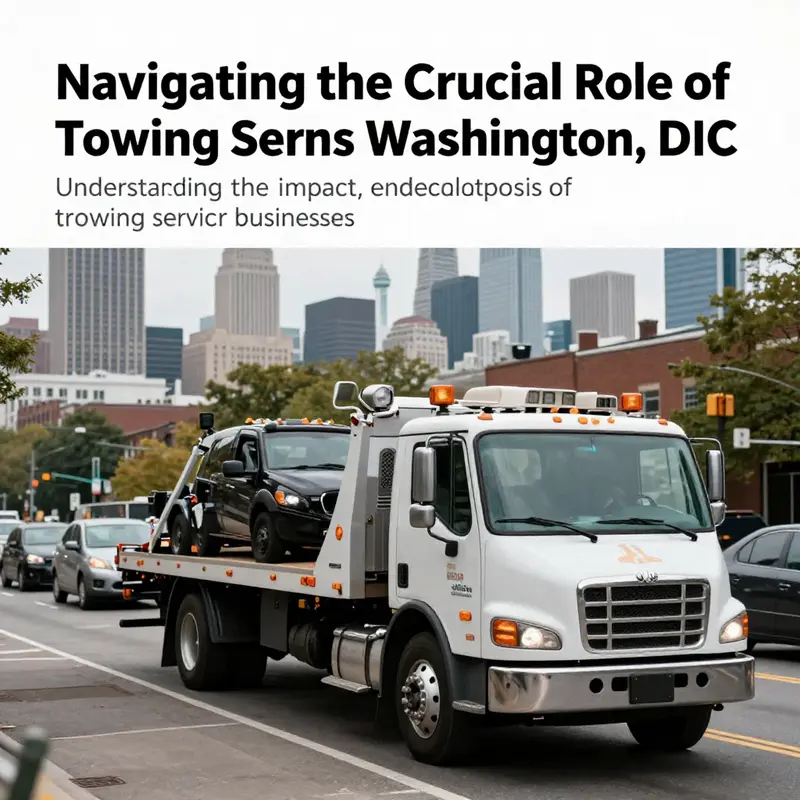
In the bustling environment of Washington, DC, where every moment counts for businesses, towing services play a pivotal role in maintaining urban mobility and efficiency. For business owners, understanding how towing services function not only helps in preventing costly disruptions but also opens avenues for better operational strategies. This article delves into the vital aspects of towing services in DC, exploring their importance to urban mobility, their economic footprint, and the regulatory landscape that governs their operations.
Tow Roads, Flowing City: The Integral Role of DC Towing in Urban Mobility
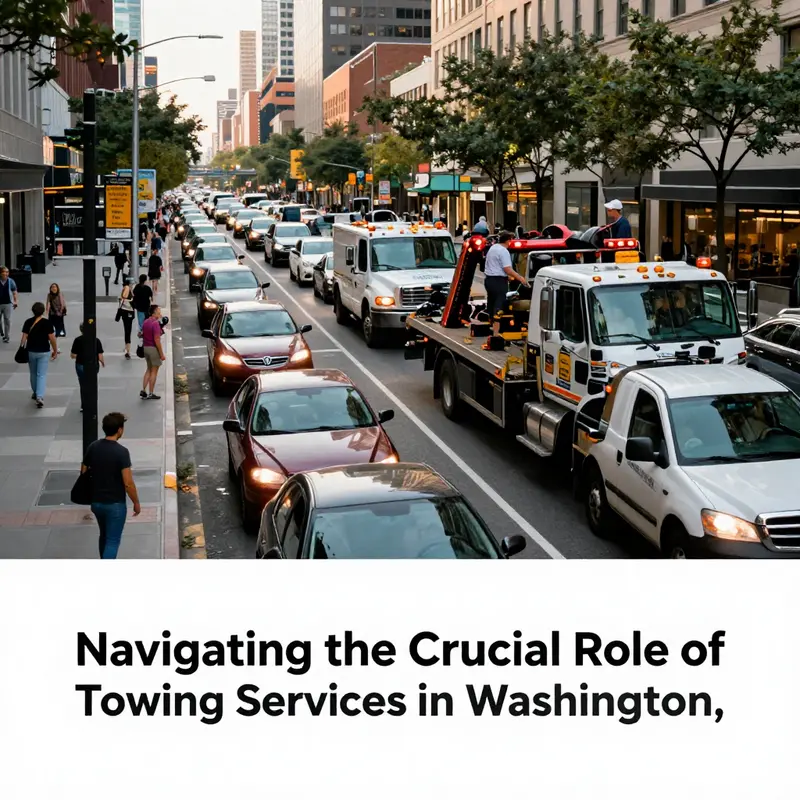
In the dense grid of Washington, DC, every minute counts for people on the move and for the vehicles that shuttle goods through the city. The role of towing services in this environment is not merely to recover a stranded car; it is to restore a thread in the urban fabric that keeps traffic moving, deliveries arriving, and emergency responses unblocked. In 2026, the most effective towing providers have evolved into coordinated components of the city’s mobility framework, operating around the clock and coordinating with other systems to minimize disruption rather than simply responding to it. Their work is quiet, but its impact is loud: it determines how quickly a stalled bus can return to a lane, how fast a delivery truck can reach a storefront, and how smoothly a broken-down vehicle will be removed from a critical artery during rush hour.
This chapter examines how DC’s towing ecosystem functions as a living, adaptive layer within urban mobility. It begins with the practical realities—the constraints of narrow streets, the pace of city life, and the imperative to clear incidents without creating new hazards. In a city where every corridor has its own rhythm, the value of a fleet that can reach a problem site swiftly depends on more than raw power. It rests on discipline, precise dispatch, and an ability to fit a vehicle into limited spaces while coordinating with other responders. Light-duty units, favored for their agility, are trained to navigate residential streets, alleys, and crowded intersections with minimal disruption. Their compact profiles allow for rapid deployment, reconfiguration, and, when needed, delicate handling of damaged passenger cars in busy urban cores. The presence of integrated warning and lighting systems further enhances safety, signaling to other drivers and pedestrians while the scene is being managed.
Yet the street drama rarely ends with a single vehicle. Even a minor breakdown on a major corridor can trigger a wave of ripple effects: blocked lanes, delayed buses, and frustrated commuters. That is where the specialized versatility of equipment comes into play. Modern towing operations combine lift, tow, and flatbed loading to remove stranded vehicles without compromising the surrounding traffic environment. The ability to switch quickly between modes—lifting a car from a curb, loading onto a flatbed for safe transport, or performing a controlled winch on a steeper incline—translates directly into reduced secondary incidents and shorter downtimes. In the best operators, these capabilities are paired with robust onboard diagnostics and real-time visibility. A driver can assess the vehicle’s health remotely, anticipate what the recovery will require, and coordinate with a nearby incident response team to stage the operation so it integrates with traffic flow rather than blocking it.
On arterial routes and in less forgiving weather, heavy-duty towing becomes essential. Buses, commercial vans, and larger trucks can overwhelm a standard tow setup, so medium and heavy-duty units carry specialized equipment designed to stabilize, lift, and transport without compromising safety. The presence of such units on DC’s road network is not just about moving a single vehicle; it’s about preserving the continuity of essential services—the ability of a hospital shuttle to reach its patients, the fuel supply chain for district centers, and the smooth operation of emergency corridors. The goal is to prevent a single incident from cascading into a wider mobility disruption—an outcome city planners and responders actively try to avoid through coordinated response protocols and preplanned staging areas.
The urban mobility equation also hinges on technology that connects roadside assistance to the city’s broader information ecosystem. Modern towing operations increasingly rely on GPS tracking, real-time dispatch updates, and direct communication with traffic management centers. This integration enables proactive planning and data-driven decision-making. For example, when a breakdown occurs near a busy transit hub, the system can reallocate nearby resources, adjust signal timing at adjacent intersections, and inform affected lines about alternate routing. Such coordination is not a luxury but a necessity in a city where every lane can influence the rhythm of thousands of commuters. The interoperability between field crews and central operations reduces the chance of bottlenecks and helps responders arrive with the right equipment the first time. In Washington, DC, this level of synchronization is a visible sign of how the city has transformed roadside assistance from a reactive service into a strategic tool for mobility resilience. For readers seeking a practical sense of what this looks like on the ground, the DC towing landscape offers a clear example of a structured, responsive network Washington DC towing.
Beyond the immediate scene, the flow of information and the cadence of response shape the daily experience of urban travel. A well-orchestrated towing operation reduces the duration of lane closures and lowers the risk of secondary incidents, which are among the most dangerous outcomes of roadside breakdowns. That dynamic is especially pronounced during peak commute periods when even a small obstruction can ripple across several miles. In these moments, the towing fleet becomes a stabilizing force, enabling predictable, repeatable responses that allow the rest of the traffic management system to function with a higher degree of reliability. The result is not merely safer streets but more dependable travel times, which in turn influence planning decisions for residents, businesses, and visitors navigating the district each day.
Policy and planning perspectives reinforce this practical logic. The role of towing services extends into broader transportation policies and urban design. Preventive planning, including provisions for efficient roadside assistance, can reduce long-term infrastructure strain by shortening incident durations and improving traffic recovery after disruptions. The lessons drawn from broader regional and international experiences show that even seemingly peripheral services contribute to the resilience of the city’s transportation network. When cities embed towing capacity into their early design considerations, they are acknowledging that mobility is not only about vehicle speed but about the reliability of every link in the chain—from the moment a vehicle fails to the moment it exits the roadway. This perspective also supports cross-modal transport objectives, ensuring that a hiccup in one mode does not undermine the functioning of others. By enabling quicker removal of obstructing vehicles, towing services help preserve dedicated lanes for buses and light rail, maintain safe zones for pedestrians, and uphold the integrity of critical corridors essential for emergency response and economic activity.
Ultimately, the story of towing in urban mobility is a story of first responders who operate with precision, care, and a deep understanding of complex city rhythms. They are not merely hired hands; they are key participants in a digital and physical ecosystem that treats the road as a shared resource. As cities grow smarter and more interconnected, the role of towing services will continue to evolve—from simple recovery to intelligent, coordinated intervention that aligns with real-time traffic information, predictive analytics, and integrated urban planning. The transformation is ongoing, but the direction is clear: every strategic adjustment in roadside assistance translates into a smoother, safer, and more reliable urban experience for everyone who depends on the city’s roads.
For readers seeking broader context on how urban towing is evolving in smart cities, this external analysis offers further perspective: https://www.cityinfrastructurereview.com/urban-towing-services-2026
The Quiet Engine: How DC’s Towing Network Shapes Traffic, Jobs, and the City’s Bottom Line
On the surface, towing is a very specific, situational service. Pull a car from a shoulder, clear a lane blocked by a stalled vehicle, or recover a mangled ride after a fender bender. Yet when you step back, the work of towing in Washington, DC reveals itself as a core piece of the city’s economic and logistical fabric. It is not merely about moving cars; it is about preserving the rhythm of urban life. The city’s streets function as a complex machine whose efficiency depends on timely interventions to remove hazards, reallocate space, and restore access to essential routes. In this sense, towing services operate as a kind of quiet infrastructure, a fleet of responders who keep the gears turning even when the public eye is elsewhere. Their reliability matters far beyond the moment of roadside assistance, shaping daily routines for commuters, delivery crews, emergency responders, and small businesses that depend on predictable travel times and clear access to customers and suppliers. The economic impact emerges as a multi-layered effect, where safety, productivity, and municipal management intertwine with job creation, revenue streams, and the governance of a fair and transparent system.
Traffic flow and safety are the most immediate ways towing affects the city’s economy. Vehicles that obstruct travel lanes or block access for emergency services create spillover costs—delays, detours, increased fuel consumption, and heightened risk of secondary incidents. By removing illegally parked or abandoned cars, towing operators open corridors for buses, taxis, ride-hailing vehicles, and freight carriers. The result is a smoother cascade of activity: fewer bottlenecks in peak hours, faster ambulance and fire responses, and more reliable transit schedules. In a city where time translates into dollars, those minutes saved translate into tangible productivity gains for workplaces, hospitals, and government operations alike. It is a public service that pays with greater efficiency across the board.
Beyond the street, towing services anchor local employment. The industry employs a spectrum of workers—from skilled drivers to dispatchers, account managers, and administrative staff who coordinate logistics and maintain records. Each role supports a broader ecosystem: fuel providers, maintenance shops, insurance providers, and parts suppliers all feel the ripple effects of steady demand. This is not a one-operator economy; it is a networked system that sustains local livelihoods and offers pathways into skilled trades for residents. The City’s residents benefit when these opportunities exist close to home, strengthening neighborhoods and expanding workforce participation. The economic footprint of towing, thus, extends into neighborhoods, not just the curbside, reinforcing communities with stable jobs and predictable local spending.
Revenue and fiscal considerations form a second axis of impact. The District collects fees and fines from vehicle removals and storage, and those funds fund city services, transportation management systems, and capital improvements that improve mobility for all residents. In this sense, towing contributes to municipal revenue that can be reinvested in road maintenance, signage, lighting, and more efficient enforcement technologies. Yet this financial role opens questions about how enforcement is carried out. Regulators worry that over-reliance on towing as a revenue stream could erode trust if enforcement appears opaque or biased toward revenue generation rather than fair service delivery. The DC regulatory environment has evolved to address these concerns, emphasizing accountability, transparent pricing practices, and clear standards for how long a vehicle can be stored, what fees may be charged, and how complaints are resolved. The balance sought is one in which the city benefits from predictable revenue while residents and motorists receive equitable treatment and reliable service.
The regulatory framework, in particular, acts as a compass for the entire ecosystem. Public-facing rules govern licensing, on-scene conduct, recovery methods, and interaction with property owners and fleets that operate in dense urban spaces. The District’s approach seeks to harmonize public safety with business viability, recognizing that a healthy towing sector depends on legitimate, well-supervised activity. For citizens and businesses, this translates into more consistent expectations: when a vehicle is towed, the process is explained, charges are transparent, and the vehicle’s return is handled with clear procedures. In practice, these measures help limit disputes and promote trust between residents, operators, and the city’s institutions.
The 24/7 nature of DC’s towing capacity further reinforces the city’s economic resilience. Incidents do not respect office hours or holiday calendars, and the ability to mobilize quickly underpins the city’s commitment to reliable mobility. Rapid response reduces the time a corridor remains blocked, limits the exposure of other drivers to risk, and minimizes the probability of cascading delays in critical corridors or during large-scale events. This responsiveness, in turn, feeds into a more predictable business climate. Vendors, delivery services, and contractors who rely on timely travel can plan with greater confidence, which supports scheduling, inventory management, and customer service. In sectors where time is money, the value of prompt, professional roadside recovery adds measurable economic stability to daily operations.
The broader regional fabric adds another layer of importance. DC’s towing operators serve not only the city proper but also surrounding neighborhoods where traffic intersects with major arterials, industrial districts, and mixed-use zones. The interconnectedness of the metropolitan area means that the health of the DC towing market reverberates into adjacent jurisdictions. A well-functioning network supports supply chains, keeps commercial corridors open, and helps attract investment by demonstrating a city that can manage mobility risk and maintain orderly streets. The practical effect is a more reliable environment for small businesses, contractors, and service providers that depend on regular access to clients and suppliers, even on the busiest days.
As with any critical service, public perception and trust hinge on consistent, fair practice. When residents encounter a tow, they want clear communication about why it happened, how much it costs, and how long it will take to retrieve their vehicle. Transparent processes reduce friction and encourage positive choices when options are needed, including whether to call a tow or seek alternative assistance. For the wider public, this means fewer disputes, smoother ride-sharing and delivery operations, and a willingness to rely on local service providers rather than seeking distant solutions. Such trust is an intangible but invaluable driver of economic activity: it lowers transaction costs, encourages local hiring, and supports long-term planning for urban mobility.
In weaving together safety, employment, revenue, and governance, the city’s towing network embodies a form of urban infrastructure that often goes unseen until it is absent. The capacity to clear a blocked lane, to recover a vehicle quickly after a breakdown, or to manage the storage of a recovered car with fairness and clarity all contribute to a climate in which businesses can operate with greater certainty. And as the city continues to evolve—with growing demand for flexible mobility options, more dynamic traffic patterns, and ongoing investments in public transit—the role of reliable towing services becomes even more central. The presence of a robust local ecosystem, capable of delivering rapid, responsible service, is a quiet but vital component of Washington, DC’s economic health. For communities and stakeholders, recognizing that role helps highlight how everyday support services underpin the big goals: safer streets, more productive workdays, and a city that can adapt to the changing pace of urban life.
For readers who want to explore the practical scope of DC towing and how it’s positioned within the capital’s transportation landscape, the regional network’s approach illustrates a responsive model that aligns street maintenance with economic vitality. It is a reminder that the success of transportation systems depends not only on hardware and highways but also on the people and processes that keep those systems moving in every hour of the day. If you seek deeper detail about how DC’s towing services operate within the broader traffic ecosystem, you can find more information about the local capabilities and standards through the capital region’s guidance and service pages, including resources that describe how DC towing integrates with city plans and emergency response protocols. Washington DC towing provides a practical lens on how these services function in real-world conditions and how residents experience the benefits in everyday mobility.
For a regulatory overview and the official guidelines governing towing and storage in the District, see the District Department of Transportation’s Vehicle Towing and Storage page: https://ddot.dc.gov/service/vehicle-towing-and-storage
Toward Clarity in the Capital: How Regulatory Frameworks Shape Washington, DC’s Towing Landscape
On the busy arteries of Washington, DC, where a stalled vehicle can ripple through traffic and disrupt commutes, the value of a towing service goes beyond merely moving a car from the shoulder. It hinges on a framework that governs how those services operate, how they price, how they train their crews, and how they are held accountable when something goes wrong. In an environment as densely regulated as the nation’s capital, the question of towing deserves more than speed and efficiency; it demands clarity, reliability, and fairness for every motorist encountering an emergency. A robust regulatory approach in DC would align with timeless goals: protect consumers at moments of vulnerability, ensure safe handling of vehicles, and foster a market where operators compete on quality rather than opportunistic practices. While DC and its surrounding jurisdictions differ from distant regulatory theaters, the underlying logic travels with the driver: when help is needed, it should arrive promptly, transparently, and with a clear sense of responsibility for the vehicle and the traveler involved.
A useful lens for imagining how DC might strengthen its towing sector comes from recent reform discussions in other regions. In Western Australia, regulators have signaled a concerted move to overhaul the crash towing industry. The consultation materials emphasize government intervention to root out inconsistencies and to establish a coherent standard for operators. The proposed framework centers on six pillars that resonate strongly with DC’s needs: clear and enforceable standards for operators; transparent pricing that helps consumers anticipate costs rather than discover them after the tow is done; stronger accountability mechanisms to address disputes and unethical conduct; a licensing system that ensures operators meet minimum criteria; and targeted requirements for training, insurance, and equipment.
The WA approach is not about replacing professional judgment with bureaucratic rigidity. It is about creating a predictable operating environment where the basics—competence, safety, and honesty—are non-negotiable. The licensing component is particularly consequential. By requiring a demonstrated level of training, robust insurance, and adherence to equipment standards, a licensing regime reduces the risk of poorly equipped crews handling delicate recoveries or misrepresenting services to distressed customers. It also enables enforcement agencies to act decisively when practices fall below accepted norms. The aim, as stated in the consultation materials, is to curb unfair or exploitative behavior that can surface in the wake of motor vehicle accidents, when drivers and passengers are most vulnerable and least able to scrutinize every charge.
If Washington, DC, were to fold these principles into its own regulatory fabric, several practical implications would unfold. First, there would be a clearer pathway for operators to demonstrate their legitimacy. A licensing system would require proof of training for personnel who perform towing and recovery, ensuring that those who respond to incidents possess not only technical know-how but also the practical judgment needed to operate safely around traffic, pedestrians, and emergency responders. Second, insurance requirements would be tied to service quality. Adequate coverage protects both parties in the event of property damage or bodily injury during a tow, and it signals a baseline commitment to professional conduct. Third, equipment standards would guarantee that vehicles used in towing—straps, winches, wheel lifts, brake away devices, lighting, and on-board safety features—are maintained to minimum specifications. This reduces the likelihood of secondary damage to the vehicle or unsafe handling that could endanger bystanders.
Transparency, the third pillar of the WA framework, would translate into tangible protections for DC motorists. A consumer stepping into a tow situation often faces time pressure and uncertainty about what will be billed. A DC regime that mandates upfront estimates, itemized invoices, and a prohibition on surprise fees would transform a stressful moment into a more predictable process. It would empower drivers to compare options and to understand the services being offered—whether the tow is a simple roadside pull, a winch-recovery from a ditch, or a transport to a repair facility. In an urban landscape where space is at a premium, the ability to hold service providers to clear pricing standards becomes a practical element of consumer empowerment.
Accountability and enforcement are the glue that makes standards meaningful. Without robust oversight, licensing and price transparency risk becoming hollow promises. DC could implement structured compliance checks, periodic audits, and a straightforward avenue for complaints. Clear consequences for violations—ranging from fines to license suspension—would deter poor practices and quickly remedy recurrent issues. In turn, this reduces the spillover effects that misaligned incentives can cause: overcharging, misrepresentation of services, and inconsistent response times. When customers know that there is a reliable mechanism to escalate concerns, trust in the entire towing ecosystem strengthens, which benefits drivers, fleets, and the city’s traffic management goals alike.
An integrated approach to regulation also has ecosystem benefits. For operators, a predictable regulatory environment lowers the cost of doing business by reducing the trial-and-error period required to figure out what customers will tolerate. It encourages investment in better training, more reliable equipment, and higher standards of customer communication. For the city, it means fewer emergencies caused by unsafe practices, more consistent service levels across neighborhoods, and clearer data on the performance of the towing sector. And for motorists, it translates into a more straightforward experience during a stressful moment: a uniform expectation that the person arriving on the scene is trained, insured, and transparent about what will happen next.
Within this broader vision, it is worth noting a practical path DC can pursue that aligns with existing consumer protection sensibilities. Consumers can benefit from a centralized standard of practice that emphasizes visibility and accountability. Operators can benefit from a credentialing process that recognizes proficient and responsible service. For residents and commuters who rely on 24/7 capacity in a dense metropolitan area, the alignment of standards with everyday realities—such as the need for rapid response, safe handling near busy corridors, and clear communication about costs—can transform the experience of roadside assistance into a more coordinated, dignified process. To support readers seeking immediate guidance about DC-based towing options, a practical step is to consult a local service that clearly communicates service scope, response times, and pricing expectations, preferably one that demonstrates adherence to transparent practices and professional preparedness. See a DC-focused overview of towing options through Washington, DC towing services for a concise sense of the landscape and what to look for when you need help Washington, DC towing services.
As these threads come together, the overarching message is straightforward: a thoughtful regulatory framework for DC’s towing industry would not merely regulate; it would elevate the entire experience for drivers, passengers, and the city’s road network. By combining licensing with training, insurance, equipment standards, and pricing transparency, DC could strike a balance between operational efficiency and consumer protection. The WA reform proposals provide a blueprint worth considering, not as a mirror of another jurisdiction, but as a disciplined articulation of principles that can help DC address the most persistent pain points in roadside assistance. In the end, the goal is simple and enduring: when a driver pulls to the shoulder in DC, the help that arrives should be competent, accountable, and clear about what it will cost, enabling a safe and efficient return to the city’s streets.
External resources for further context on these international regulatory dynamics can be found in the prison of policy discourse surrounding the Western Australian crash towing framework. See the Proposal for the Regulation of the Crash Towing Industry in Western Australia for a comprehensive view of the concepts described above: https://www.commerce.wa.gov.au/publications/accident-towing-industry-consultation-report
Final thoughts
Towing services in Washington, DC are more than just a roadside assistance tool; they are integral to the functioning of urban mobility, economic health, and are shaped by important regulatory frameworks. For business owners, understanding these dimensions not only facilitates smoother operations but also enhances the ability to navigate potential challenges. Engaging with reliable towing services, such as A & A Towing Service, ensures that your business can maintain its momentum even in the face of unexpected vehicle issues.